
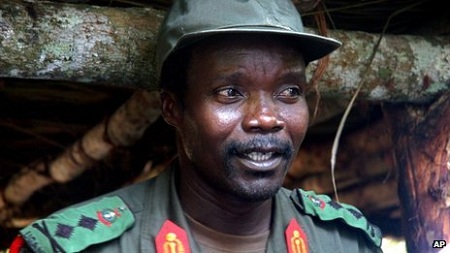
Studies conducted by anthropologists who clearly stated a lack of any connection between the respondents’ answers and their access to humanitarian aid also provided figures very different from those obtained by NGOs interviewing victims of LRA abductions. The average length of captivity under the LRA was 9.5 months, the median age of abductees was 12-16 (considered adolescent in that part of the world), at least 20% of them were adults aged 18-30. ‘Only’ 24% were ever forced to kill, compared to 49% of those held for over one year. And ‘only’ 8% were forced to kill a relative or friend. 30% of abductees were released or escaped within two weeks, and 76% within a year. ‘Only’ 20% of abductees did not return, most of them because they died. 50% of kidnapped children and 40% of the abducted adults even felt an actual sense of allegiance to Kony. [36] It is plausible that their dire need for humanitarian assistance might have prompted displaced former abductees to play up the atrocities they had suffered in order to elicit greater compassion on the part of missionaries and charity workers.
The structure of the LRA differentiates between abductees incorporated into its ranks as soldiers and those merely used as porters. Many of the latter are released after reaching the destination camp or allowed to escape because their captors, for lack of further interest to feed a mouth that had become redundant, simply stopped watching them. As for the LRA combatants, NGOs including Invisible Children campaigned in support of the general amnesty in Uganda by leaving in the forest leaflets in local languages and in pictures for those who could not read, encouraging LRA soldiers to simply put down their weapons and come home to their families.[37] Conceivably, it would not have been difficult for the LRA to hunt down those who took up that offer, knowing well wherefrom it had abducted whom – but it rarely did.
Much is being made of the widely reported fact that abductees have to kill their own families so they have nowhere to go. In reality, ‘only’ 8% had to kill a relative or a friend (and it is not specified whether a brother-in-arms did count as a friend or not for the purposes of the study).[38] Published estimates range from 20-66,000 abductees[39] while the LRA never counted more than two thousand members, and even that number comes from the beginning of its existence when the army still consisted of genuine volunteers. Nowadays, the LRA is about 200-500 members strong.[40] The numbers of abductions are high because most of them last for a short period of time, sometimes only a few days, and not because the LRA is so incompetent that it cannot watch its own prisoners at all. Individuals retained as soldiers are specially selected and undergo testing how they fare under pressure and in the face of killing, often of one of the other abductees. Some fighters joined the LRA voluntarily, even as children, similarly to others joining the Museveni army when it was still a rebel group,[41] or any other guerrilla group in that region. This can be explained by the existence of orphaned or abandoned children in the region who seek protection and assured meals.
Conspicuously, gang rape is not among the violent crimes perpetuated by the LRA. Western media and NGOs refer to “sex slavery” as a catch-all phrase, but this is factually inaccurate in the case of the LRA. “Sex slavery” is different both legally and experientially from “forced marriage” that the group actually practices. [42] The kidnapped girls are assigned as wives to officers and sometimes to soldiers as a reward for bravery. While rape still exists within the context of a forced marriage, it is very different from sexual abuse of a girl by an army. Specifically, the captor husband shares the household and raises children with his abductee wife.[43] The purpose of sexual relations is procreation, and girls who fail to conceive are given traditional fertility treatments. Members of the group of either gender are punished for refusing sexual relations with their assigned spouses as they are punished for other infractions. [44] The goal of the marriage is not only to produce offspring to be raised within the LRA as most trusted soldiers and future leaders, but also to increase social cohesion of the group by creating interdependence.[45] The importance of economic and social dependence of women and their small children within the group is underscored by the fact that although widows have the right to refuse the assignment of a new husband, they rarely do.[46] Abducted pre-pubescent girls are adopted and protected by the families of LRA commanders, and assigned as wives only upon reaching puberty. Educated girls are especially prized since they can be used as assistants of top commanders.[47] While abductions of boys are usually random and guided only by their approximate age, abductions of girls are strictly controlled by the command of the LRA in accordance with the reported needs and combat merits of individuals in the group. Lower ranking soldiers can be rewarded for bravery with one or two wives, while highest ranking officers can pick up to five. Kony himself is reported to have as many as forty wives. Considering the ratio of women and their children to actual combatants, the logistics of moving the LRA forces would appear very difficult. Furthermore, the existence and prevalence of forced marriage, procreation, and family structures within the LRA also calls into question its popular image as an ‘army of children.’
The peculiarity of gender violence within and by the LRA is part of a greater picture of spiritual teachings that encourage daily prayer and prohibit drugs, alcohol, and extramarital sexual relations.[48] Thus, civilian population is rarely subjected to sexual violence, and disobeying troops are punished by Kony himself.[49]
Brainwash forms a large part of the group’s methods. It is also the reason why so many begin to support Kony’s mission while in captivity. Through initiation ceremonies and political teachings, new soldiers are persuaded that they are freedom fighters going into battle for their country and for their fellow Acholi to end the oppression by Museveni.
Massacres of villagers seem to be part of the propaganda effort in East Central Africa as they were in Vietnam in order to prevent cooperation with the enemy but also to loot resources such as food and batteries. The LRA does receive weapons but little food from foreign clandestine supporters such as the al-Bashir government of Sudan, unless international humanitarian aid is redirected to them by some corrupt local official. The LRA uses collective punishment for UPDF collaborators,[50] but the true scale of the reported massacres is actually small – apparently, thousands of residents flee villages at least temporarily because a handful of them was murdered or, even more effectively, mutilated as a warning or for revenge. The charge that the LRA displaced millions sounds like mass hysteria if one considers the number of actual casualties – until one learns that the government’s UPDF itself forcibly moved to displacement camps some Acholi who refused to leave their villages. Holding conditions in closed displacement camps guarded by the UPDF to prevent their inmates from escaping were so appalling that they have been called concentration camps by Amnesty International.[51]
Stopping war criminals and saving children is a noble cause few would dream of opposing. Yet, when ‘Kony 2012’ aired in Uganda, the event caused a flood of spontaneous and even violent protests.[52] Other NGOs except Invisible Children reacted similarly dismayed. What had gone wrong with their peace message?
Well, in this question precisely lies the crux – ‘Kony 2012’ does not deliver any peace message to this region torn apart by wars since 25 years. In fact, it calls for ratcheting up U.S. military intervention in Uganda and granting the Ugandan military an international mandate to invade neighboring countries in their chase for fugitive rebel Kony. Proportionality receives little consideration in the matter.
The first time the Bush administration insisted on, and provided support for, an all-out attack on the LRA by the UPDF in 2008, this attack occurred in direct breach of a peace accord concluded between the LRA and the UPDF that had brought truce to the region for two years.[53] Some in the media and elsewhere speculate that one plausible cause for the sudden U.S. interest in the region may have been the discovery of substantial oil fields in Northern Uganda. This purported operation of three powers[54] was, in fact, executed by the UPDF alone – and it was badly botched: Kony and all his top aides who had been indicted along with him escaped capture, and the now scattered LRA exacted bloody revenge against the civilian population. Future peace talks were stalled by experience-based suspicions ever since, and LRA atrocities have increased. Given previous experiences with U.S. intervention, the fact that president Obama signed an authorization for combat-ready advisors to be sent to the region in 2011,[55] the implicit U.S. support for the Museveni regime and the presence of foreign military personnel whose purpose is to train the UPDF in hostile action, not to support peace talks, caused local observers considerable wariness.[56] Based on these facts, further calls to sustain if not increase U.S. military intervention in Uganda as Invisible Children had advocated by encouraging young Americans to send letters to their legislators can be viewed with good justification as outright irresponsible. Already on December 6, 2001, the LRA was designated a terrorist organization by the U.S. Department of State.[57]
The use of child soldiers is by no means a new or surprising phenomenon in this part of the world. Since 1850, abductions of young men with the aim of turning them into soldiers and porters, and of young women for use as sex slaves, have featured in virtually every single conflict in the region.[58] Kony is far from unique. As recently as 2003, European peacekeepers and the UN reported on rampant use of child soldiers and atrocities including genocide, mutilations, rapes, and even cannibalism on every side of the complicated conflict in Congo, including heinous crimes against humanity committed by invading Ugandan forces[59] and Ugandan-supported rebels.[60] In 2004, similar reports came from Uganda itself, which this time placed blame for all reported crimes and atrocities solely and unequivocally on the LRA.[61] Not surprisingly, the naive claim that capturing or killing just one man, Joseph Kony, would somehow end the vicious cycle of abductions, atrocities, and use of child soldiers in Africa, if not in the world at large, meets with little sympathy from NGOs that perform actual work in the region and from the Ugandan population itself, especially since Joseph Kony has long moved his troops outside Ugandan borders, while part of the Ugandan population desperately needs humanitarian aid far more urgently than it needs another war.
The tendency to oversimplify reported news in order to serve the public an easily-digestible mix of sensationalist sound bites has become a very serious concern raising complex questions of professional responsibility in modern journalism.[62] ‘Facts’ created by the media and even by NGO activists form a new paradigm that, once established, is very difficult to overcome – they not only shape public perception effectively, but also foreign policy, and they do so without semblance of factual or democratic legitimacy.[63] Prevarications and embellishments to increase circulation, sales or donations are one thing. But it is a much more serious matter when engineered facts disrupt or destroy lives of indigenous people for the ulterior motives of those proclaiming intentions to help them. Invisible Children spends a mere 37% of its revenues in Africa.[64] Aside from their overhead, their main identifiable product is propaganda. News organizations have strong incentives to distort so as to dramatize. That creates a direct conflict with their stated purpose of objective and truthful reporting. Politicians, finally, find in such initiatives a remarkably low-cost opportunity for widely reported and approved activism.[65] Very likely, no express collusion exists between these various players. There is no need – their interests are naturally aligned and coordinated by the ‘invisible hand’ of their congruent self-interest. Would that the same could be said of truth in reporting accurate facts in the interest of indigenous people.
