
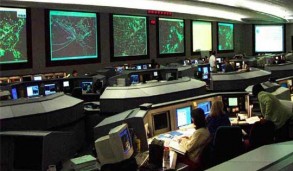
The Wall Street Lawyer and the Special Ops Hijack Coordinator
Another special operations soldier who testified to the 9/11 Commission and played a significant role with regard to the airlines and facilities prior to 9/11 was Brian Michael Jenkins. While Shelton and Canavan were running SOCOM and JSOC, Jenkins was the deputy chairman of Kroll when that company was designing the security system for the World Trade Center (WTC) complex.[38]
Jenkins was appointed by President Clinton to be a member of the White House Commission on Aviation Safety and Security, where he collaborated with James Abrahamson of WTC security company Stratesec, and FBI director (and alleged Opus Dei member) Louis Freeh. In 1999 and 2000, Jenkins served as an advisor to the National Commission on Terrorism, led by L. Paul Bremer, who went on to be an executive of WTC impact zone tenant, Marsh & McLennan, and then the Iraq occupation governor. Jenkins returned to the RAND Corporation, where he had previously worked with Donald Rumsfeld, Condoleezza Rice, Frank Carlucci of The Carlyle Group, and Paul Kaminski of Anteon.
Lieutenant Colonel John Blitch was yet another special operations soldier who played a big part in the events immediately following 9/11. Blitch spent his career in the US Army’s Special Forces and was said to have retired just the day before 9/11 to become an employee of Science Applications International Corporation (SAIC). Immediately following the attacks, he was put in charge of the team of robotic machine operators that explored the pile at Ground Zero, using devices that had previously been used for elimination of unexploded ordnance.
Conclusions
Despite being given plenty of notice about the four planes hijacked on 9/11, FAA management did not request military assistance to ensure the planes were intercepted before they crashed. The 9/11 Commission attributes this to a string of gross failures in communication between the FAA and the military on 9/11. However, the report places no blame on any of the people who were involved and doesn’t even mention the one person who was most important to this chain of communications.
One of the most important people involved was Benedict Sliney, who had, just before 9/11, left a lucrative law career defending Wall Street financiers to return to work as a specialist at the FAA. It was his first day on the job. With regard to ensuring military interception of the hijacked planes, he said he did not receive a “request to authorize a request.” Sliney also claimed to not know that FAA management at the Command Center, where he was in charge, or FAA HQ, had any role in requests for military assistance. This is in contradiction to the stated protocol in the 9/11 Commission report and also the idea of an FAA “hijack coordinator.”
The FAA hijack coordinator was Michael Canavan, a career special operations commander who had come to the civilian FAA job only nine months before 9/11. According to an FAA intelligence agent, one of the first things Canavan did in that job was lead and participate in exercises that were “pretty damn close to the 9/11 plot.” He was also known within the FAA for writing a memo just a few months before 9/11 that instituted a new leniency with regard to airport and airline security.
With regard to the communication failures, Canavan offered the unsolicited excuse that he was absent during the morning hours of 9/11, in Puerto Rico. The 9/11 Commission did not pursue this excuse, nor did it ask who was filling the critical hijack coordinator role in Canavan’s absence. In fact, the 9/11 Commission report didn’t address the hijack coordinator role at all. The report mentioned Sliney only once in the entire narrative and did not refer to Canavan in his role as hijack coordinator.
When a new, honest investigation is finally convened, it should look into why a lawyer, who knew how to handle evidence and get financiers off the hook, was experiencing his first day on the job as national operation manager at the FAA. And If 9/11 was a “special operation” as many people now suspect, that investigation might consider that a number of special operations specialists were in place to ensure that the operation went off without a hitch and was not discovered. Long-time special operations leaders like Michael Canavan, Hugh Shelton, Brian Michael Jenkins, and Richard Armitage played critical parts with respect to the facilities, events, and official story of 9/11. These facts seem worth investigating.
References
[1] The 9/11 Commission Report, page 14
[2] The 9/11 Commission report, pages 17 to 18
[3] The 9/11 Commission report, page 34
[4] Ibid
[5] Matthew Goldstein, When Bad Scams Go Good, The Wall Street Journal, May 21, 2001, http://www.smartmoney.com/investing/stocks/when-bad-scams-go-good-10573/
[6] NASD Regulation, Inc. Office of Dispute Resolution, Arbitration No. 9644952
[7] Westlaw citation WL 31426028, United States District Court, S.D. New York, No. 00 CR 91-11 RWS, Oct. 28, 2002
[8] United States District Court, E.D. New York, 103 F.Supp.2d 579, Downes v. O’Connell, 103 F.Supp.2d 579 (2000)
[9] Lynn Spencer, Touching History: The Untold Story of the Drama That Unfolded in the Skies Over America on 9/11, Free Press, 2008, page 2
[10] 9/11 Commisison memorandum for the record, Interview with Benedict Sliney, May 21, 2004
[11] History Commons 9/11 Timeline page for John Czabaranek, http://www.historycommons.org/entity.jsp?entity=john_czabaranek_1
[12] Matthew Everett, The Repeatedly Delayed Responses of the Pentagon Command Center on 9/11, 911blogger.com, November 7, 2010, http://911blogger.com/news/2010-11-07/repeatedly-delayed-responses-pentagon-command-center-911
[13] History Commons 9/11 Timeline page for Monty Belger, http://www.historycommons.org/entity.jsp?entity=monty_belger
[14] 9/11 Commisison memorandum for the record, Interview with Benedict Sliney, May 21, 2004
[15] History Commons 9/11 Timeline page for Ben Sliney, http://www.historycommons.org/entity.jsp?entity=ben_sliney
[16] The 9/11 Commission report, page 113
[17] Peter Dale Scott, American War Machine, Rowan & Littlefield, 2010
[18] Harvey M. Sapolsky, Benjamin H. Friedman, Brendan Rittenhouse Green, US military innovation since the Cold War: creation without destruction, Taylor & Francis Publishers, 2009
[19] History Commons 9/11 Timeline profile for William S. Cohen, http://www.historycommons.org/entity.jsp?entity=william_s._cohen
[20] History Commons 9/11 Timeline profile for Henry Hugh Shelton, http://www.historycommons.org/entity.jsp?entity=henry_h._shelton
[21] 9/11 Commission Memorandum for the Record (MFR) on John Hawley interview, October 8, 2003, http://media.nara.gov/9-11/MFR/t-0148-911MFR-00608.pdf
[22] Transcript of 9/11 Commission public hearing of May 23, 2003, 9/11 Commission Archive, http://www.9-11commission.gov/archive/hearing2/9-11Commission_Hearing_2003-05-23.htm
[23] Andrew R. Thomas, Aviation Security Management: Volume 1, Greenwood Publishing Group, page 78, http://terrortalk.org/myfiles/Terrorism%20Books/Aviation%20Security%20Management.pdf
[24] Ricardo Alonso-Zaldivar, FAA Culture of Bureaucracy Stymies Security Reform Efforts, Critics Say, Los Angeles
[25] History Commons 9/11 Timeline profile for Mike Canavan, http://www.historycommons.org/entity.jsp?entity=mike_canavan#a830faahijackcoordinator
[26] Interview of Michael Canavan, 9/11 Commission Public Hearing, May 23, 2003, http://www.9-11commission.gov/archive/hearing2/9-11Commission_Hearing_2003-05-23.htm
[27] 9/11 Commission Report, footnote 36 to Chapter 10
[28] White House press briefing by Leon Panetta, January 10, 1996
[29] Gordon Thomas, Gideon’s Spies: The Secret History of the Mossad, Thomas Dunne Books, 1995, pp 309-310
[30] John T. Carney, Benjamin F. Schemmer, No Room for Error: The Story Behind the USAF Special Tactics Unit, Presido Press, 2002, p 232
[31] Graeme C. S. Steven, Rohan Gunaratna, Counterterrorism: a reference handbook, ABC-CLIO, 2004, p 230
[32] Abbas Al Lawati, ‘You can’t authorise murder’: Hersh, Gulf News, May 12, 2009, http://gulfnews.com/news/region/palestinian-territories/you-can-t-authorise-murder-hersh-1.68504
[33] Blake Hounshell, Seymour Hersh unleashed, Foreign Policy, January 18, 2011, http://blog.foreignpolicy.com/posts/2011/01/18/seymour_hersh_unleashed
[34] Matthew Phelan, Pulitzer Prize Winner Seymour Hersh And The Men Who Want Him Committed, WhoWhatWhy.com, Feb 23, 2011, http://whowhatwhy.com/2011/02/23/pulitzer-prize-winner-seymour-hersh-and-the-men-who-want-him-committed/
[35] Summary of 9/11 Commission interview with John Flaherty, Chief of Staff for Secretary of Transportation, Norman Mineta, April 2004
[36] Spartacus Educational webpage for Richard Armitage, http://www.spartacus.schoolnet.co.uk/JFKarmitage.htm
[37] CNN Politics, Armitage admits leaking Plame’s identity, September 08, 2006, http://articles.cnn.com/2006-09-08/politics/leak.armitage_1_novak-and-other-journalists-cia-officer-valerie-plame-patrick-fitzgerald?_s=PM:POLITICS
[38] Kevin R. Ryan, Demolition Access To The WTC Towers: Part Two – Security, 911Review.com, August 22, 2009, http://911review.com/articles/ryan/demolition_access_p2.html
