
Paul Krugman tried to slam Ron Paul in his most recent column by writing:
Back in 1980, just as America was making its political turn to the right, Milton Friedman lent his voice to the change with the famous TV series “Free to Choose.” In episode after episode, the genial economist identified laissez-faire economics with personal choice and empowerment, an upbeat vision that would be echoed and amplified by Ronald Reagan.
But that was then. Today, “free to choose” has become “free to die.”
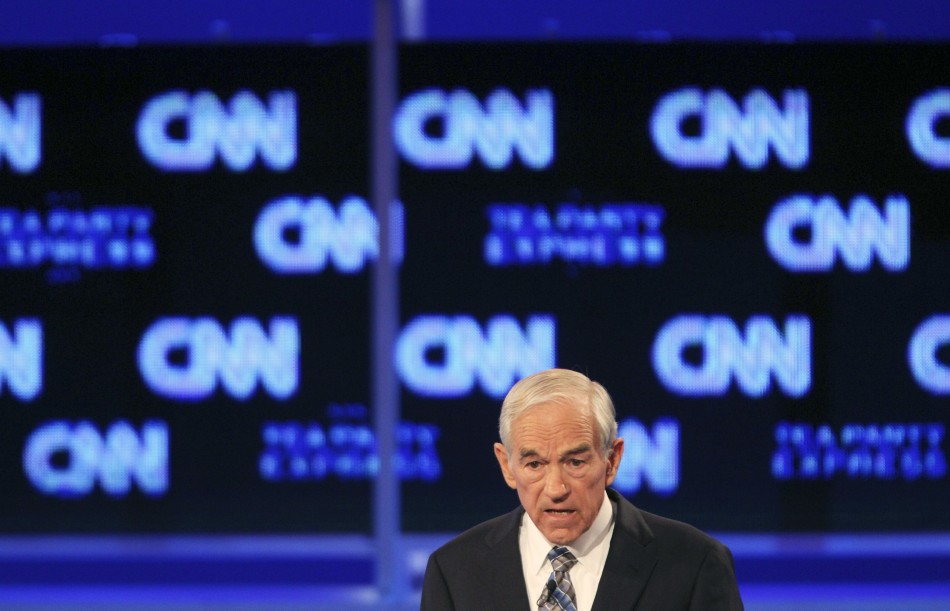
I’m referring, as you might guess, to what happened during Monday’s G.O.P. presidential debate. CNN’s Wolf Blitzer asked Representative Ron Paul what we should do if a 30-year-old man who chose not to purchase health insurance suddenly found himself in need of six months of intensive care. Mr. Paul replied, “That’s what freedom is all about — taking your own risks.” Mr. Blitzer pressed him again, asking whether “society should just let him die.”
And the crowd erupted with cheers and shouts of “Yeah!”
Ah, but what was Ron Paul’s response? Here is the full transcript:
Wolf Blitzer: You’re a physician, Ron Paul, so you’re a doctor, you know something about this subject. Let me ask you this hypothetical question: A healthy, 30-year old young man has a good job, makes a good living, but decides, “You know what? I’m not going to spend 200 or 300 dollars a month for health insurance, because I’m healthy, I don’t need it.” But something terrible happens. All of a sudden, he needs it. Who’s going to pay for it if he goes into a coma? Who pays for that?
Ron Paul: In a society that you accept welfare-ism and socialism, he expects the government to take care of him…
WB: What do you want?
RP: …but what he should do is whatever he wants to do and assume responsibility for himself. My advice to him would be to have a major medical policy, but not be forced…
Here, Ron Paul was clearly going to say the person should not be forced to buy insurance by the government (crucial context), but CNN’s Wolf Blitzer rudely interrupted him:
WB: But he doesn’t have that. He doesn’t have it, and he needs intensive care for six months. Who pays?
RP: That’s what freedom is all about, taking your own risks. [Applause] This whole idea that you have to prepare and take care of everybody… [Applause]
WB: But, Congressman, are you saying the society should just let him die?
RP: No! [A few audience members shout “Yeah”. Laughter.] I practiced medicine before we had Medicaid in the early 1960s, when I got out of medical school. I practiced at Santa Rosa Hospital at San Antonio, and the churches took care of them. We never turned anybody away from the hospitals! And we’ve given up on this whole concept that we might take care of ourselves, assume responsibility for ourselves. Our neighbors, our friends, our churches would do it. This whole idea—that’s the reason the cost is so high! The cost is so high because we dump it on the government, it becomes a bureaucracy, it becomes special interests, it kowtows to the insurance companies and the drug companies, and then on top of that, you have the inflation. The inflation devalues the dollar. We have lack of competition. There’s no competition in medicine! Everybody’s protected by licensing. We should actually legalize alternative health care, allow people to practice what they want! [Applause]
So Ron Paul actually responded with a firm “No!”, but Krugman relies upon a couple of shouts from the audience in an apparent attempt to impugn Paul by making him seem heartless. Krugman was no less dishonest as he continued, saying that:
[A]fter the crowd weighed in, Mr. Paul basically tried to evade the question, asserting that warm-hearted doctors and charitable individuals would always make sure that people received the care they needed—or at least they would if they hadn’t been corrupted by the welfare state.
But Ron Paul didn’t “evade” the question at all. He answered it with a firm and direct, “No!” And he didn’t offer some hypothetical of what would be true if there was no welfare state, in terms of health insurance, he stated the fact of what was true before the welfare state came to be, which makes Krugman’s next comments all the more dishonest:
Sorry, but that’s a fantasy. People who can’t afford essential medical care often fail to get it, and always have — and sometimes they die as a result.
So, again Krugman would have his readers believe Ron Paul was offering a hypothetical about what would be true if the situation was different, when in truth he was stating the fact about what was true when the situation was different. Sorry, but that’s not a fantasy. That’s history. Notice how Krugman deliberately says this isn’t true today, which — his intentions to mislead his readers as to Ron Paul’s actual response notwithstanding — actually reinforces Ron Paul’s point that before the government got involved, hospitals never turned away patients and that private individuals or communities took care of the costs.
Krugman next attempts to portray Ron Paul, who holds to the Austrian school of economics, as opposed to Krugman’s Keynesian view — as some kind of radical by turning to Austrian economist Friedrich Hayek for support for his position in favor of the welfare state. Krugman writes:
In the past, conservatives accepted the need for a government-provided safety net on humanitarian grounds. Don’t take it from me, take it from Friedrich Hayek, the conservative intellectual hero, who specifically declared in “The Road to Serfdom” his support for “a comprehensive system of social insurance” to protect citizens against “the common hazards of life,” and singled out health in particular.
Okay, let’s go and look at what Hayek actually wrote, at length, and in context (emphasis added throughout):
Like the spurious “economic freedom”, and with more justice, economic security is often represented as an indispensable condition of real liberty. In a sense this is both true and important. Independence of mind or strength of character are rarely found among those who cannot be confident that they will make their way by their own effort.
Hmm… Could this have anything to do with what Ron Paul said about people assuming their own risks and accepting responsibility for themselves? Let’s continue:
Yet the idea of economic security is no less vague and ambiguous than most other terms in this field; and because of this the general approval given to the demand for security may become a danger to liberty. Indeed, when security is understood in too absolute a sense, the general striving for it, far from increasing the chances of freedom, becomes the gravest threat to it.
Hmm… Do you think this sounds more like Ron Paul or Paul Krugman at this point? Continuing:
It will be well to contrast at the outset the two kinds of security: the limited one, which can be achieved for all, and which is therefore no privilege but a legitimate object of desire; and the absolute security which in a free society cannot be achieved for all and which ought not to be given as a privilege—except in a few special instances such as that of the judges, where complete independence is of paramount importance. These two kinds of security are, first, security against severe physical privation [lack of the basic necessities of life], the certainty of a given minimum of sustenance for all; and, secondly, the security of a given standard of life, or of the relative position which one person or group enjoys compared with others; or, as we may put it briefly, the security of a minimum income and the security of the particular income a person is thought to deserve.
Follow? So there is the “security” of having the basic necessities of life that one needs, such as food, shelter, and clothing, and then there is the “security” of having the standard of living that one desires. What is Hayek’s view on each of these two kinds of security? Continuing:
We shall presently see that this distinction largely coincides with the distinction between the security which can be provided for all outside of and supplementary to the market system, and the security which can be provided only for some and only by controlling or abolishing the market.
Pause again and consider that in light of the two kinds of “security” Hayek offered a distinction between; those needs which can be provided for in accordance with a free market system and in accordance with liberty, and those wants which can be provided for only by eliminating the free market and infringing upon liberty. Continuing:
There is no reason why in a society that has reached the general level of wealth which ours has attained, the first kind of security should not be guaranteed to all without endangering general freedom. There are difficult questions about the precise standard which should thus be assured: there is particularly the important question whether those who thus rely on the community should indefinitely enjoy all the same liberties as the rest. An incautious handling of these questions might well cause serious and perhaps even dangerous political problems; but there can be no doubt that some minimum of food, shelter, and clothing, sufficient to preserve health and the capacity to work, can be assured to everybody. Indeed, for a considerable part of the population of this country this sort of security has long been achieved.
Notice that Hayek acknowledges that the basic necessities of life had not been achieved for all at the time he was writing, even though he believed there was no reason it could not be achieved under a free market system, and that he thought the issue raised important questions about the risk of people who would rely upon social welfare feeling a sense of entitlement, which could lead to “dangerous political problems” resulting in loss of individual liberty and/or the destruction of the free market. Continuing:
Nor is there any reason why the state should not assist the individuals in providing for those common hazards of life against which, because of their uncertainty, few individuals can make adequate provision. Where, as in the case of sickness and accident, neither the desire to avoid such calamities nor the efforts to overcome their consequences are as a rule weakened by the provision of assistance, where, in short, we deal with genuinely insurable risks, the case for the state helping to organize a comprehensive system of social insurance is very strong.
So there are the portions Krugman quoted in context. Thus, one may observe that what Hayek was saying is that there is no reason the state should not be able to assist individuals who became sick or had an accident within a free-market economy and without infringing upon individual liberty. Continuing:
There are many points of detail where those wishing to preserve the competitive system and those wishing to supersede it by something different will disagree on the details of such schemes; and it is possible under the name of social insurance to introduce measures which tend to make competition more or less ineffective.
Hmm… What was that Ron Paul said about “We have lack of competition. There’s no competition in medicine!”? Continuing:
But there is no incompatibility in principle between the state providing greater security in this way and the preservation of individual freedom. To the same category belongs also the increase of security through the state rendering assistance to the victims of such “acts of God” as earthquakes and floods. Wherever communal action can mitigate disasters against which the individual can neither attempt to guard himself, nor make provision for the consequences, such communal action should undoubtedly be taken.
Okay, so now let’s go back once more to Ron Paul’s actual answer to the question once again and compare it and compare it with Krugman and with what Hayek actually said. Ron Paul said, No, society should not let the uninsured person die. Before government took over the health care industry, hospitals never turned anybody away. For the uninsured, the community took care of them. Americans have lost the idea that we should be responsible for ourselves, and this is why health care costs are so high, because we’ve come to expect the government to take care of use and it’s become a bureaucracy that favors special interests and kowtows to the insurance and drug companies that profit when the risk is socialized, which destroys the free market and competition in medicine, which raises health care costs.
Ron Paul was in large part speaking out against the federal mandate that requires Americans under threat of penalty to purchase services from private companies. For Krugman to invoke Hayek, who unquestionably would have included a federally mandate to purchase insurance as a violation of the free markets and of liberty, in an attempt to challenge Paul’s position on health care is the height of intellectual dishonesty.
