
Nearly 80% revenue growth against a backdrop of deepening losses tells investors everything about the brutal trade-offs now defining the artificial intelligence sector.
Cerebras Systems (NASDAQ: CBRS) posted revenues of $755.8 million for the twelve months ended September 30, 2026, a 79.9% jump over the comparable prior-year period, underscoring ferocious demand for high-performance AI computing infrastructure.
That figure dwarfs the $142.1 million recorded by rival BigBear.ai (NYSE: BBAI) over the same stretch, which itself represented a roughly 1.5% decline from the previous year.
The contrast captures a fundamental split inside the AI investment landscape between specialized government-facing software and the semiconductor hardware powering next-generation model training.
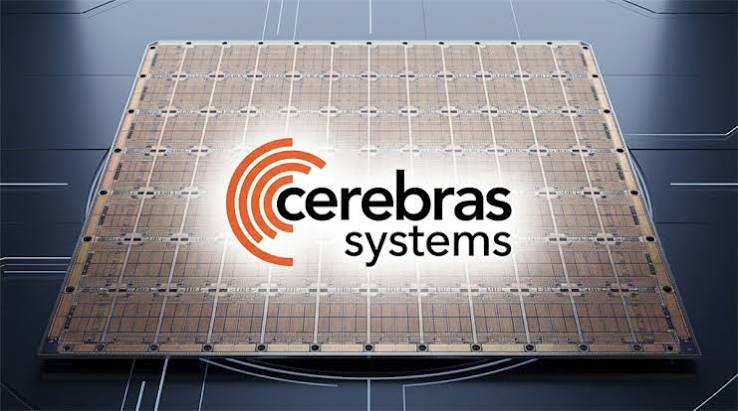
Cerebras builds wafer-scale processor systems engineered to train large AI models faster than conventional chips, with deployments spanning data centers and applications in medical research, cryptography, and energy.
The company has attracted a roster of heavyweights, including OpenAI, Microsoft, and Oracle, as customers, a validation that carries significant weight in a market where credibility is currency.
BigBear.ai operates on a very different axis, developing decision intelligence software for defense and intelligence agencies and using a land-and-expand approach that deploys minimally viable products to seed long-term government contracts.
That strategy creates meaningful concentration risk, with a small number of federal clients generating most of the company’s revenue, leaving it exposed when Washington tightens its belt, as it did in 2025.
After U.S. government budget cuts caused sales to fall that year to $127.7 million, BigBear.ai is now forecasting full-year 2026 revenues between $150 million and $165 million, a recovery that still leaves questions about the durability of its federal dependency.
Compounding those concerns, the company recorded a $76.7 million goodwill impairment in late 2026 and continues to face legal challenges stemming from historical accounting restatements, adding operational turbulence to its financial profile.
On the balance sheet, BigBear.ai carries a debt-to-equity ratio of zero as of December 2025, a clean leverage position, though its free cash flow stood at negative $46.3 million for fiscal year 2025.
Cerebras presents a more complicated financial picture, with a debt-to-equity ratio of -0.5x indicating total liabilities exceed shareholder equity, and free cash flow of negative $392.8 million for the same period, reflecting the capital intensity of semiconductor development.
Both companies are burning cash, but Cerebras does so at a scale proportionate to its ambitions, posting a net loss of $651.4 million against BigBear.ai’s net loss of $180.2 million for the twelve months ended September 30, 2026.
Valuation metrics reveal the market’s diverging expectations, with Cerebras trading at a price-to-sales ratio of 28.4x and a forward price-to-earnings multiple of 325.9x, compared to BigBear.ai’s far more modest P/S ratio of 5.6x.
BigBear.ai’s $818 million market capitalization and 52-week trading range of $1.43 to $7.18 paint a picture of a micro-cap under pressure, while Cerebras commands a $23 billion valuation with shares ranging from $77.84 to $386.34 over the past year.
For investors weighing which stock offers a stronger path into 2027, Cerebras’ proprietary chip architecture and its growing list of enterprise customers present a more compelling growth narrative, despite the steep premium attached to its shares.
BigBear.ai’s reliance on Microsoft and Amazon cloud infrastructure to deliver its software, combined with its vulnerability to federal budget cycles, suggests the company has yet to establish the kind of technological indispensability that attracts durable investment.
Until BigBear.ai can meaningfully broaden its customer base beyond government clients, Cerebras’ hardware-driven model and accelerating top-line momentum make it the stronger candidate for AI-focused portfolios looking toward 2027.
