
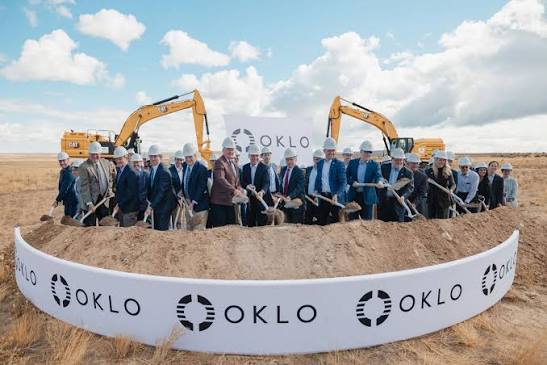
America’s insatiable appetite for artificial intelligence computing power is reshaping the electricity market, and nuclear startups are emerging as a primary beneficiary of that structural shift.
The Department of Energy projects that data centers alone could absorb as much as 12% of total U.S. electricity demand by 2028, a figure that is drawing fresh attention to small modular reactor developers.
Oklo (NYSE: OKLO), despite sitting 70.47% lower for the year and trading at $21.19, carries $3.1 billion in cash and marketable securities on its balance sheet, a financial cushion that most early-stage energy companies cannot match.
That disconnect between a battered share price and a fortress balance sheet underpins a 12-month price target of $31 from 24/7 Wall St., representing 46.3% upside with a buy rating at 55% confidence.
Among the three closest publicly traded nuclear peers, Oklo posts the lowest price-to-book multiple at 1.06x, below both NuScale Power (NYSE: SMR) at 1.18x and Centrus Energy (NYSE: LEU) at 1.59x, even though Oklo holds more cash and has an operating reactor.
The company’s Groves-1 test reactor reached first criticality in less than a year from the start of construction, with substantial work completed in just 229 days, demonstrating a pace that few competitors have matched.
Oklo is now developing an Ohio campus of up to 1.2 gigawatts alongside Meta Platforms (NASDAQ: META), and has reserved manufacturing slots for 27 Aurora modules, with a first full fuel assembly targeted for 2027.
Analyst sentiment leans constructive, with five Strong Buy ratings and eight Buys against ten Holds, and the most optimistic scenario puts the consensus target at $55.43, implying 161.6% upside from current levels.
The risks are real and worth tracking: Oklo posted a net loss of $123.3 million through the first nine months of 2026, funded partly by $2.3 billion raised through at-the-market stock offerings that have weighed on the share price.
Institutional confidence has also wobbled, with Millennium Management exiting its position entirely and Marshall Wace trimming its stake by 49%, moves that contributed to a 23.58% decline over just the past month.
Regulatory setbacks added to the pressure after PJM withdrew Oklo’s Virginia interconnection application and FERC dropped the company’s related complaint, though management stated the outcome carries no consequences for its Ohio development.
Net interest income of $72.4 million partially offset the operating losses, and the company guides for $400 million to $500 million in capital spending on physical assets alongside $120 million to $150 million in annual operating cash burn.
The Meta partnership, while strategically significant, has not yet resulted in a binding commitment from either party to actually construct a reactor, leaving that upside contingent on future negotiations.
In the most pessimistic scenario, continued dilution or a startup delay pushing Aurora past 2029 could drag the stock toward its implied cash value of roughly $15.87 per share, just below the current 52-week low of $18.54.
The longer-range model, assuming 30% annual appreciation once Aurora-Idaho comes online, projects Oklo reaching $40.30 in 2028, $52.39 in 2029, and $68.11 by 2030, with binding power agreements identified as the single biggest potential catalyst above those levels.
