
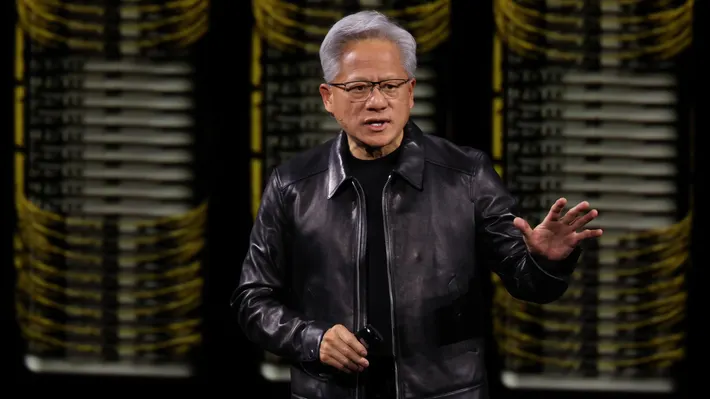
The unanimous decision by Nvidia’s board to reinstate Jensen Huang as chief executive sent shockwaves through AI-adjacent markets on November 23, 2026, lifting cloud infrastructure stocks sharply higher.
Nebius Group (NASDAQ: NBIS), a Netherlands-based AI and high-performance computing infrastructure company, was among the session’s biggest beneficiaries, jumping nearly 22% to close at $99.85 per share.
That single-day advance translated to a gain of $18.54 per share, reflecting intense investor optimism that Nvidia’s leadership continuity would sustain momentum across the broader AI investment cycle.
Fellow neocloud provider CoreWeave (CRWV) posted a similarly dramatic move, also climbing more than 22%, as traders bet that Nvidia would continue channeling capital and support toward GPU-intensive cloud operators.
The rally was not confined to neocloud names, with the Technology Select Sector SPDR ETF advancing almost 8% and the Invesco QQQ Trust adding close to 6% across the session.
Nebius itself was born from the restructuring of Russian internet giant Yandex following the geopolitical disruptions of 2022, and has since repositioned as a pure-play AI infrastructure provider serving markets in Europe and the United States.
The company’s core business spans GPU compute capacity, AI-centric cloud services, and data center operations, placing it directly in the path of rising enterprise demand for large-scale model training and inference infrastructure.
Despite the eye-catching single-session performance, NBIS has recorded 102 separate moves exceeding 5% over the past year alone, underscoring just how turbulent the stock’s trading history has been.
Even against that volatile backdrop, a gain of 22% in a single session is an outlier, suggesting that Huang’s reinstatement carried outsized symbolic weight for investors tracking the AI infrastructure trade.
That extreme price sensitivity cuts both ways, however, and analysts warn that investors who chase sharp one-day rebounds in stocks with this level of volatility risk buying into momentum that can reverse just as quickly as it forms.
The broader question for markets is whether Huang’s return represents a durable signal for AI infrastructure spending or simply a short-term sentiment catalyst that pulled forward gains that would otherwise have accumulated over weeks.
For Nebius shareholders, the session was a reminder that company-specific fundamentals can be temporarily overwhelmed by macro and sector-level catalysts, making position sizing and entry timing especially consequential in names this reactive.
