
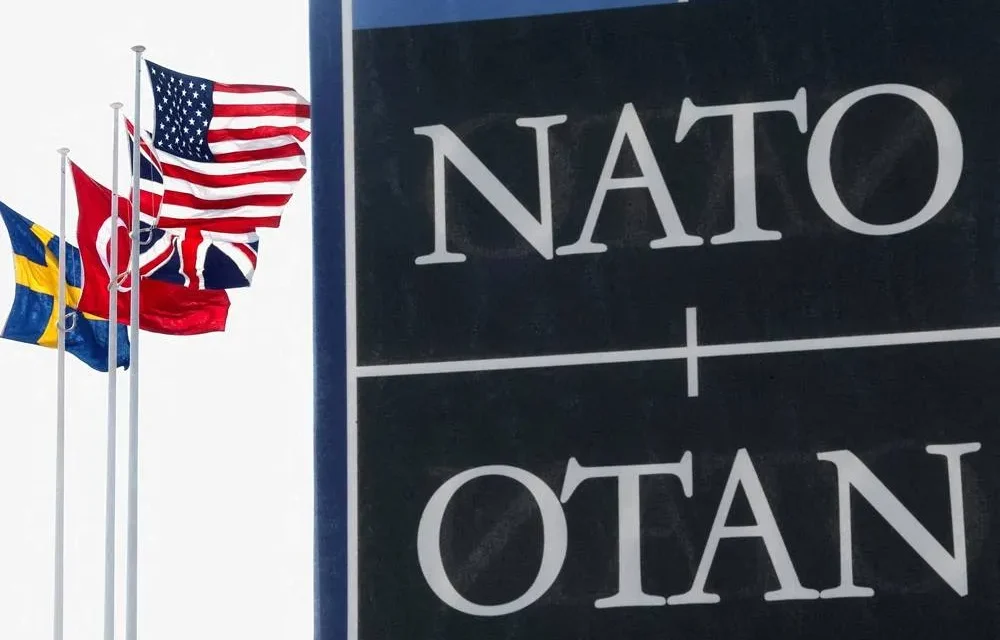
Berlin’s most significant NATO gathering in more than a quarter century laid bare the alliance’s sharpest internal tensions, even as Germany unveiled a defense transformation of striking scale.
Germany’s military budget has climbed to more than €139 billion ($151 billion) for the coming year, a figure that reflects a broader rearming drive across the alliance’s 32 member states.
General Carsten Breuer, Germany’s highest-ranking soldier, told delegates at the 72nd NATO Parliamentary Assembly that the pace of change had been dramatic, stating: “Our defense budget has tripled since 2021.”
Breuer set an ambitious timeline for Germany’s contribution to NATO’s collective 5% of GDP defense spending target, pledging to reach that threshold well before the alliance-wide 2035 deadline.
The Bundeswehr is simultaneously undergoing a structural expansion, with plans to grow the force to 460,000 personnel by the mid-2030s, including 200,000 reservists drawn from civilian ranks.
Breuer acknowledged the difficulty of scaling up so rapidly, saying: “This is like walking a tightrope because we must find the right balance between growth and operational readiness.”
His personal profile within the alliance is also rising, as delegates voted him in as the new chair of the NATO Military Committee, a role that will see him relocate to Brussels as principal military advisor to Secretary General Mark Rutte by mid-next year.
Breuer described the appointment as meaningful beyond the personal, saying: “I take this election as a sign of recognition that Germany has now accepted its responsibility as well as its role in security policy.”
Against that backdrop of expanding capabilities, Ukrainian President Volodymyr Zelenskyy joined the Berlin assembly by video call and delivered a pointed appeal for air defense systems, telling delegates: “Missiles that can stop Russian ballistic missiles should not be sitting in warehouses collecting dust. And we say this openly. Please help us with this.”
With the winter season approaching, Zelenskyy identified air defense as Kyiv’s foremost need, framing the request in stark terms: “Dear friends, winter is now ahead of us. And of course, our number one priority is air defense.”
Zelenskyy also renewed his push for NATO membership, posing a direct challenge to the alliance’s hesitation and asking: “Wouldn’t it be more effective to simply bring Ukraine into NATO? Wouldn’t that be better for all of us, for everyone? Cheaper to put in place? And more reliable when it comes to actually protecting security?”
NATO has repeatedly affirmed that the path to membership remains open to Ukraine, but member states have consistently framed that prospect as a long-term possibility rather than an immediate option, citing the active war and collective defense obligations.
Rutte was direct in rejecting Ukrainian demands for near-term accession, noting that unanimity among members is currently absent on the question, while adding: “There is total clarity on that within the alliance.”
German Chancellor Friedrich Merz offered a more sympathetic historical reading, describing the alliance’s decision at its 2008 Bucharest summit not to admit Ukraine as “what a mistake it was not to follow the American suggestion back in 2008 at the NATO summit in Bucharest to admit Ukraine as a member.”
Merz argued that any future ceasefire arrangement should include robust security guarantees for Ukraine comparable to those afforded to full NATO members.
Rutte, meanwhile, kept the diplomatic door open on whether membership could feature in eventual peace negotiations, noting ongoing US efforts toward talks and signaling a cautious approach: “But it is also to test now whether Putin is willing to play ball, and then these issues might come up again.”
Beyond membership, the secretary general flagged a persistent supply-side problem undermining the alliance’s rearmament push, warning that “right now, demand still far exceeds the supply” of weapons across member states.
