
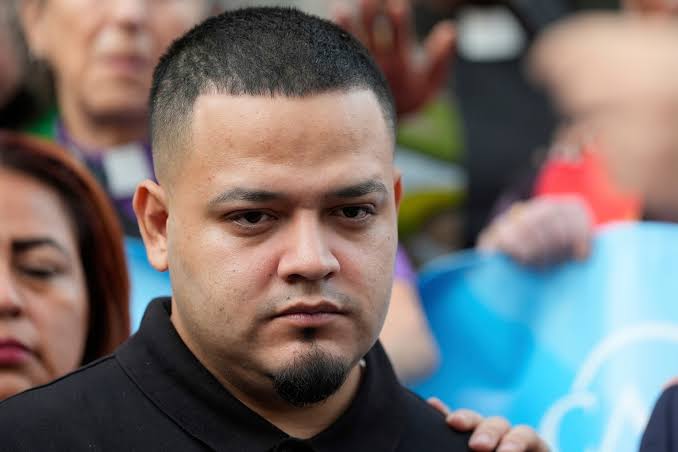
A negotiated agreement between U.S. authorities and Kilmar Abrego García, 31, has resolved one of the most closely watched immigration cases of the Trump era.
The Salvadoran migrant boarded a commercial flight bound for Spain just after 10 p.m. Eastern time Tuesday, with the departure delayed by several hours due to mechanical difficulties.
His voluntary exit brings to an end a legal confrontation that wound through multiple federal courts before reaching the U.S. Supreme Court.
The resolution is a notable shift from the position U.S. officials had maintained for months, insisting that Abrego García should instead be deported to Africa.
Attorney Sean Hecker confirmed that his client was scheduled to depart for Spain on Tuesday evening, with the voluntary departure structured as part of a broader negotiated deal.
The case first drew national attention after Abrego García was wrongfully removed from Maryland to El Salvador, in direct violation of a standing judicial order of protection.
The Trump administration ultimately acknowledged the removal was an “administrative error,” though that admission did little to accelerate his return in the early stages of the dispute.
Following his erroneous deportation, Abrego García was held at El Salvador’s Terrorism Confinement Center, known as CECOT, before being transferred to a separate Salvadoran prison facility in April.
After the Supreme Court directed the government to facilitate his return, federal prosecutors moved to file a criminal indictment against him on human smuggling charges arising from an earlier incident involving state troopers who stopped him while he was transporting eight passengers from Texas to Maryland.
Abrego García pleaded not guilty to those federal charges and denied all allegations, and a judge subsequently dismissed the human smuggling case, though the Justice Department filed an appeal of that ruling in August 2026.
His attorneys had secured a court order temporarily blocking any further removal from U.S. soil while the legal proceedings continued, providing a crucial legal shield during the extended dispute.
The case became widely regarded as a defining symbol of the Trump administration’s aggressive posture on immigration enforcement, attracting sustained scrutiny from civil liberties advocates and legal observers throughout its 20-month duration.
With Abrego García now bound for Spain under a voluntary arrangement, the prolonged saga that once consumed courtrooms at the highest levels of American jurisprudence has reached a quiet, negotiated conclusion far from the country he was originally forced to leave.
