
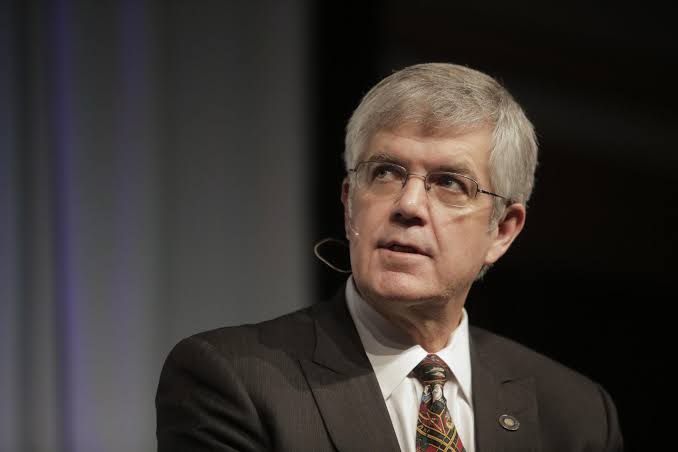
While Republicans absorbed heavy losses across the country, one congressman in a deeply blue state ran up a margin that most of his party could only envy.
Rep. Cliff Bentz (R-Ore.) secured his fourth congressional term with 61% of the vote, outpacing his Democratic opponent by more than 70,000 ballots despite a nationwide wave that handed his party significant defeats.
Democrats now outnumber Republicans by nearly 100 seats in the House and hold a 10-seat advantage in the Senate, making Bentz’s performance in Oregon all the more striking.
The congressman attributes his durability at the ballot box to a straightforward argument: that Oregon’s progressive leadership has driven the state into economic dysfunction, and that voters in his district have grown tired of paying the price.
Oregon carries a 9.9% state income tax rate, a top corporate income tax of 7.6%, and a 0.57% corporate activity tax rate, figures Bentz argues have pushed the local economy toward collapse.
The state legislature has also passed measures requiring large employers in retail, hospitality, and food service to provide workers with advance scheduling, a policy critics contend limits operational flexibility for businesses.
Bentz pointed squarely at the state capital as the source of the problem, citing what he called “crazy, crazy Democrat policies emanating out of Salem, the capital of Oregon” for what he described as their “ridiculous impact.”
His constituents, he said, were voting for economic protection rather than ideological alignment, explaining that “my folks wanted someone that they could depend upon when it comes to protecting business and trying to reverse this horrible trend toward more, in this you have a failed state than anything else.”
Beyond his own district, Bentz believes the approach carries lessons for a Republican Party now preparing to operate in the congressional minority, arguing that opposition status creates its own political opportunities.
“When you’re in the minority, you can start calling out the stupidity of the opponent’s approach to the economy and to regulation,” he said, framing the coming years as a chance to draw sharp contrasts with Democratic governance.
His prescription for fellow Republicans is pointed: let voters feel the consequences of the policies they have supported, adding “so you start out by saying, ‘Hey, if you want more of this, well, just keep voting for it.'”
Bentz indicated he intends to spend the next congressional term executing precisely that strategy, stating, “I think that’s hugely important, and that’s what I’ll be doing in these next two years.”
Whether a formula refined in one of the nation’s most reliably Democratic states can translate to competitive districts elsewhere remains the central question for a party searching for answers after a difficult election cycle.
