
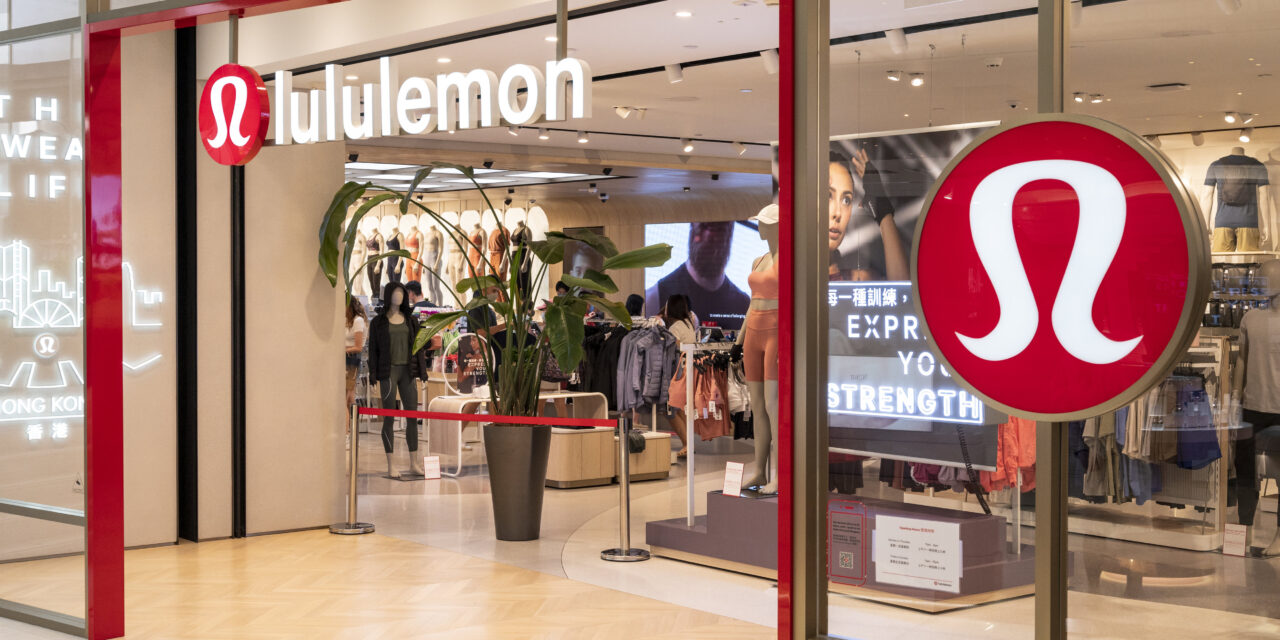
Lululemon Athletica (NASDAQ: LULU) carries a forward price-to-earnings ratio of just 11.0x, less than half the 24.7x commanded by Colgate-Palmolive (NYSE: CL), a gap that demands explanation.
At first glance, LULU’s price-to-sales ratio of 1.1x against Colgate’s 3.6x makes the athletic apparel company look like an obvious value play heading into 2027.
But valuation discounts rarely exist in a vacuum, and the underlying business trends for both companies tell a more complicated story than the multiples alone suggest.
Lululemon’s net margin of 12.8% for the twelve months ended August 2, 2026, actually surpasses Colgate’s 9.6% margin over a comparable period, making the valuation gap even more striking on the surface.
The catch is that Lululemon’s revenue grew only about 1.7% to reach roughly $11.1 billion in that period, a sharp deceleration from the explosive post-pandemic expansion that originally built the brand’s premium reputation.
North American consumers are buying less at existing Lululemon stores, the company trimmed its full-year guidance in its most recent report, and a new chief executive is still in the process of reshaping the leadership team.
Colgate, by contrast, grew revenue approximately 5.9% to around $21.3 billion in the twelve months ended September 30, 2026, with emerging markets including India and Brazil leading regional gains as management subsequently raised its profit outlook.
The consumer staples giant sells across more than 200 countries, holds the largest share of the global toothpaste market, and draws additional revenue from its Hill’s pet food brand, giving it two distinct growth engines under one roof.
Colgate has also raised its dividend for 63 consecutive years, currently yielding 2.14% at an annual payout of $2.11 per share, a track record that reflects demand for its products across virtually every economic cycle.
Lululemon’s balance sheet is considerably cleaner, with a debt-to-equity ratio of roughly 0.4x and a current ratio of approximately 2.3x, compared to Colgate’s highly leveraged 158.4x debt-to-equity and a current ratio of only 0.8x.
Lululemon also holds $1.4 billion in cash and generated around $921.7 million in free cash flow in its fiscal year ended February 1, 2026, providing meaningful financial flexibility despite its slower growth.
Colgate’s free cash flow is significantly larger at close to $3.6 billion for the fiscal year ended December 31, 2025, underscoring the scale advantage that comes with a $78 billion market capitalization versus Lululemon’s $11 billion.
Both companies carry meaningful risks: Colgate faces ongoing talc-related litigation, heavy exposure to foreign currency swings, and fierce competition from Procter & Gamble (NYSE: PG) and private-label rivals.
Lululemon contends with copycat products eroding its premium positioning, supply chain concentration in the Asia-Pacific region, pending securities class action lawsuits, and sensitivity to shifts in U.S. tariff policy.
Walmart and its affiliates account for nearly 11% of Colgate’s total net sales, a customer concentration that adds a layer of vulnerability despite the breadth of the company’s global distribution.
Lululemon operates more than 800 stores alongside its own digital platforms, and uses licensing and supply arrangements to enter markets such as the UAE and Israel, reflecting an international ambition that has yet to fully offset domestic softness.
For investors weighing the two, Colgate’s combination of consistent dividend growth, global scale, and accelerating emerging-market momentum makes a stronger case for a buy-and-hold position through 2027 and beyond.
