
Four of the five largest automakers, four of the five biggest airlines, and 12 of the world’s 15 largest banks all count SoundHound AI (NASDAQ: SOUN) as a technology partner.
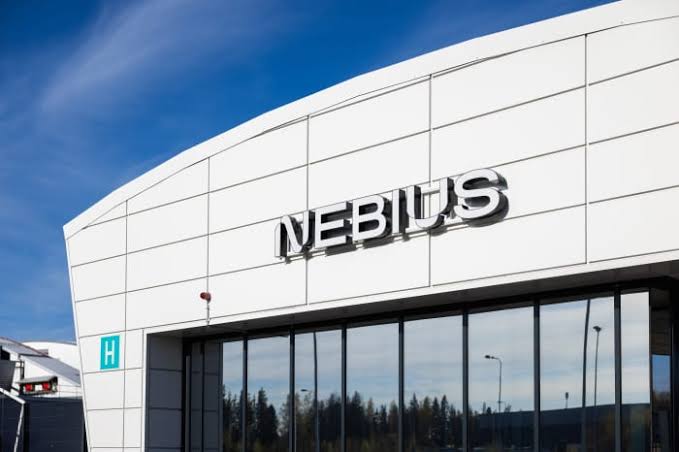
That blue-chip client roster is genuinely impressive for a company with a market capitalization of just $1.4 billion, a figure dwarfed by rival Nebius Group (NASDAQ: NBIS) at $28 billion.
The contrast between the two companies sharpens further when revenue figures enter the picture, with Nebius recording approximately $2.2 billion in sales for the 12 months ended September 30, 2026.
SoundHound posted roughly $223.6 million over the same period, reflecting year-over-year growth of about 50.7%, a respectable clip that nonetheless pales against Nebius’s staggering 535.8% expansion.
What makes the Nebius growth figure even more striking is the company’s origin story, which traces back not to Silicon Valley but to Yandex, the Russian internet giant from which it was carved out to separate its non-Russian operations.
Armed with a substantial cash reserve following that separation, Nebius made an audacious wager, purchasing thousands of top-tier chips from Nvidia Corp (NASDAQ: NVDA) and repositioning itself as a full-stack AI cloud hyperscaler almost overnight.
Annual sales had already reached approximately $530 million in the prior fiscal year, a figure that itself represented more than five times what the business generated before its pivot into artificial intelligence infrastructure.
Today, the company operates a platform stretching from raw data processing through model training to production deployment, targeting specialized verticals including physical AI, life sciences, media entertainment, and robotics with a team of over 1,300 employees.
SoundHound, by contrast, has been in the voice recognition business since its founding in 2005, giving it a two-decade head start in conversational AI and a genuine depth of expertise in speech-enabled interfaces for automobiles, televisions, and restaurants.
The acquisition of LivePerson was designed to broaden its reach into enterprise digital messaging, though integrating that deal, along with earlier purchase Amelia, introduces execution risk and has contributed to ongoing losses.
For the 12 months ended September 30, 2026, SoundHound reported a net loss of approximately $74.2 million, translating to a negative net margin of roughly 33.2%, while Nebius managed net income of about $124.5 million on a 5.7% margin.
Nebius’s balance sheet carries a debt-to-equity ratio of approximately 1.1x against a current ratio of 3.1x, while SoundHound’s near-zero leverage and a current ratio of 4.6x reflect a more conservative financial structure.
Free cash flow remains deeply negative at both companies, with Nebius burning through nearly $3.7 billion in the fiscal year ended December 31, 2025, and SoundHound consuming roughly $103.1 million over the same period.
On valuation, SoundHound trades at a price-to-sales ratio of 5.9x versus Nebius’s 10.6x, making it the cheaper option on that metric, though Nebius carries a forward price-to-earnings ratio of 43.3x while SoundHound has no equivalent figure given it is not projected to reach profitability.
A legitimate strategic question hangs over SoundHound specifically: whether a focused voice AI specialist can defend its position against deep-pocketed rivals like Alphabet Inc. (NASDAQ: GOOG) and Apple Inc. (NASDAQ: AAPL), both of which command enormous user bases and the resources to replicate its core functionality.
Nebius, meanwhile, faces the capital-intensity challenge inherent to cloud infrastructure, competing against global hyperscalers with far larger financial reserves, and managing complexity as it expands across multiple industry verticals simultaneously.
The lesson from the AI boom so far is that scale compounds advantage, and on that dimension Nebius holds a structural edge that a robust SoundHound client list cannot fully offset.
SoundHound’s persistent losses and an uncertain path to profitability remain meaningful red flags for investors weighing the two options heading into 2027, tipping the balance toward Nebius for those willing to accept its richer valuation.
