
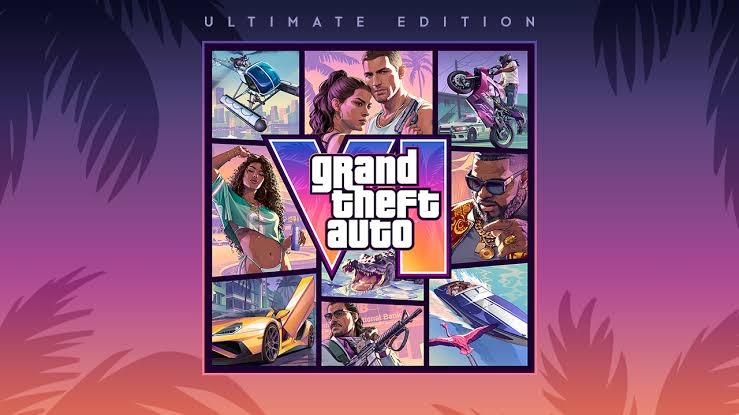
Wall Street is grappling with one of gaming’s sharpest financial paradoxes: Take-Two Interactive (NASDAQ: TTWO) expects $8 billion to $8.2 billion in net bookings for its fiscal year ending March, yet the projected profit sits at a comparatively thin $109 million to $142 million.
The gap reflects years of development costs for Grand Theft Auto VI finally hitting the books at the moment of sale, a consequence of building what Take-Two CEO Strauss Zelnick has called “arguably the most anticipated entertainment property of all time.”
The title launched November 19, ending a wait of more than 13 years since GTA 5 arrived in September 2013 and went on to sell nearly 235 million copies across multiple console generations.
Analysts had set an even higher bar: when Take-Two issued its bookings forecast in May, Reuters reported that Wall Street had been expecting roughly $9.1 billion, leaving the company’s own guidance roughly $900 million short of those expectations.
The holiday quarter alone is projected to contribute $3.35 billion to $3.5 billion, a figure that would more than double what Take-Two booked in its most recent quarter, and one that carries substantial risk if player engagement fades after launch day.
Recurring revenue is where the real long-term prize sits, with 81% of Take-Two’s net bookings last quarter derived from ongoing player spending such as virtual currency and additional content rather than upfront game sales.
A Bank of America estimate reportedly places GTA Online spending at approximately $2.2 billion in the year following launch, illustrating why keeping players inside the game matters as much as the initial sale.
Morgan Stanley’s base case projects 40 million copies sold through the end of March, while analytics firm NewZoo forecast in July that the title could generate $3 billion to $5 billion in its opening week across as many as 51 million copies, a figure that would easily surpass the roughly $1.2 billion Avengers: Endgame earned in its opening weekend.
The financial rewards extend well beyond Take-Two itself, with Sony (NYSE: SONY) and Microsoft (NASDAQ: MSFT) positioned to collect an estimated $500 million combined from digital sales alone, since platform holders typically retain around 30% of digital copy revenue.
Digital pre-order spending has already been estimated at more than $1.6 billion, supported by Sensor Tower data placing digital pre-orders at roughly 17 million units, with approximately 89% of buyers reportedly opting for the $100 ultimate edition over the $80 standard version.
The game launches exclusively on PlayStation 5 and Xbox Series X and S, with no PC version announced, cementing the console platforms as the only entry point and giving Sony and Microsoft significant leverage as hardware sellers.
Competitors recognized the commercial gravity of the release date and adjusted accordingly, with the maker of Squadron 42 pushing its game to 2027 explicitly to avoid a direct collision, while Call of Duty moved its launch to October.
Christopher Dring of The Game Business described October as “the latest you can release a game and not get sucked into the Rockstar black hole,” capturing the degree to which a single title reshaped the broader industry’s release calendar.
Retail chains are also positioned to benefit: GameStop (NYSE: GME) saw new game sales surge 43% in the quarter GTA 5 launched, and stores began receiving GTA VI boxes as early as November 12, though physical copies contain a download code rather than a disc.
The pre-launch hype built steadily through 2025 and 2026, with Rockstar’s second trailer drawing 475 million cross-platform views on its first day in May 2025, and an August gameplay reveal on Netflix peaking at nearly 4 million simultaneous viewers across Twitch, YouTube, and Kick.
Secondary market demand signaled genuine consumer appetite, with some pre-orders trading on eBay at 10% to 75% above the $79.99 retail price and at least one listing asking roughly $225, nearly triple the standard cost.
The franchise’s financial history gives context to the scale being discussed: GTA 4 generated approximately $310 million on its first day and exceeded $500 million within its first week in 2008, the same year Electronic Arts offered around $2 billion to acquire Take-Two, a bid the board rejected as “highly opportunistic.”
That rejection proved consequential, since Take-Two stock fell when EA eventually withdrew its offer, yet the company retained control of a franchise that has since become one of the most valuable intellectual properties in entertainment.
Twitch CEO Dan Clancy has acknowledged that GTA VI will drive a viewership spike on his platform, though he conceded he has no idea how large it will be, a rare admission of uncertainty that itself speaks to the game’s singular commercial weight.
