
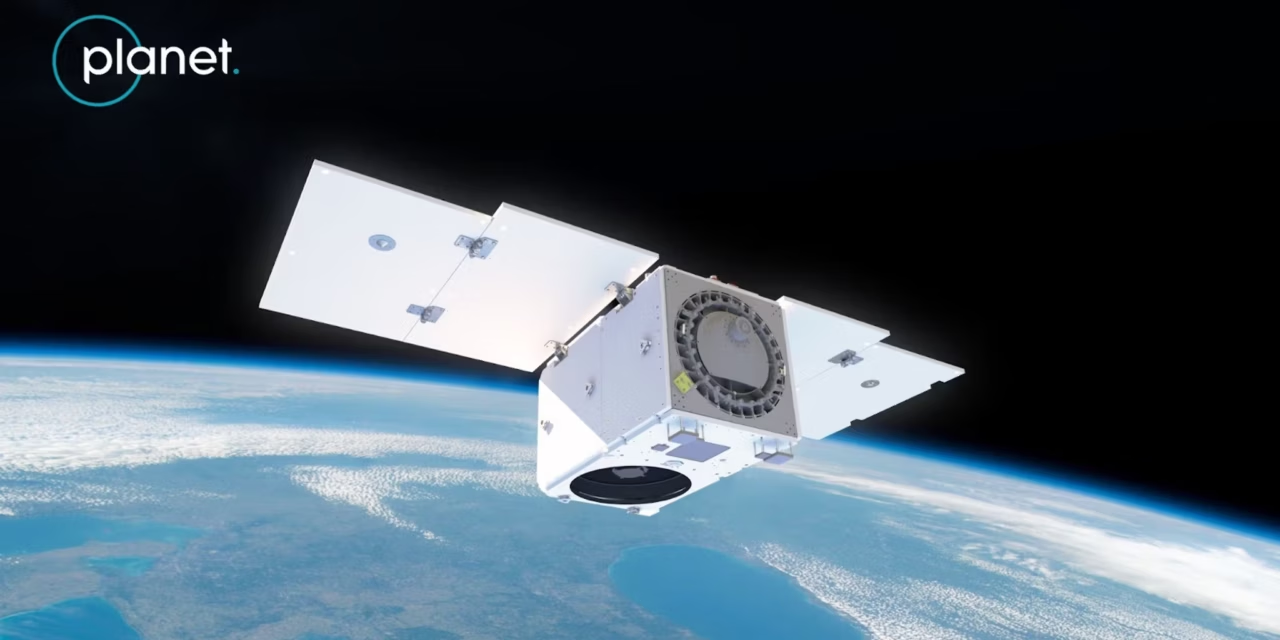
Planet Labs (NYSE: PL) has shed 36.66% of its value year to date, now trading at $12.49, a level that sits well beneath the $31.95 average price of its recent at-the-money equity raise.
That discount arrives despite Planet posting fiscal third-quarter revenue of $116.05 million, a 58.1% increase driven by defense and intelligence contracts that surged more than 90%.
A 98% recurring annual contract value rate gives the business a subscription-like revenue profile that few hardware-heavy space companies can claim.
CEO Will Marshall has articulated a clear directional bet, saying, “Our strategy pairs AI-enabled analytics with sovereign satellite services.”
A sole-source $8 million award from the National Geospatial-Intelligence Agency underscores why governments are willing to pay a premium for what Planet’s archive provides.
Marshall put the competitive moat plainly: “Even if someone had a daily scan suddenly today, they wouldn’t have the archive,” a data advantage that accumulates with every passing orbit.
Planet’s pipeline of satellite services opportunities now exceeds $4 billion, though the company carries $448.3 million in convertible notes and faces government contract termination clauses that represent real balance-sheet risk.
On the launch side, Rocket Lab (NASDAQ: RKLB) reported third-quarter revenue of $267.83 million, up 72.7%, with product revenue nearly doubling to $197.49 million as spacecraft manufacturing carried the quarter.
Twelve Rocket Lab-built satellites reached orbit during the period, including eight Globalstar direct-to-device platforms, and the company’s order book swelled to a record $3.57 billion backlog.
A GAAP loss per share of $0.12 missed consensus, but analysts largely attributed the shortfall to a $27.26 million debt extinguishment charge and $21.34 million in Iridium-related costs rather than underlying weakness.
The margin structure separating the two companies is significant: Rocket Lab operates at a 38.4% non-GAAP gross margin reflecting manufacturing economics, while Planet’s 59% non-GAAP gross margin reflects what data businesses can command at scale.
Rocket Lab’s medium-lift Neutron rocket, priced at a $70 million base per mission, has already filled its first 16 launch slots, with the next available windows not opening until the 2030s.
Neutron’s debut has slipped to 2027 after engineers discovered voids in a propellant tank dome, making every subsequent test update a material event for the company’s financial timeline.
Management has said adjusted EBITDA should turn positive within six months of a successful Neutron first flight, tying profitability directly to hardware that has yet to leave the ground.
Planet currently relies on SpaceX rideshare missions for its launches and has also signed an agreement with Isar Aerospace, meaning it does not depend on Rocket Lab’s Electron rocket for its own constellation replenishment.
Both stocks dropped sharply in recent sessions, with Rocket Lab falling 12.21% and Planet declining 12.47% over the same week, suggesting broader sentiment pressure across the commercial space sector.
The two companies effectively occupy opposite ends of a single commercial space supply chain, with Rocket Lab reducing the cost of building and deploying constellations and Planet converting orbital coverage into recurring government and enterprise revenue.
Together they address what analysts frame as a $40 billion total addressable market, though the direct commercial relationship between the two remains limited to structural complementarity rather than formal partnership.
For Planet, the next near-term milestone is fiscal third-quarter revenue measured against its own guidance range of $101 million to $105 million, a bar complicated by the early Swedish satellite handover that pulled revenue forward into the prior quarter.
