
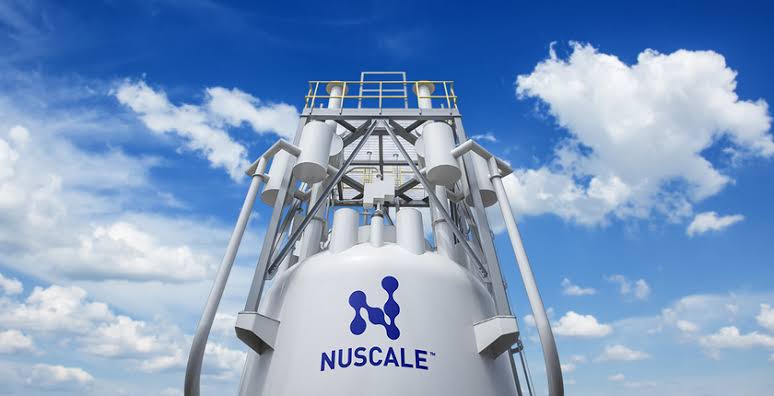
A signed binding agreement between ENTRA1 Energy and the Tennessee Valley Authority could cost NuScale Power (NYSE: SMR) roughly $1.2 billion under the terms of its own milestone contract.
That figure represents the second of three payment tranches NuScale owes its exclusive sales partner, ENTRA1, once ENTRA1 converts a non-binding TVA arrangement into a formal power purchase or offtake agreement.
The milestone structure, established under an August 2025 agreement, breaks NuScale’s obligations into three stages tied to how far ENTRA1 advances each project toward a real commercial order.
The first tranche, worth 15% of total milestone value, triggered when ENTRA1 and TVA signed their non-binding deal covering up to 6 gigawatts, or 72 modules, with NuScale booking roughly $495 million and settling approximately $260 million in cash.
The second tranche equals 35% of the total, which across 72 modules amounts to approximately $1.16 billion, falling due the moment ENTRA1 commits to a binding power agreement.
A third and even larger payment, around $1.65 billion, would follow only once an actual equipment purchase agreement with NuScale is signed.
That payment ladder reframes how investors should read NuScale’s $1.9 billion cash and investments balance recorded at the end of September, because the best commercial milestone on the horizon arrives with an immediate and substantial bill attached.
The company’s cash burn outside of milestone settlements has been relatively contained, with the first nine months of operating outflows totaling $401.4 million, or roughly $142 million after stripping out the milestone cash settlement.
Revenue, however, has nearly disappeared from the income statement, with third-quarter sales coming in at just $281,000, a steep drop from the $8.2 million recorded in the same period a year earlier.
The decline followed the completion of engineering work for Romania’s RoPower project in late 2025, and no comparable contract has since emerged to replace that revenue stream.
Over the full nine-month period, NuScale brought in just $921,000, compared with $29.7 million in the prior-year period, leaving the business almost entirely dependent on its cash reserves while it waits for commercial orders.
The narrowing of the net loss to $45.7 million from $532.6 million a year earlier is largely a bookkeeping artifact, since the prior year included the large milestone charge that did not repeat in the current period.
On the manufacturing side, progress is tangible: Doosan Enerbility signed on October 29 to fabricate the upper reactor coolant system for NuScale’s first commercial module, a contract CEO John Hopkins said “moves our Nuclear Regulatory Commission-approved design into actual build.”
Hopkins offered no timeline for a binding TVA deal during the earnings call, leaving investors without a clearer view of when the second tranche obligation could crystallize.
Rival Oklo (NASDAQ: OKLO) offers a useful contrast, sitting on $3.1 billion in cash while directing $400 million to $500 million of capital spending this year toward plants it will own and operate directly.
NuScale carries no such construction burden, but unlike Oklo, its single largest future cash commitment is entirely contingent on a third party’s commercial decision rather than its own investment plan.
To sustain operations through the waiting period, NuScale has leaned heavily on equity issuance, raising $984.5 million through stock sales in the first nine months alone, pushing Class A shares outstanding up 29% to 410.5 million since December.
Each successive raise spreads any eventual module revenue across a broader shareholder base, making the dilution cost of the waiting strategy increasingly visible.
The full-year financial report, expected in late February, will be the next opportunity to gauge whether ENTRA1 and TVA have moved materially closer to binding commercial terms.
