
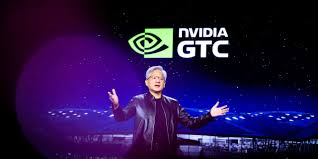
A potential loss of nearly half of Nvidia’s (NASDAQ: NVDA) data center revenue tied to China restrictions may represent the most immediate financial threat the chipmaker now confronts.
Reports have raised concerns about “circular financing” and Nvidia chips ultimately reaching Chinese end-users through indirect channels, complicating the company’s regulatory standing.
At the center of those concerns is Megaspeed, a firm that Nvidia reportedly vouched for despite reports suggesting it may have been financed by Alibaba (NASDAQ: BABA).
Jensen Huang, who co-founded Nvidia and served as its chief executive for 33 years, allegedly was aware of the Alibaba connection when the company extended its support for Megaspeed.
Huang had previously lobbied against export restrictions on the basis that limiting chip sales would only accelerate China’s efforts to develop its own competitive semiconductor alternatives.
Whatever the outcome of those regulatory questions, Nvidia’s shareholders are now contending simultaneously with a leadership transition that the company was entirely unprepared to execute.
Huang and the board had not designated a successor, established a clear chain of command, or built a pipeline of senior executives positioned to eventually assume the chief executive role.
Colette Kress has agreed to step in as interim CEO, and the board has also appointed a chair for the first time in the company’s history, two structural moves that underscore how abruptly the transition has arrived.
Beyond the leadership vacuum, competitive pressure on Nvidia’s core technology advantage is intensifying, with AMD GPUs and custom-designed AI chips emerging as lower-cost alternatives to Nvidia’s dominant hardware stack.
Much of Nvidia’s early competitive moat was built by Huang himself, who developed the CUDA software platform to allow programmers to deploy GPUs across a wide range of tasks and then deliberately seeded CUDA into universities and AI research labs during the formative years of the industry.
That strategic foresight cemented Nvidia’s position at the foundation of the AI boom, but with rivals closing the gap on both hardware and software tooling, sustaining that advantage without its architect will require a clear and credible long-term strategy.
Nvidia remains one of the most sought-after semiconductor suppliers in the global AI buildout, and its underlying business model retains considerable strength even under the current pressure.
Whether a permanent successor can replicate the strategic instincts Huang applied across three decades of leadership is a question investors may be weighing for some time.
