
NatWest Group’s (LSE: NWG) completion of its Evelyn Partners acquisition at the end of June 2026 more than doubled the bank’s assets under management and administration to £131 billion.
That single deal is expected to push group fee income roughly 20% higher, shifting NatWest’s earnings profile toward capital-light, recurring revenue at precisely the moment the Bank of England is signalling rates will remain elevated.
A higher-for-longer rate environment cuts in multiple directions for UK domestic lenders, squeezing some borrowers while simultaneously widening the spreads that banks earn on new lending.
The question for investors is which institutions are best positioned to convert that dynamic into durable returns rather than simply absorbing the credit pressure that tighter money can generate.
For NatWest, the Evelyn Partners deal represents a deliberate strategic hedge, reducing dependence on net interest income by building a larger base of fee-generating wealth management business alongside its core retail and SME lending operations.
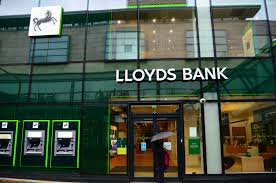
Lloyds Banking Group (LSE: LLOY), with a market capitalisation of approximately £56.1 billion, is addressing the same rate environment through a different lens, anchored in its sweeping Accelerate 2030 growth plan launched across its retail banking, mortgage, credit card, insurance, and motor finance divisions.
The plan targets mid single digit net income growth and high single digit fee income growth, while driving the cost-income ratio below 45% by 2030 through a heavy reliance on artificial intelligence and digital investment programmes.
As analyst consensus noted, “The Accelerate 2030 plan leans heavily on AI and digital programmes to deliver about £2b of gross cost savings from 2027 to 2030 and to support high single digit growth in fee based income.”
Whether Lloyds can translate those cost savings into genuine pricing power will depend significantly on competitive dynamics in the UK mortgage and savings markets, where margins remain under constant pressure.
Secure Trust Bank (LSE: STB), valued at roughly £259.3 million, operates at a very different scale, focusing on unsecured retail finance, property-backed real estate lending, and asset-based commercial finance for small and medium-sized enterprises.
The specialist lender generates approximately £83 million from its Retail Finance segment and £7.1 million from other activities, making its revenue base notably more concentrated than its larger peers.
Management has responded to the rate-sensitive operating environment by pushing through a £25 million cost reduction and technology simplification programme scheduled to run through 2028, with roughly £15 million in annualised savings already secured.
The stated ambition is to compress the cost-income ratio into a 35% to 40% range, with analysts noting that “the £25m cost reduction and technology simplification programme running to 2028, with about £15m of annualised savings already actioned, is intended to lower the cost/income ratio toward the stated 35% to 40% ambition and increase operating margins.”
The central risk for Secure Trust Bank is that cost savings improve the headline margin picture without fully reflecting any deterioration in credit quality within its lending book.
Across all three institutions, the Bank of England’s extended tightening stance is forcing management teams to make structural choices rather than waiting for a rate cycle to do the heavy lifting.
NatWest’s fee income pivot, Lloyds’ digital cost offensive, and Secure Trust Bank’s efficiency drive each reflect a recognition that the era of straightforward margin expansion from rising rates is giving way to a more complex competitive landscape.
For investors screening UK domestic lenders, the divergence in strategy and scale across these three names suggests the sector rewards careful differentiation rather than a broad-brush approach to rate exposure.
