
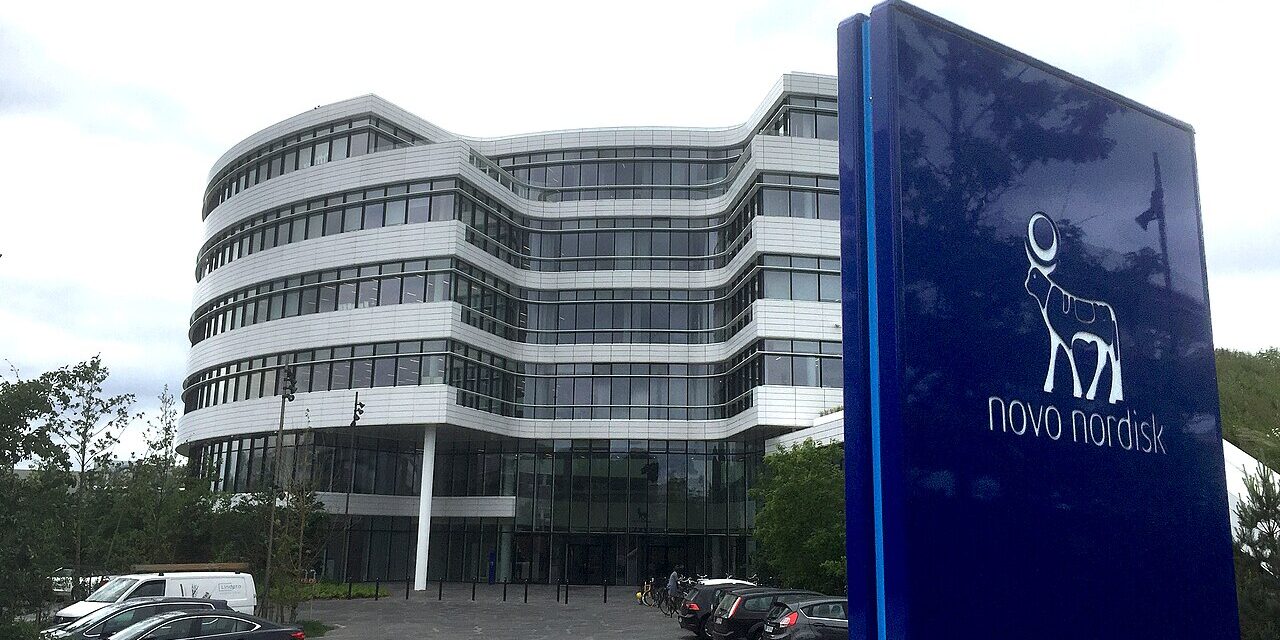
A 16% collapse in quarterly net income is rarely the result investors want alongside a modest revenue gain, yet that is precisely the picture Novo Nordisk (CPSE: NOVO B) delivered in its third-quarter 2026 results.
Net income for the period came in at DKK 16,740m, a steep retreat from the DKK 20,006m recorded in the same quarter a year earlier, even as the Danish pharmaceutical giant grew its top line.
Revenue reached DKK 79,195m in Q3 2026, compared with DKK 74,976m twelve months prior, representing growth of roughly 6% that failed to translate into proportional earnings power.
Basic earnings per share followed the same downward trajectory, printing at DKK 3.8 against DKK 4.5 in Q3 2025, a decline of approximately 16% that sharpens questions about cost pressures within the business.
Despite the profit squeeze, adjusted operating profit actually rose 27% during the quarter, suggesting that the headline earnings decline reflects specific line items rather than a broad operational deterioration.
Management maintained full-year guidance for both adjusted sales growth and adjusted operating profit within a -2% to +2% range, while free cash flow is projected to land between DKK 60b and DKK 70b.
The stock entered the earnings print in an uneven position, having recovered roughly 10% over the prior month while still nursing a loss of approximately 11% over the preceding three-month window.
Novo Nordisk’s longer-term investment case rests heavily on its ambition to diversify beyond GLP-1 treatments, with pipeline milestones during the quarter offering some early evidence that the strategy is advancing.
Frehemgo received a positive CHMP opinion, CagriSema produced supportive Phase III data ahead of a planned early 2027 launch, and Zenagamtide progressed into Phase III trials, complementing 10 ongoing late-stage programs and 7 first-in-human starts recorded so far this year.
“The goal to launch at least five multi-blockbuster drugs by 2030, with a risk adjusted sales ambition of more than DKK 150b over the following decade, gives Novo Nordisk multiple shots at new revenue streams that could lessen reliance on GLP 1 pricing and support longer term earnings resilience.”
That ambition carries its own risks, particularly as the company compresses development timelines and accelerates scale-up efforts with the assistance of artificial intelligence tools.
“Compressed development timelines and faster scale up ambitions (aided by AI) increase the chance of late-stage attrition or post-launch safety issues, which could produce lumpier R&D write-offs and more volatile earnings.”
Execution risk is not entirely theoretical, with the ZEUS program and ongoing U.S. pricing dynamics both cited as areas where outcomes could diverge from current projections.
The company recorded one product launch in Q3 2026, a shift from the prior-year period which saw no launches but did include one regulatory approval, marking a transition from pipeline building toward commercial deployment.
With GLP-1 products still anchoring current revenue performance, the coming quarters will test whether the broader portfolio can meaningfully reduce that concentration and support more stable profit margins over time.
