
The critical investor question surrounding UK domestic banking stocks is no longer simply whether rates rise, but whether fee-based revenue can cushion what tightening does to lending margins.
NatWest Group (LSE: NWG), with a market capitalization of £48.3 billion, made a decisive move in that direction when it closed its Evelyn Partners acquisition at the end of June 2026.
That deal more than doubled NatWest’s assets under management and administration to £131 billion and is projected to lift group fee income by roughly 20%.
As one assessment put it, the transaction “sets up a larger mix of capital light, recurring revenue that could support earnings resilience relative to pure interest income.”
NatWest draws its operating income primarily from Commercial and Institutional banking at £9.1 billion, with Retail Banking contributing £6.3 billion and Private Banking and Wealth Management adding £1.3 billion.
The unanswered question for investors is whether that growing fee engine can genuinely offset any deterioration in UK lending spreads as the Bank of England pushes borrowing costs higher.
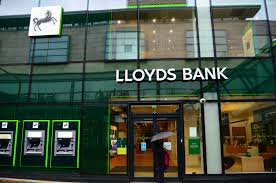
Lloyds Banking Group (LSE: LLOY), carrying a market cap of £55.5 billion, is widely regarded as the most direct expression of domestic UK rate sensitivity among publicly listed British lenders.
Its entire loan book and deposit base are anchored in the British economy, meaning a Bank of England rate cycle feeds through to Lloyds’ earnings with unusual directness compared with more internationally diversified peers.
Management’s response is a structural overhaul branded Accelerate 2030, described in detail in a recent assessment: “Lloyds Banking Group is moving into a new four year Accelerate 2030 plan that targets mid single digit net income growth, high single digit fee income growth and a cost income ratio below 45% by 2030.”
The plan relies heavily on artificial intelligence and digital investment to generate approximately £2 billion in gross cost savings between 2027 and 2030, while simultaneously pushing fee-based revenue higher.
Barclays (LSE: BARC) presents a structurally different risk profile, with its £57.8 billion market cap underpinned by an investment bank generating £13.5 billion in revenue alongside UK banking operations worth roughly £11.8 billion.
That global capital markets arm insulates Barclays from purely domestic rate dynamics but introduces a different vulnerability, captured in this assessment: “The first concern is Barclays’ significant exposure to investment banking and trading income. These businesses are inherently cyclical, and profits can fluctuate considerably depending on market conditions.”
A rate environment that simultaneously pressures UK funding costs while damping capital markets activity could therefore hit Barclays from two directions at once.
The Bank of England’s anticipated rate increase sits at the center of all three narratives, reshaping what borrowers pay, what depositors earn, and ultimately how these institutions price risk across their balance sheets.
Beyond these three names, a broader screening exercise identified eleven additional UK domestic banks and lenders with meaningful exposure to the same rate cycle, suggesting the investment theme extends well beyond the headline institutions.
For all three banks, the decisive variable is the same: how the interplay between funding costs, credit quality, and fee income growth ultimately resolves as monetary policy tightens further into the domestic economy.
