
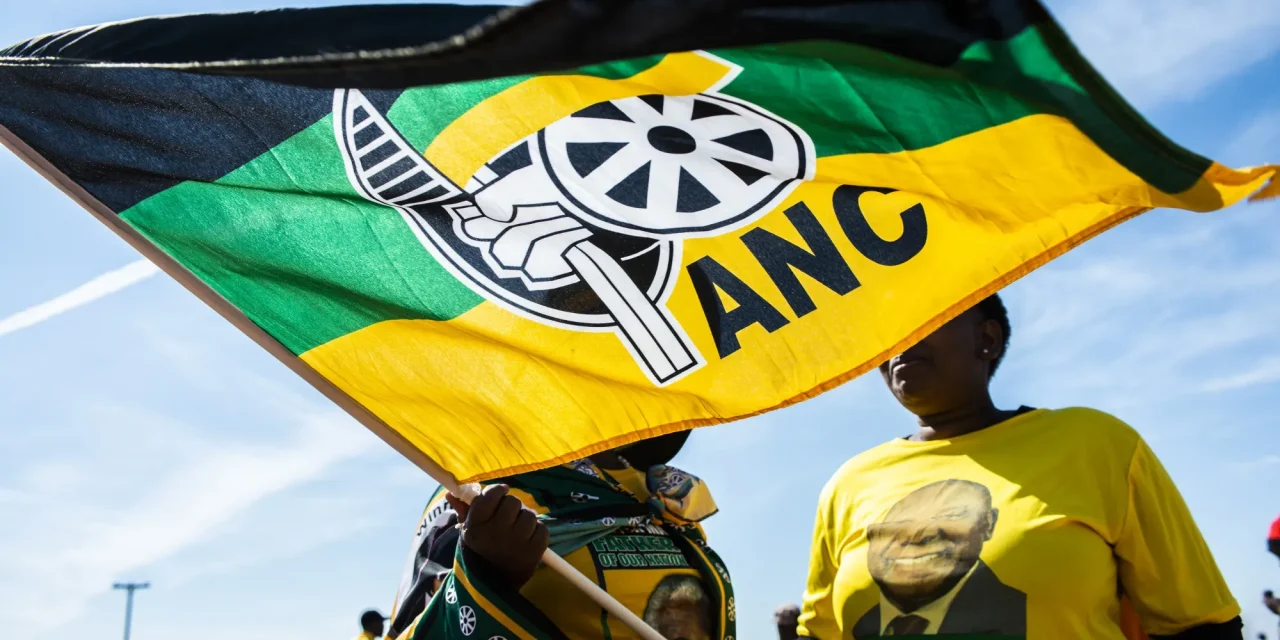
A global research firm’s forecast that the African National Congress could capture as little as 30% support in South Africa’s municipal elections marks a dramatic potential low point for a party that once dominated local government.
Ipsos arrived at that figure after tracking a decade of steady erosion: the ANC pulled 53.91% of the total vote in 2016, holding outright majorities in 161 of 213 councils, before slipping to 45.59% in 2021 with majorities in just 122 municipalities.
The vote will determine who controls South Africa’s largest cities, with 136,760 candidates from dozens of parties competing for council seats across the country.
In Johannesburg alone, 75 parties are contesting, with 70 in Tshwane and 69 in eThekwini, reflecting a deeply fractured political landscape where every percentage point carries real consequence.
Sanusha Naidu, an analyst at the Institute for Global Dialogue, says the ANC has failed to keep pace with an electorate increasingly shaped by Millennial and Gen Z voters, who now make up the majority of the voting-age population.
Crumbling water infrastructure has emerged as perhaps the sharpest grievance fueling that generational disillusionment, with neighborhoods across Johannesburg enduring weeks of cuts and rationing as aging pipes strain under demand.
In Tshwane, which encompasses Pretoria, South Africa’s administrative capital, a recent treatment failure left more than 400 residents sick, illustrating how severely the crisis has spread beyond the country’s commercial center.
Ferrial Adam, executive director of water rights organization WaterCAN, offered a stark national assessment, saying “almost 70% of our wastewater treatment works are in a critical state and spewing sewage into rivers and streams across the country.”
That deterioration is visible at street level in places like Tembisa, a township in the Ekurhuleni municipality outside Johannesburg, where 22-year-old Lindokuhle Mbandazayo describes sewage in the streets and constant power outages as everyday realities she expects elected councilors to fix.
Mbandazayo, voting in her second election, said she was actively considering abandoning the party she previously supported, stating simply: “We need change.”
Her neighbor Vatiswa Zoya reached the opposite conclusion, deciding to stay home entirely and asking: “What is the point? We will still sleep hungry.”
Naidu described both reactions as expressions of the same underlying pressure, arguing that “embedded frustration” is ultimately what drives voters either toward the ballot box or away from it.
Immigration has also cut through the campaign, with parties including Action SA, the MK Party, and the Patriotic Alliance leaning into anti-immigration sentiment that has fueled protests across the country since October.
Aldu Cornelissen, co-founder of digital analysis firm Murmur Intelligence, said Action SA stood to gain the most from that issue but cautioned that the ceiling was limited, estimating the sentiment would translate to roughly 6% to 8% of the vote.
The election has also been shadowed by a surge in disinformation, with the Independent Electoral Commission investigating more than 700 complaints, including a widely circulated false claim that the ANC intended to use asylum seekers as voters.
William Bird, director of media monitoring agency Moxii Africa, dismissed the election-rigging narrative directly, saying “in South Africa’s case, there’s no evidence to support that at all” and describing the IEC as “one of the best electoral-management bodies in the world.”
Turnout may ultimately decide which parties benefit most, given that half of all council seats are allocated through a proportional representation ballot that rewards parties with higher raw vote totals.
Municipal turnout fell sharply between 2016, when it reached 57.95%, and 2021, when it dropped to 45.87%, well below the 58.64% recorded in last year’s national elections.
Naidu warned that low participation directly shrinks a party’s proportional representation haul, making ground-level mobilization as strategically important as any policy platform heading into election day.
