
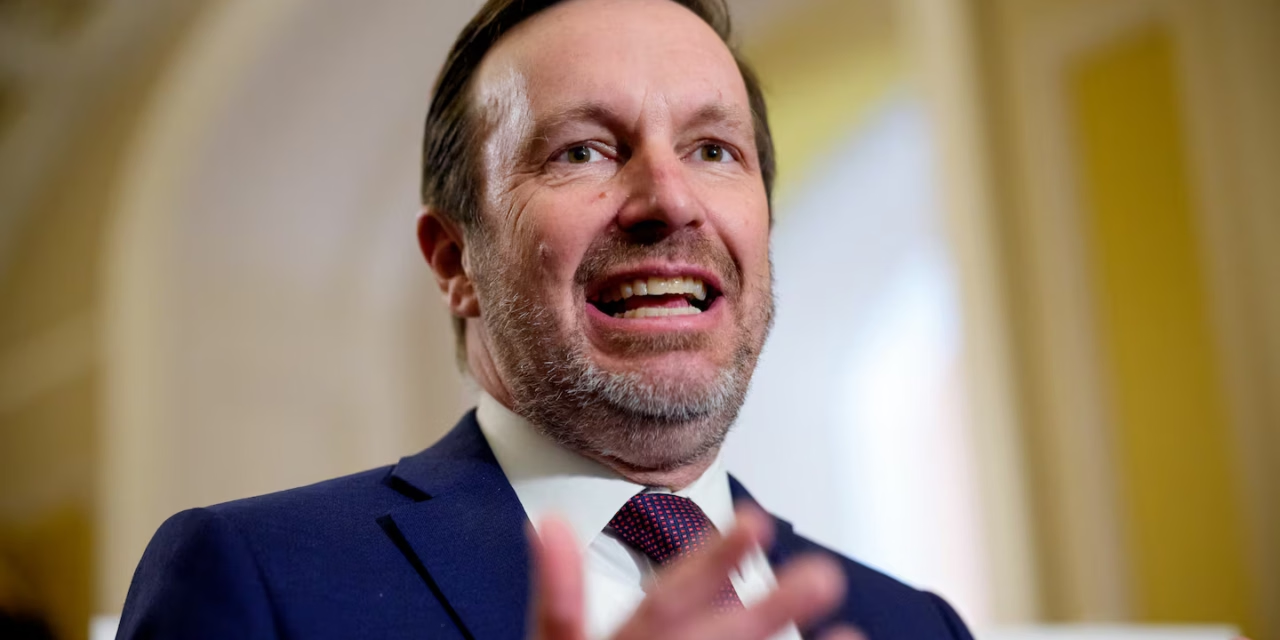
A medical emergency has sidelined one of the Democratic Party’s most closely watched figures at a moment of intense political activity heading into the midterm elections.
Sen. Chris Murphy of Connecticut, a potential 2028 presidential contender, was rushed to a local hospital Saturday before being transferred to Johns Hopkins for further monitoring and treatment.
The 53-year-old senator first noticed something was wrong during his son’s hockey game Saturday afternoon, when he began experiencing numbness in his arm.
His chief of staff, Allison Herwitt, confirmed the diagnosis in a statement released Sunday, providing the first official account of what had occurred.
“He was taken to a local hospital, where it was discovered he had experienced a stroke. He was transferred to Johns Hopkins for further monitoring and is responding well to treatment,” Herwitt said.
Herwitt’s statement offered an optimistic outlook on the senator’s condition, with medical staff reporting positive signs in the hours following the incident.
“The doctors are encouraged by his progress, he is awake and alert, and we are optimistic he will make a full recovery,” she added.
Murphy had been deeply embedded in Democratic campaign efforts in recent weeks, traveling the country to help his party recapture a Senate majority in the midterm elections.
A Sunday appearance in New Hampshire, where he had been scheduled to stump for Democratic candidates, was among the engagements immediately affected by his hospitalization.
Murphy, who was born on August 3, 1973, has represented Connecticut in the Senate since first winning election in 2013, building a national profile over more than a decade in office.
His name has circulated prominently in discussions about the 2028 Democratic presidential primary field, making his current health status a matter of wider political significance beyond Connecticut.
The stroke arrives at a particularly demanding stretch of the political calendar, with Murphy having devoted significant energy to Senate races across multiple states in the weeks prior.
While the medical prognosis relayed by his office is encouraging, the episode raises questions about the physical toll of sustained campaign travel on elected officials operating at the national level.
No timeline for his return to Senate duties or the campaign trail has been publicly announced by his office.
