
AST SpaceMobile (NASDAQ: ASTS) shares, already down 42% year-to-date, slipped another 1% in overnight trading Tuesday as regulators handed Amazon a major satellite expansion victory.
The Federal Communications Commission’s Space Bureau gave formal clearance to Amazon’s $11.5 billion acquisition of Globalstar, a transaction that positions the tech giant as a direct rival in the satellite-to-phone market.
Central to the deal is the transfer of 25 megahertz of internationally harmonized mobile-satellite spectrum, which Amazon lacked and could not have built a competitive direct-to-device system without.
FCC Chairman Brendan Carr framed the approval as a win for consumers and connectivity, posting that “This will enhance Amazon’s offering of direct-to-device (D2D) services, which will mean even more competition, coverage, and capacity.”
The acquisition pairs Amazon Leo’s satellite construction capabilities, launch arrangements, and ground infrastructure with Globalstar’s established network assets, creating a vertically integrated competitor almost overnight.
Amazon plans to roll out its next-generation satellite-to-device system starting in 2028, with the Globalstar deal expected to formally close in 2027, pending conditions that include replacement-satellite milestones.
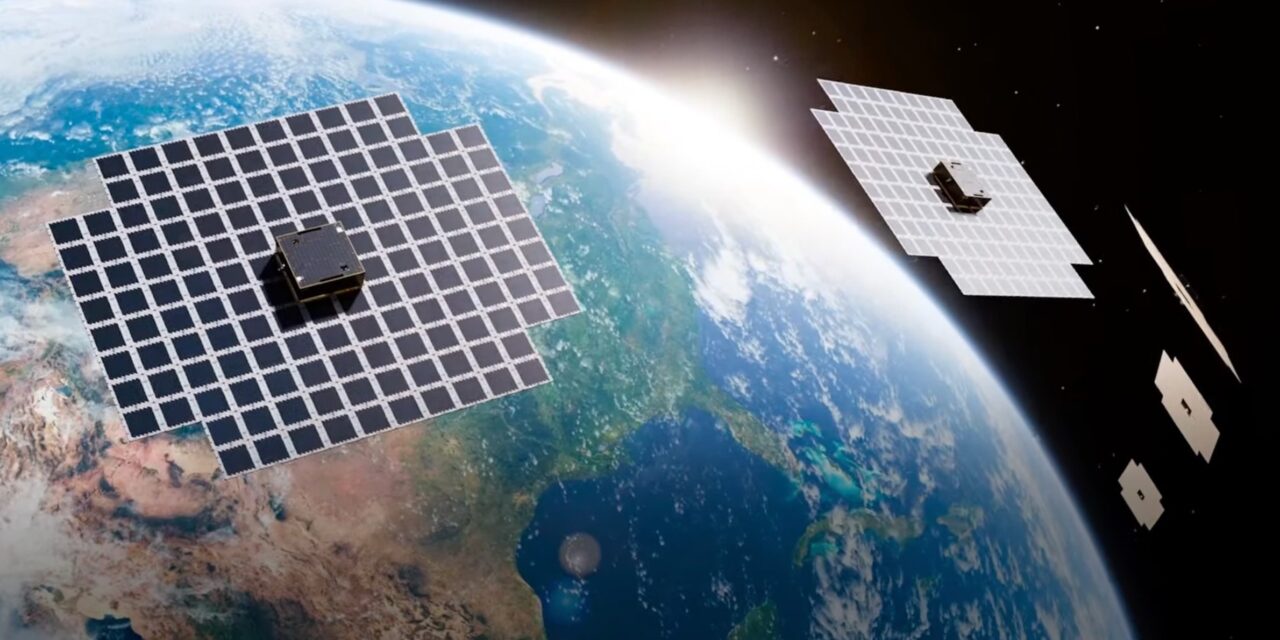
The regulatory approval carries direct implications for AST SpaceMobile, which already holds FCC authorization to deploy and operate as many as 248 satellites, connecting directly to standard smartphones through 700 MHz and 800 MHz spectrum.
AST’s commercial agreements with AT&T, running through 2030, alongside partnerships with Verizon and FirstNet, have formed the backbone of its competitive position, but advocacy groups cited in the FCC’s approval order argue Amazon could now challenge that standing.
Public Knowledge and New America’s Open Technology Institute argued in filings that pairing Amazon’s resources with Globalstar’s assets creates a stronger competitor to both SpaceX’s T-Mobile partnership and AST’s carrier alliances.
Globalstar also brings Amazon an existing relationship with Apple, having long supported emergency messaging and location sharing on iPhones and Apple Watches, with both companies agreeing to maintain and expand those features through Amazon Leo.
Carr underscored the broader ambition behind the deal, stating that “By approving this deal, the FCC has empowered Amazon Leo to deliver fast, next-gen satellite broadband services, increase competition, and help communities stay connected all across the country.”
A Thursday FCC meeting could further reshape the competitive landscape, with proposals on the table to open 500 megahertz of additional spectrum for satellite-to-device services, including a potential spectrum auction.
ASTS gained 6% during Tuesday’s regular session, closing at $41.96, but the overnight pullback of more than 1% reflected unease about an increasingly crowded satellite market.
Retail sentiment on Stocktwits turned bearish for ASTS this week, reversing bullish readings from just seven days earlier, with message volume described as low.
Divided views among retail traders were evident, with one user posting “$ASTS im buying all the dips,” while another wrote “$ASTS The CEO needs to step down. There is a persistent failure to execute on strategic guidance, and the company’s recent earnings results have been consistently disappointing. This level of performance is unacceptable.”
