
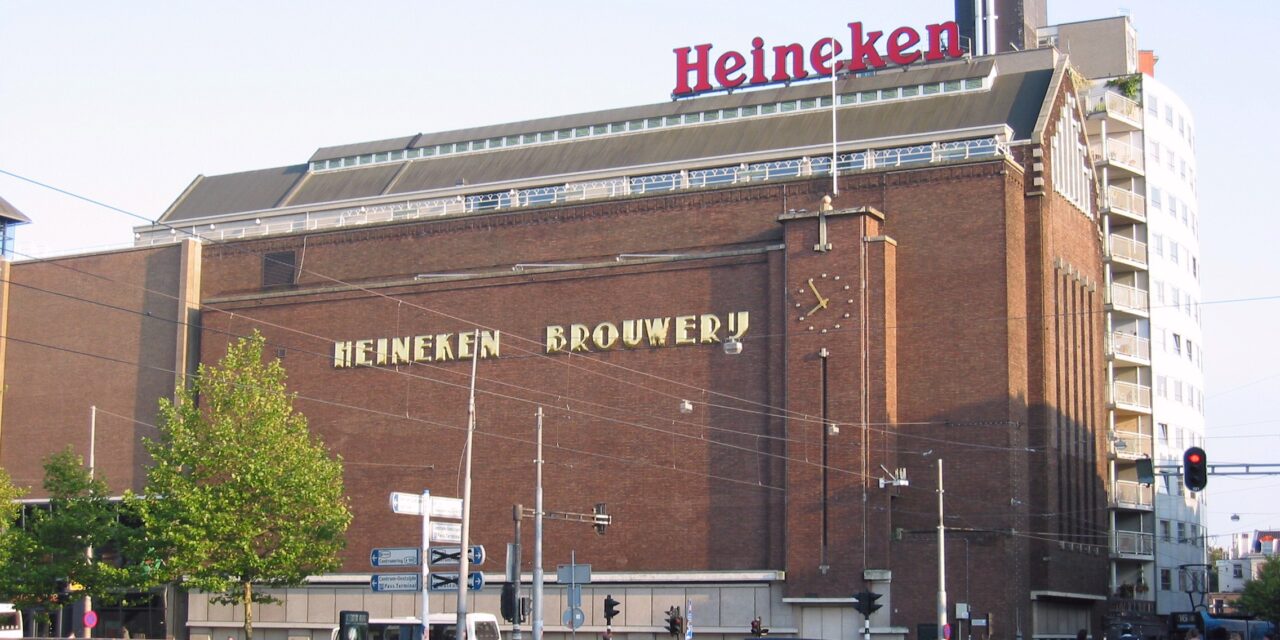
Heineken, the world’s second-largest beer maker, has privately told British pubs and bars to adapt to the boom in GLP-1 weight-loss drugs “or risk losing customers and revenue.”
Reuters reviewed the presentation, which Heineken delivered to its UK hospitality customers in October 2026, marking a rare on-the-record admission from a major alcohol company that the medicines pose a genuine threat to drinking habits.
The warning carries added weight given that Heineken owns more than 2,000 pubs across Britain, making it both a brewer and a landlord with direct exposure to any shift in consumer behavior.
Heineken’s US-traded ADR fell 1.30% to $43.31 on the day the report surfaced, while Anheuser-Busch InBev (NYSE: BUD) lost 1.44% to $84.26, Molson Coors (NYSE: TAP) fell 1.10% to $41.21, and Constellation Brands (NYSE: STZ) slipped 0.22% to $138.68.
The presentation specifically names Novo Nordisk’s Ozempic and Wegovy, warning that the drugs “could reduce the desire to drink alcohol” and that “traditional multi-pint drinking occasions could become harder to sustain.”
Heineken advises venues to promote half-pints and low- and no-alcohol drinks, and to pair drinks with small plates of food as a way of retaining customers who are consuming less.
A Heineken spokesperson acknowledged, “We see some changes in consumption behavior among (GLP-1) users,” though the company stopped short of saying the drugs have directly reduced its beer sales.
Heineken’s own financial results have so far held firm, with total volume rising 1.6%, consolidated volume up 0.4%, and operating profit growing 6.7% in the first half of 2026, alongside a maintained full-year outlook for operating profit growth of 2% to 6%.
The multi-pint round is identified as the most exposed format, since a drinker who feels full typically stops well before the third or fourth pint, compressing revenue per visit even if foot traffic holds steady.
Heineken UK says beer generated nearly £14 billion in British pubs, bars, and restaurants in the year to February 2026, yet less than £300 million of that total came from no- and low-alcohol beer, illustrating just how much revenue depends on full-strength, multi-pint consumption.
US data reinforces the concern, with Circana finding that after two years on GLP-1 medication, households with a user spent about 7% less per month on alcohol and 13.5% less on beer.
JPMorgan estimates that approximately 10 million Americans were taking drugs like Ozempic and Wegovy in 2025, a figure that represents a substantial and growing pool of consumers drinking less.
AB InBev CEO Michel Doukeris had argued in 2023 that “two years down the road and that conversation is gone,” yet his company’s own annual report, released February 12, 2026, named Ozempic, Wegovy, and Mounjaro as risks to consumer behavior.
AB InBev’s 2025 volumes fell 2.3%, though its shares are up 33.51% year to date, with investors rewarding a premium product mix that includes 27% growth in no-alcohol revenue in the first quarter.
Eli Lilly (NYSE: LLY) is up 56.08% over the past year and is valued at $1.14 trillion, while Novo Nordisk (NYSE: NVO), worth $172.38 billion, is down 19.58% year to date and plans to cut Wegovy’s list price by roughly 50% on January 1, 2027.
Access to GLP-1 drugs is broadening rapidly, with Lilly now offering a pill version and Medicare covering obesity treatment at a $50 monthly copay, factors that could accelerate adoption and apply further pressure on alcohol volumes.
Heineken’s third-quarter trading update on October 28 represents the first near-term test for new volume data, followed by AB InBev’s results on October 29, where another decline in North America volumes after a 3.2% drop in the first quarter would support the bear case for the sector.
