
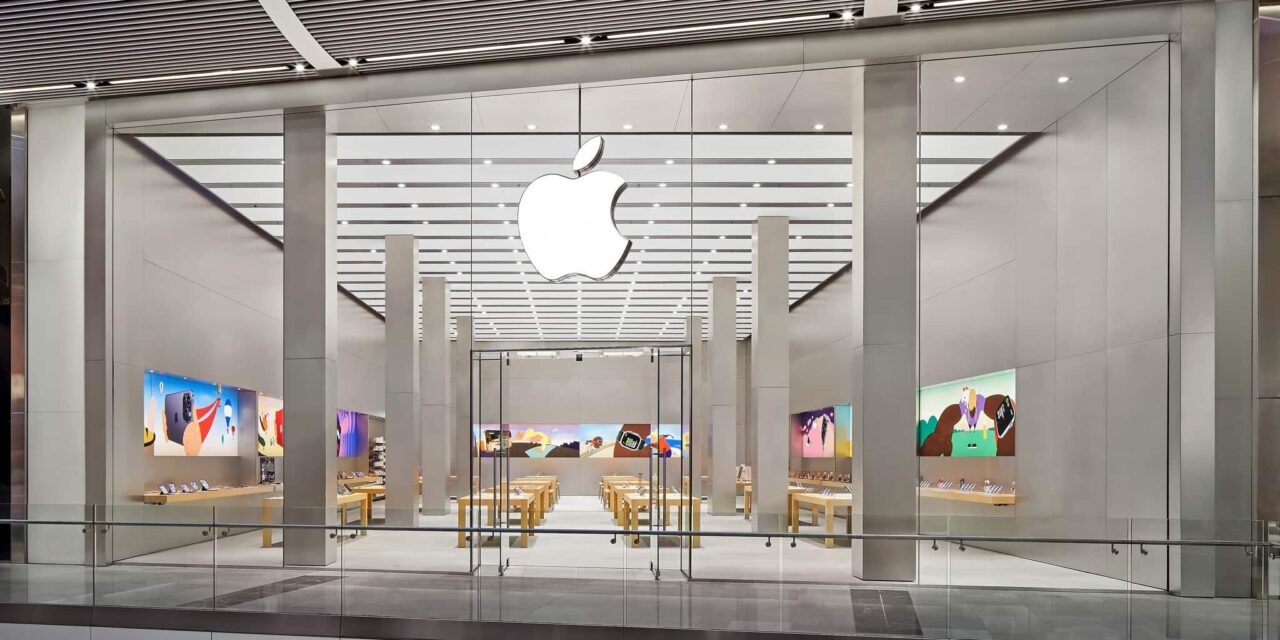
Apple (NASDAQ: AAPL) has surpassed a $5 trillion market valuation, making it the second largest company by market cap, trailing only Nvidia (NASDAQ: NVDA).
The milestone comes just weeks after Apple faced widespread criticism for lagging behind Big Tech rivals in artificial intelligence infrastructure spending.
While competitors poured capital into AI development, Apple held back, avoiding the kind of aggressive balance sheet leverage that has characterized the broader industry push.
That restraint, once seen as a weakness, now appears to be a key driver of investor confidence, with Apple trading at a premium to many of its hyperscaler peers.
Adam Johnson, portfolio manager at Bullseye American Ingenuity Fund, spoke on Yahoo Finance’s 8:30 panel alongside hosts Julie Hyman and Jake Conley to explain why he views Apple as a must-own holding.
“It’s what I call core ingenuity,” Johnson said, placing Apple alongside other names he considers essential, including Oracle (NYSE: ORCL), Palo Alto Networks, and Salesforce (NYSE: CRM).
Johnson was candid about his earlier skepticism toward CEO Tim Cook, admitting he was not a fan for much of Cook’s tenure due to concerns about a lack of new product introductions.
However, Johnson gave Cook significant credit for building Apple’s services business, which he estimates now accounts for roughly a third of the company’s total revenues.
“He figured out a way to monetize all the sort of internal operations of the thing, the hardware we already had, and for that I give him tremendous credit,” Johnson said.
The services business grew steadily over time, with Johnson noting that from a consumer perspective, the recurring charges are small enough that users simply accept them as conveniences rather than significant costs.
Cook’s political relationships were also highlighted as a continued strength, with panelists describing him as a “Washington whisperer” capable of navigating relationships with the Trump administration and managing Apple’s complex ties to China.
The arrival of John Turnis, who comes from a hardware background, has raised hopes that Apple may now complement its services strength with a renewed push on new product development.
Apple’s rise to $5 trillion reflects how disciplined capital allocation and a quietly expanding revenue base can outperform strategies centered on heavy spending, at least in the eyes of the market.
