
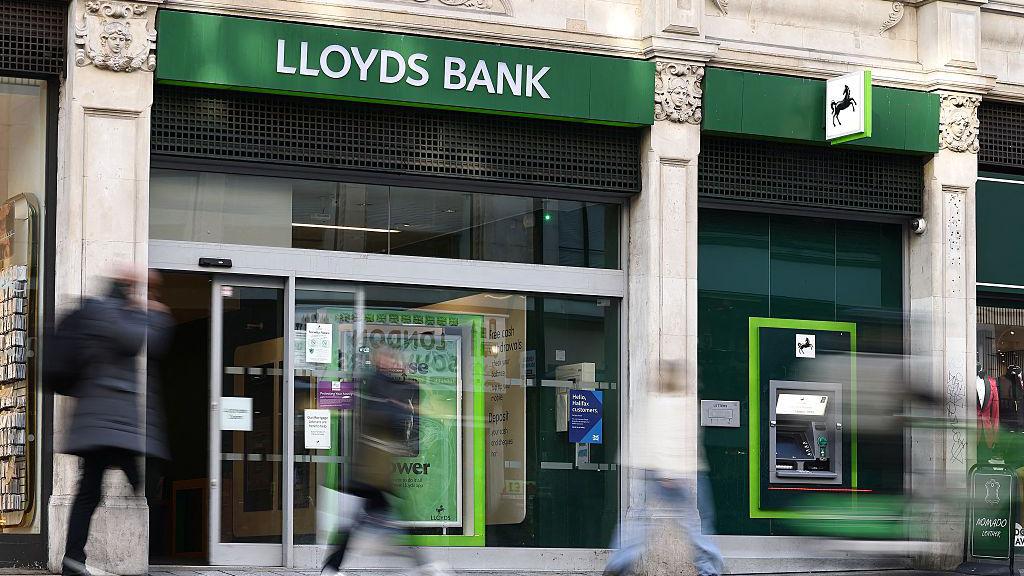
Lloyds Banking Group (LSE: LLOY) handed shareholders a total return of 26.1%, including dividends, over the past year, confounding the more pessimistic voices in the market.
Shares were priced at £0.83 at the start of the period, with investors forced to choose between two sharply contrasting outlooks for the UK banking giant.
The bullish case centered on digital transformation and AI investment driving meaningful cost reductions and lifting overall earnings quality across the business.
That optimistic scenario pointed to a fair value of £0.89, assuming improved margins and a forward price-to-earnings multiple of 11.1x under the stated conditions.
Bears, meanwhile, focused on the bank’s heavy concentration in UK mortgages and the mounting burden of technology and compliance expenditure as the primary threats to profitability.
The pessimistic fair value estimate sat at £0.53, built on an assumption that profit margins could soften to roughly 22.2% even with revenue growth holding at 8.0%.
Lloyds rolled out its Accelerate 2030 plan, pairing approximately £2 billion of targeted cost cuts with significant AI and digital investment, a direction that broadly supported the optimistic narrative.
However, Q2 2026 results showed revenue and profit both rising while net margin remained flat at 27.8%, leaving the central claim of technology-driven margin expansion unproven.
Lloyds now trades at £1.02, above the selected narrative’s fair value estimate, meaning buyers at the current price are effectively paying for successful execution of the existing strategy.
A two-hour outage affecting Lloyds, Halifax and Bank of Scotland mobile apps in August 2026, following an earlier disruption in the same quarter, raised fresh concerns about operational resilience and the potential for higher ongoing IT remediation costs.
The key risk for current investors is not fintech competition but the sustained drag of IT, regulatory and hedge management costs on net margins as the bank pushes through its transformation program.
The hinge question for any bank undergoing a similar digital overhaul is whether technology investment ultimately widens margins or simply transfers spending from one cost line to another.
