
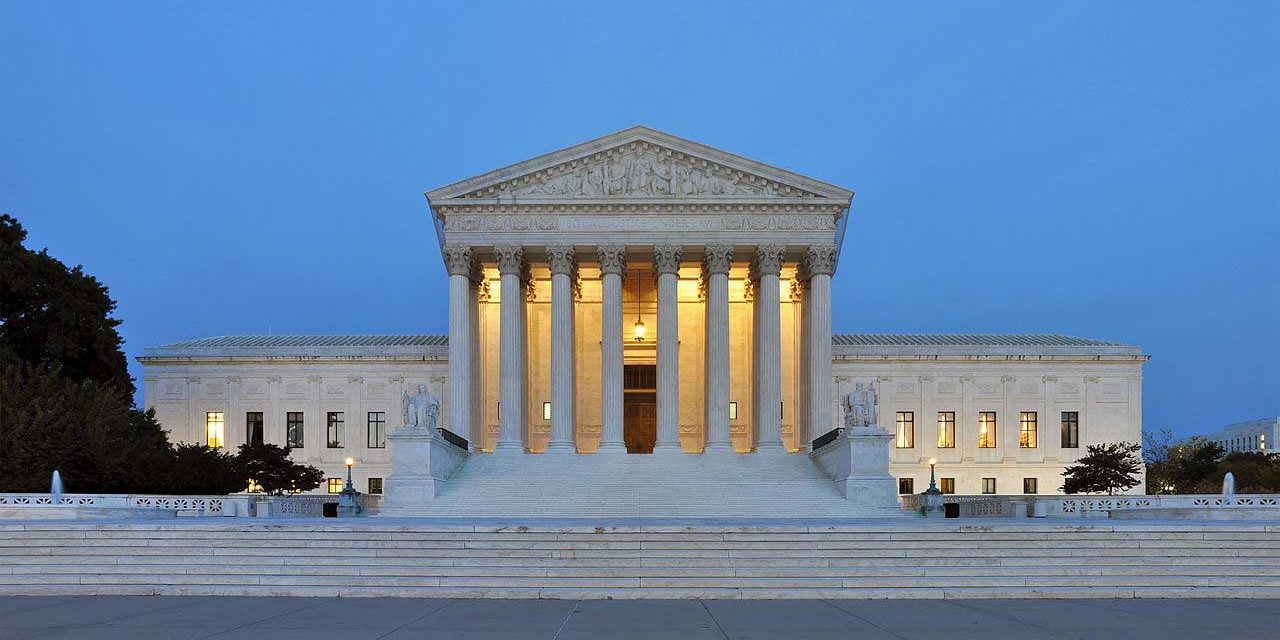
Three Democratic-controlled cities have filed an emergency application with the Supreme Court, seeking to revive a Biden-era immigration regulation dismantled through a deal between Texas and the Trump administration.
Baltimore, Columbus, Ohio, and New Haven, Connecticut, along with legal aid group Centro Legal de la Raza, accuse Texas and the administration of “egregious collusion” in orchestrating the regulation’s elimination.
The cities and Centro Legal de la Raza are represented by Democracy Forward Foundation in the emergency Supreme Court application.
Texas Attorney General Ken Paxton filed the lawsuit in June 2026, and the Trump administration conceded the regulation was unlawful on the very same day the suit was filed.
Judge Reed O’Connor of the U.S. District Court for the Northern District of Texas swiftly entered a judgment eliminating the regulation on a nationwide basis.
The ruling also permanently restricted the federal government’s ability to adopt similar immigration protections in the future, a sweeping outcome the cities argue was orchestrated rather than litigated.
“The government did not merely leverage a convenient loss to undo agency action, but rather, announced in advance that it would not defend a disfavored regulation and then colluded with the challenger from the moment that suit was filed,” the cities wrote in their application.
The regulation at issue governs immigration court procedures, specifically the authority of immigration judges to administratively close certain cases, a tool the cities argue shields crime victims, witnesses, and U visa holders from deportation.
The cities sought to intervene in the litigation to defend the regulation, but both the district court and the appellate court denied their motions, leaving the Supreme Court as their final option.
“The adversity requirement is not a formality,” the cities wrote in their emergency appeal, arguing that the courts cannot simply rubber-stamp settlements designed to circumvent regulatory protections.
The emergency application goes to Justice Samuel Alito, who handles matters arising from Texas by default in his capacity overseeing that circuit.
Justice Alito has the authority to act on the application independently or refer the matter to the full Supreme Court for a vote among all nine justices.
The case has drawn significant attention as an example of what critics describe as coordinated use of litigation to dismantle federal regulations without genuine legal adversity between the parties involved.
