
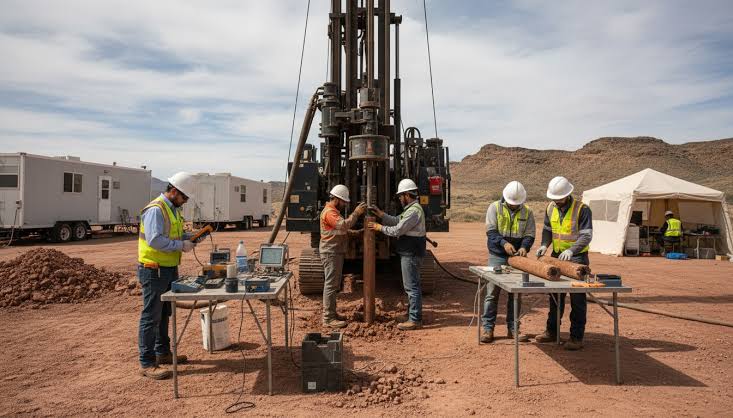
Natural hydrogen, sometimes called white hydrogen, is drawing fresh attention as the green hydrogen industry continues to struggle with persistently high costs and weak demand.
Green hydrogen development has been plagued by widespread project delays and outright cancellations, undermining confidence in its role as a cornerstone of the clean energy transition.
White hydrogen occurs naturally within the Earth’s crust, forming through geological processes rather than energy-intensive industrial production methods.
Because it is naturally occurring, white hydrogen carries a significantly lower carbon footprint than conventional hydrogen production, making it an attractive option for hard-to-decarbonize industries.
Industries such as steelmaking, heavy transport, and chemicals have long been cited as sectors where electrification alone is unlikely to deliver the deep emissions cuts required under global climate targets.
Green hydrogen was positioned as the solution for these sectors, but its economics have proven far more challenging than early proponents anticipated, with production costs remaining stubbornly elevated.
White hydrogen, by contrast, would theoretically require far less energy to extract than green hydrogen requires to produce, potentially offering a more cost-competitive pathway to low-carbon industrial fuel.
Researchers have already identified promising geological systems where natural hydrogen may be accumulating in recoverable quantities, raising hopes that commercial extraction could eventually become feasible.
However, the central challenge facing the white hydrogen industry is locating deposits that are sufficiently large, concentrated, and economically recoverable to justify the investment required for full-scale extraction operations.
The geological conditions required for viable white hydrogen accumulation are not yet fully understood, meaning exploration remains at an early and uncertain stage compared to more mature energy industries.
Despite these obstacles, the repeated failures and retreats within the green hydrogen sector have intensified interest among researchers and investors looking for alternative low-carbon hydrogen sources.
If white hydrogen exploration can demonstrate commercially viable deposits, it could reshape the hydrogen economy in ways that green hydrogen, despite years of investment and policy support, has so far failed to deliver.
The coming years will likely determine whether white hydrogen represents a genuine breakthrough or remains a promising but elusive geological curiosity that cannot be scaled to meet industrial demand.
