
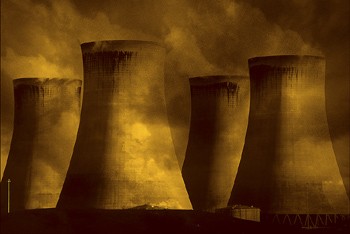
Oracle (NYSE: ORCL) has agreed to subscribe to between 10% and 20% of the output from Wisconsin’s Point Beach Nuclear Plant, securing 125 to 250 megawatts of dedicated power for a major AI campus.
The energy is earmarked for the Lighthouse Campus, a $15 billion AI data center project in Port Washington, Wisconsin, co-developed by Oracle, OpenAI, and Vantage Data Centers.
The facility is part of the broader Stargate initiative and is designed to house close to 1 gigawatt of AI capacity within a 1.3 gigawatt total electrical footprint, with completion targeted for 2028.
Point Beach, Wisconsin’s only operating nuclear plant, has seen its cost per megawatt-hour climb from $45.94 in 2016 to $75.51 in 2026, with projections placing that figure at $122.45 by 2033.
Oracle has committed to fully funding the energy costs for its portion of the project, but the arrangement is a primary driver of a proposed $176 million electric rate hike for We Energies customers in 2027.
That Oracle deal accounts for roughly 20% of the proposed rate increase, making it a central point of contention before the Wisconsin Public Service Commission.
We Energies projects that the Oracle subscription will save customers approximately $300 million in fuel costs between 2027 and 2033 by shifting that burden to the tech company, though the immediate impact on ratepayers remains disputed.
The Oracle-We Energies agreement is part of a much broader industry sprint toward nuclear energy, with Big Tech having contracted over 10 gigawatts of new nuclear capacity across the United States over the past year.
Microsoft has entered a 20-year power purchase agreement for the 835-megawatt restart of Three Mile Island, a $1.6 billion investment expected to come online in 2027, while Amazon has acquired a nuclear-adjacent campus in Pennsylvania for over $650 million.
Amazon has also invested $500 million in X-energy small modular reactors, and Google has ordered 500 megawatts of capacity from Kairos Power with its first reactor targeted for 2030.
Data center power demand reached 29.6 gigawatts by late 2025, equivalent to the peak demand of New York State, and the International Energy Agency projects that figure will rise by 130% by 2030.
Despite the surge in high-profile contracts, nuclear output in the United States remained largely flat between 2020 and 2025, and there are currently no small modular reactors under construction in the country.
Wisconsin’s peak power demand is forecast to rise by 40% over the next five years, driven largely by data center construction, creating direct friction between hyperscaler ambitions and the interests of local ratepayers.
The structural dynamic is now clear: as AI models scale in complexity and size, the demand for reliable baseload power scales alongside them, and GPUs alone cannot solve an energy supply problem.
Oracle’s subscription model is described as a first-of-its-kind arrangement in Wisconsin, and it illustrates a broader transition in the AI industry from rapid hardware acquisition toward what is effectively desperate energy acquisition.
For investors and operators, the ability to secure long-term power supply is becoming as strategically critical as the ability to procure advanced semiconductors or data center real estate.
The Lighthouse Campus deal makes plain that the future of AI infrastructure is not purely a cloud-native story but one increasingly tethered to the physical limits of aging national power grids.
