
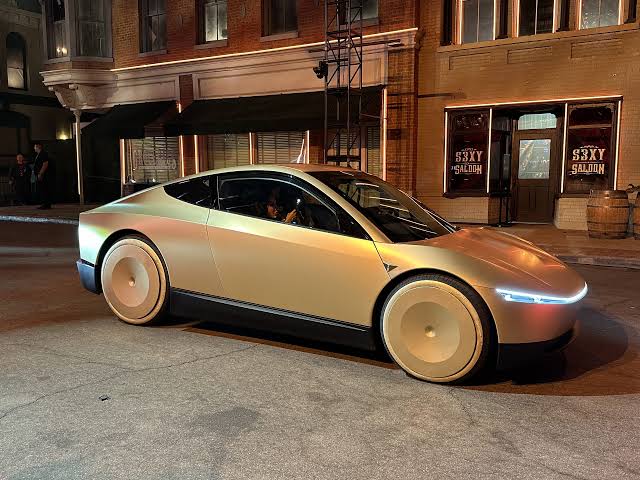
Tesla Inc. (NASDAQ: TSLA) could be approaching its most consequential year yet, with prominent tech strategist Dan Ives identifying Robotaxis, the Cybercab, and Optimus humanoid robots as the central pillars of the company’s next growth phase.
Ives made his remarks during an interview with CNBC, where he argued the bigger question is whether Tesla can convert stabilizing electric vehicle demand into meaningful progress on its autonomous-driving and artificial intelligence ambitions.
Tesla delivered 486,532 vehicles in the third quarter, surpassing the company-compiled analyst consensus of 461,974, a result that gave investors renewed confidence in the brand’s commercial trajectory.
Model 3 and Model Y deliveries accounted for 478,237 units, representing approximately 98% of total deliveries, while all other models combined for just 8,295 vehicles during the quarter.
Ives described the European sales rebound as a “sigh of relief” for investors, saying the return to growth marks a meaningful step forward for the automaker’s international standing.
“I believe it’s a big step in the right direction for Tesla in terms of what we saw right here,” Ives said, reflecting on the quarterly delivery numbers and the broader demand recovery.
Despite Cybertruck remaining an area of interest, Ives cautioned that the vehicle is unlikely to materially shift Tesla’s overall demand picture given its focus on a relatively high-end market segment.
Instead, Ives directed attention firmly toward Tesla’s autonomous driving ambitions, stating plainly that investor sentiment around the stock ultimately hinges on a single theme: “The stock, it all comes down to Robotaxis. Autonomous.”
Ives argued that Tesla is actively transitioning from a traditional electric vehicle manufacturer into what he characterized as a “true AI player,” with the current period representing a bridge between those two distinct business identities.
Robotaxi expansion into additional cities will serve as a critical test for the company, with investors watching closely for signs that the autonomous driving business can move beyond its early-stage rollout and begin operating at genuine commercial scale.
He pointed to regulatory hurdles as a factor that has slowed the Robotaxi rollout out of the gate, noting that execution and regulatory progress remain essential conditions for Tesla’s timeline to hold.
“I think right now, this is sort of the appetizer to what’s really going to be a key year for Tesla as you go in 2027,” Ives said, framing current developments as a precursor to a much larger story.
Beyond Robotaxis, Ives flagged the Cybercab as an additional potential catalyst, while also highlighting Optimus as a technology platform he expects to begin rolling out in the second half of 2027.
Early to mid-2027 is shaping up as a pivotal window for Tesla’s Robotaxi ambitions, according to Ives, who sees the convergence of multiple product launches as the basis for an exceptional year.
“I think 2027 could be a golden year for Tesla,” Ives said, capturing the optimism that underpins his broader thesis around the company’s AI and autonomous vehicle strategy.
Stabilizing demand across Tesla’s core EV business provides what Ives views as an important foundation, with the analyst noting that a recovery in that segment sets the stage for stronger performance ahead.
“Demand stabilizing, and that’s important. It sets the stage for, I think, what could be a very, very strong year,” Ives said, connecting near-term EV trends to the company’s longer-term AI-driven ambitions.
Tesla shares closed nearly 5% higher on Friday, though the stock remains down 18% year-to-date and 15% over the past 12 months, compared to a 17% gain for the S&P 500 ETF (SPY) and a 24% rise for the Invesco QQQ Trust (QQQ) over the same period.
