
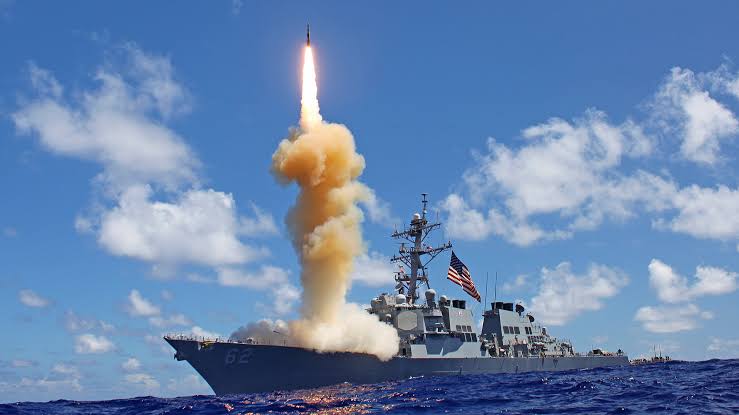
Raytheon, an RTX (NYSE: RTX) business, has been awarded a five-year contract, with two additional option years, valued at up to $24.4 billion for Standard Missile-6 interceptors.
The contract significantly increases the availability of a critical munition capable of conducting both offensive strikes and missile defense missions for the U.S. Navy.
Building on prior agreements between Raytheon and the Department of War, the long-term order ensures a consistent and reliable supply of SM-6 interceptors.
Raytheon President Phil Jasper emphasized the strategic importance of the award, stating: “SM-6’s multi-mission capability is vital to our customer, and Raytheon is intensely focused on meeting the demand.”
Jasper also noted the company’s operational investments, saying: “By continuously investing in our operations and facilities, we are removing constraints and boosting capacity to ensure we deliver this critical capability our sailors depend on.”
The SM-6 is the only combat-proven weapon capable of performing anti-air warfare, anti-surface warfare, and ballistic missile defense simultaneously, making it uniquely valuable to modern naval operations.
It has been successfully fired from various U.S. Navy ship-based platforms as well as land-based launchers, giving the fleet a versatile and highly reliable tool against the full range of kinetic threats.
Raytheon has invested heavily to keep pace with rising demand by growing its skilled workforce, building stronger partnerships across the defense industrial base, and automating production processes.
These combined efforts are designed to support significantly higher output across both near-term and long-term requirements, a critical consideration as global defense procurement accelerates.
RTX employs more than 180,000 people globally and reported 2025 sales of more than $88 billion, with its headquarters located in Arlington, Virginia.
Raytheon has operated for more than 100 years, developing capabilities across integrated air and missile defense, smart weapons, advanced sensors, hypersonics, and space-based systems across land, air, sea, and space domains.
