
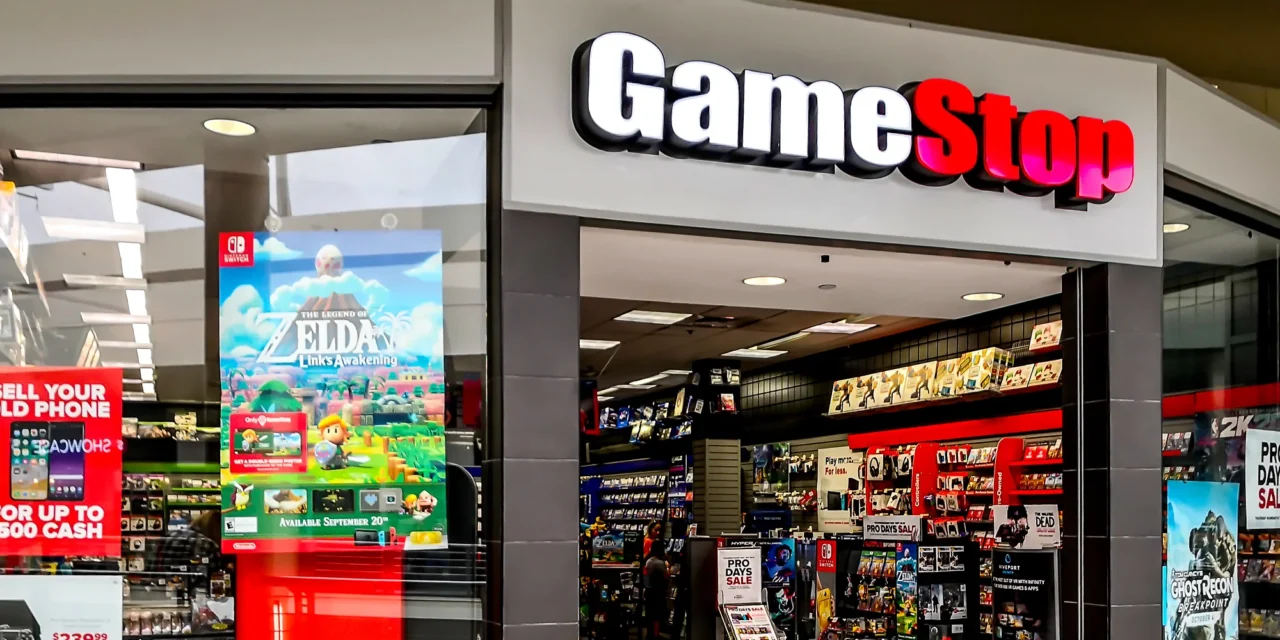
GameStop (NYSE: GME) shares jumped 5.6% intraday after CEO Ryan Cohen disclosed through a regulatory filing the purchase of an additional 1.15 million Class A shares for $26.4 million.
The transaction lifts Cohen’s total holdings past 40.4 million shares, representing approximately a 9% stake in the Grapevine, Texas-based specialty retailer.
Cohen’s latest purchase follows a broader pattern of insider accumulation, with board members Alain Attal, James Grube, and Lawrence Cheng also recently adding to their personal positions.
Insider buying at this scale is widely regarded by market participants as a signal of confidence in a company’s near-term prospects and underlying valuation.
GameStop, best known for the historic 2021 short squeeze that transformed it into one of the most discussed stocks in modern market history, has been actively reshaping its business model in recent years.
After closing hundreds of brick-and-mortar locations as part of aggressive cost-cutting measures, the company announced plans to reopen “select” stores, with one confirmed location in Brooklyn, Ohio, as part of the initial rollout.
The company carries a market capitalization of $10.3 billion and posted trailing twelve-month revenue of $3.6 billion, alongside a trailing twelve-month net income of $893.3 million, reflecting a surprisingly strong profitability profile for a legacy retail brand in transition.
GameStop’s potential pivot into acquisition activity has drawn scrutiny, as the company disclosed a $4.9 billion stake in eBay stock while still holding 59 million warrants set to expire on October 30, with GME shares currently trading below the $32 strike price.
The looming expiration of those warrants puts GameStop’s theoretical acquisition funding capacity at risk and adds a layer of uncertainty to what had been a closely watched strategic development.
From a technical standpoint, GME’s relative strength index climbed into the early 80s following the latest share price surge, a reading that places the stock firmly in overbought territory and historically precedes near-term selling pressure.
The company’s longer-term turnaround strategy leans heavily on expanding into high-margin collectible sales, a meaningful departure from its legacy focus on video game hardware and software merchandise.
GameStop currently carries no analyst ratings, which limits the available external guidance for investors trying to assess fair value at current price levels.
With insider buying providing a bullish signal on one hand and overbought technical conditions flashing caution on the other, the stock presents a complicated setup for investors in the near term.
