
CoreWeave (NASDAQ: CRWV) and D-Wave Quantum (NYSE: QBTS) represent two vastly different visions for the future of computing, making a direct comparison between them a genuinely complex investment question.
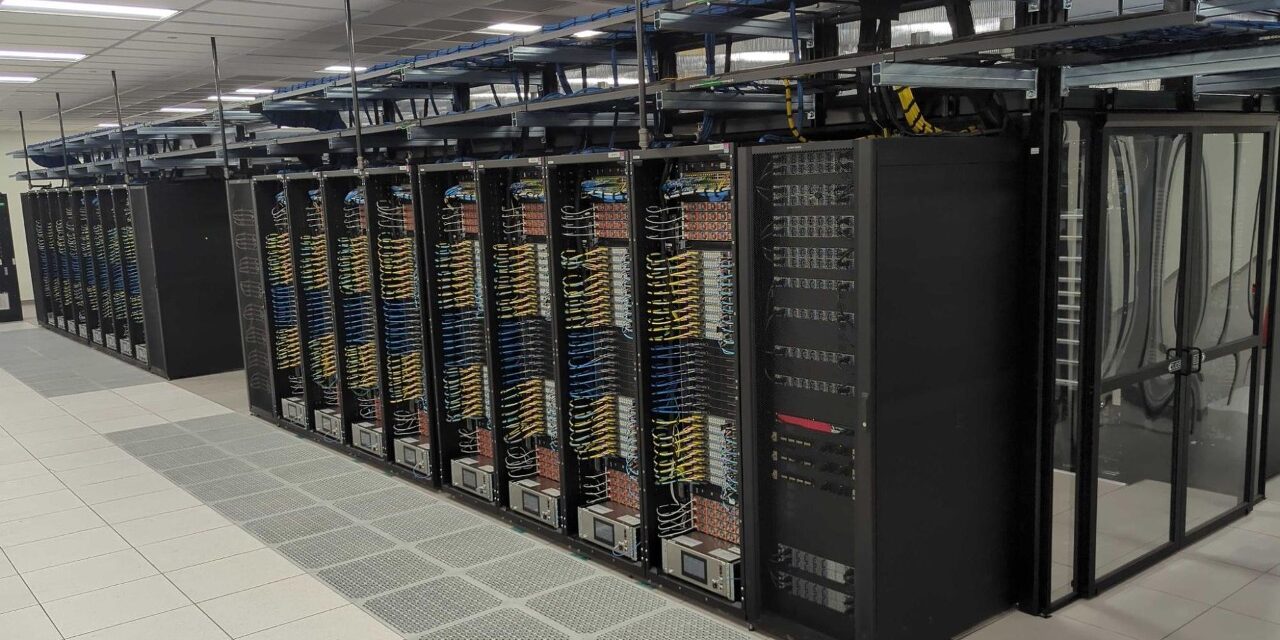
CoreWeave has built a cloud platform purpose-designed for training large-scale AI models, partnering closely with Nvidia to secure access to the high-performance GPU hardware that AI labs demand.
The scale of that demand is reflected clearly in CoreWeave’s financial results, with second-quarter 2026 revenue reaching $2.6 billion, a 112% increase compared to the same period a year earlier.
The company has also issued a full-year revenue forecast of at least $12.4 billion, which would represent more than double the $5.1 billion it generated across all of 2025.
On September 17, CoreWeave announced it had added over $25 billion in net new customer commitments as of early in the third quarter, underscoring the strength of institutional demand for its services.
Despite this momentum, CoreWeave carries meaningful risks, including heavy revenue concentration among a small number of large customers such as Microsoft and an operational dependency on Nvidia for critical GPU supply.
D-Wave Quantum is operating in a very different environment, still in the early stages of a commercial quantum computing market that has yet to deliver consistent and scalable revenue.
The company reported 179% year-over-year sales growth in fiscal year 2025, but that figure was heavily skewed by a single annealing quantum computing system sale that contributed $12.6 million to first-quarter 2025 revenue alone.
When 2026 lapped that one-time deal, the results turned sharply negative, with first-quarter 2026 revenue falling 81% year over year, and second-quarter revenue coming in essentially flat at just $3.1 million.
Through the first half of 2026, D-Wave’s total sales reached only $5.9 million, compared to $18.1 million across the same period in 2025, making the revenue trajectory difficult to ignore.
Both stocks carry high-risk, high-reward profiles, but the near-term commercial case for CoreWeave is considerably stronger given the scale and durability of enterprise AI infrastructure spending.
D-Wave Quantum may still appeal to investors with longer time horizons and a higher tolerance for uncertainty, particularly those betting on a broader quantum computing inflection point that has not yet fully arrived.
For investors weighing the two options today, CoreWeave’s demonstrated revenue scale, accelerating customer commitments, and proximity to the AI spending supercycle give it a meaningful edge over its quantum rival.
