
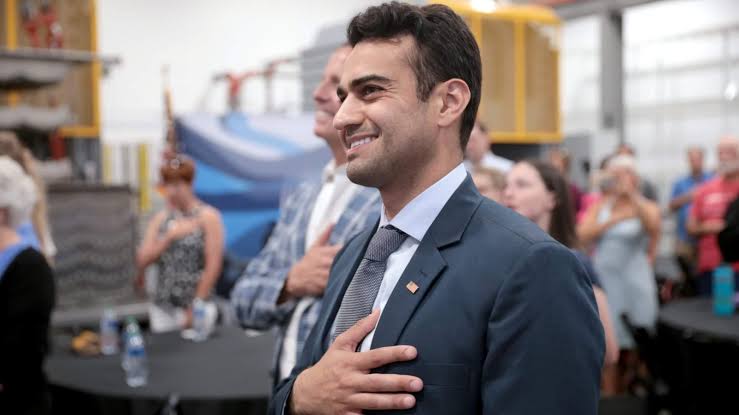
Rep. Abe Hamadeh (R-Ariz.) has urged the Trump administration to reject any Houthi offer that would spare American and Israeli ships in the Red Sea while leaving Saudi Arabia exposed, arguing in a Newsmax op-ed published Monday that such a pledge is a wedge tactic, not a peace gesture.
Hamadeh, who represents Arizona’s 8th Congressional District, writes that the U.S. cannot afford to sit out while an Iranian-backed group threatens one of the world’s key shipping corridors.
He frames the issue as a direct threat to the American economy, arguing that disruption to Red Sea trade raises costs for U.S. families and puts American forces in the region at risk.
The op-ed leans heavily on Hamadeh’s own background. A U.S. Army Reserve intelligence officer, he says he deployed to Saudi Arabia and was on the ground while the Houthis fired on U.S. mission assets — an experience he cites as the basis for his view that the group has consistently continued its attacks rather than moderating them.
The Houthis’ Recent Escalation
The op-ed lands amid a sharp escalation in Houthi attacks on Saudi targets over the past two months. The group, designated a foreign terrorist organization by the U.S., had largely held off on strikes against Saudi Arabia following a 2022 ceasefire, but resumed attacks on the kingdom in mid-July as part of the broader regional fallout from this year’s Iran war. By late July it had declared a blockade of Saudi ports and shipping in the Bab el-Mandeb Strait, and Saudi forces responded with strikes on Houthi-held port and telecom infrastructure.
Casualties have mounted on both sides since. Saudi-backed Yemeni government forces have suffered dozens of deaths in Houthi attacks in Marib and other provinces, and the Houthis have struck an air base and oil facilities in southern Saudi Arabia — hitting sites in Abha, Jazan, Najran and Khamis Mushait and wounding more than 70 people. Just last week, a Houthi drone shot down over Taif killed one person and injured two others when debris fell on the city.
The group has also targeted commercial shipping directly. In August, the Houthis claimed a ballistic missile strike on a Saudi-flagged oil tanker off Yanbu, part of a broader pattern of strikes on Saudi-linked vessels in the Red Sea, and a separate double-tap strike on a cargo ship in the Bab al-Mandeb killed at least six people.
Despite the violence, shipping traffic through the strait has proven resilient — dipping after the initial Houthi advance before climbing back above pre-crisis levels, according to shipping-industry tracking — a detail that complicates any narrative of an imminent chokehold on global trade, even as the security picture on land and at sea remains volatile.
Hamadeh’s Firsthand Account
For Hamadeh, the argument isn’t purely strategic — it’s personal. He points to his own deployment to Saudi Arabia as an Army Reserve intelligence officer as the basis for his read on the Houthis’ intentions, writing, “I was on the ground as the Houthis were launching missiles towards our mission assets.”
That experience, he says, left him with no illusions about the group’s willingness to change course.
“I can say with confidence firsthand that the Houthis have never deviated from their terrorist activities,” he writes, pushing back on any suggestion that a pledge to spare American vessels reflects a genuine shift in behavior rather than a calculated attempt to split Washington from Riyadh.
The congressman is equally direct in rejecting the idea that the kingdom’s security is a regional matter with little bearing on the U.S.
“Saudi Arabia is not some distant country whose security has no bearing on our own,” he writes.
“It is a critical American security partner, a stabilizing force in the Middle East, and an essential player in the global energy economy.”
Why it Matters Strategically
The Bab al-Mandab Strait, sitting between Yemen and the Horn of Africa, is one of the narrowest and most heavily trafficked maritime chokepoints in the world, funneling a large share of traffic between Asia, Europe and the Suez Canal. Hamadeh ties Houthi control of Yemen’s Red Sea coast to Iran’s separate leverage over the Strait of Hormuz, arguing the two chokepoints together could let Tehran and its proxies squeeze global energy and trade flows from both directions at once.
U.S. officials have so far shown little appetite for direct military involvement in this round of the conflict, a departure from the airstrike campaigns Washington launched against the Houthis under both the Biden and Trump administrations in years past. That restraint is effectively what Hamadeh is arguing against: he wants the administration to back Saudi Arabia with intelligence support, tighter sanctions on Houthi leadership and the Iranian networks supplying them, and stepped-up interdiction of weapons shipments — while stopping short of calling for direct U.S. combat involvement.
His closing argument frames the stakes in stark terms: “The Houthis must lose. Saudi Arabia and America’s allies must win. It’s that simple.”
