
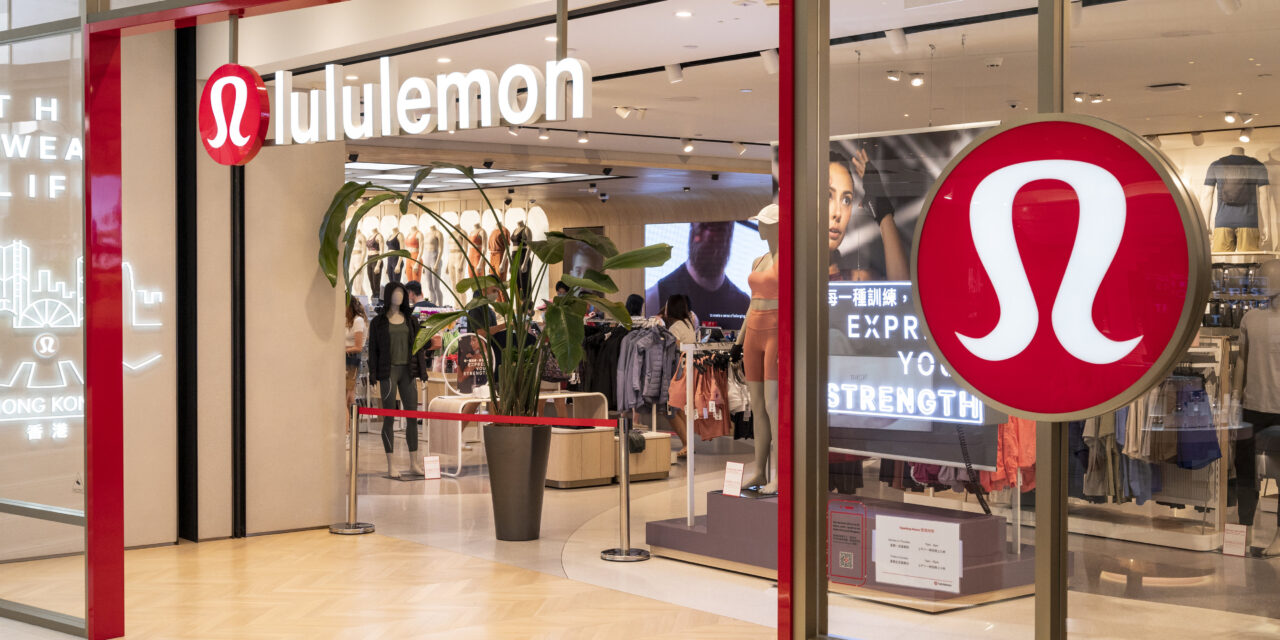
Lululemon Athletica (NASDAQ: LULU) reported second-quarter fiscal 2026 results on September 3, 2026, with net revenue falling 4% to $2.4 billion, missing the $2.46 billion analysts had expected.
Comparable sales dropped 10% on a constant dollar basis, and management slashed full-year revenue guidance to a decline of 5% to 7%, compared with its prior forecast of flat to down 1%.
Full-year earnings per share guidance was lowered to a range of $9.48 to $9.73, down sharply from a prior forecast of $10.95 to $11.15, and well below the $13.26 earned in fiscal 2025.
Shares fell approximately 18% in extended trading following the announcement, as incoming CEO Heidi O’Neill was set to begin her tenure the following week.
Wells Fargo cut its price target to $95 from $105, maintaining an Equal Weight rating, and described the magnitude of the decline as feeling “jarring,” noting a 30% reduction to second-half earnings estimates.
Morgan Stanley’s Alex Straton lowered her target to $83 with an Underweight rating, arguing the guidance cut “lowered the bar meaningfully, but we don’t think the reset is done,” and expects new management to pursue a “shrink to grow” strategy driving further negative estimate revisions.
JPMorgan’s Matthew Boss reduced his target to $95 from $154, flagging that the company’s third-quarter earnings outlook sits 60% below consensus, while Truist’s Joseph Civello kept a Sell rating and cut his target to $82, saying headwinds will prove more structural.
BMO Capital began coverage with an Underperform rating and a $70 price target, citing weakening demand across both the Americas and China and warning that the company’s historically strong margins are coming under pressure.
Citi cut its target to $117 from $130 with a Neutral rating, acknowledging that the stock’s risk-reward is “slightly more favorable” after the selloff, even as the firm described fiscal 2027 visibility as “very unclear.”
North America revenue fell 8%, leggings sales dropped approximately 20%, and China revenue grew 4% on a reported basis but declined 2% in constant currency, following negative social media commentary tied to a marketing event at the Great Wall of China.
Lululemon’s athleisure market share fell 10 percentage points to 43.9% in August, according to M Science data, while competitors Alo and Vuori gained 5.9 and 2.2 percentage points respectively during the same period.
Despite the deteriorating topline, the company ended the quarter with $1.4 billion in cash and no outstanding borrowings, providing a financial cushion as management works to stabilize operations.
The brand also showed genuine operational momentum in select areas, with the company increasing its chase volume by approximately 20% this year, enabling faster reordering of fast-moving styles across its supply chain.
Away-from-body styles including the Groove Wide-Leg, Align Foldover Jogger, Breezily, and an updated Dance Studio Pant are trending well as consumer preferences shift away from tight-fitting leggings.
The SeaWheeze Half Marathon and Festival returned in August for the first time since 2019, drawing nearly 10,000 runners from 24 countries and roughly 14,000 festival attendees, with more than 85,000 people from 120 countries joining the companion Strava challenge.
Rest of World revenue, spanning EMEA and APAC, grew 5% on a reported basis, suggesting international markets remain a relative bright spot within an otherwise difficult operating environment.
Among institutional investors, Citadel Investment Group raised its stake 84% to 1.07 million shares worth $122.7 million, while AQR Capital Management cut its position 40% to 901,601 shares worth $101.5 million as of the second quarter of 2026.
Gotham Asset Management increased its stake 58% to 519,894 shares worth $59.4 million, and Renaissance Technologies established a new position of 377,844 shares worth $43.1 million during the same period.
Overall hedge fund ownership fell to 51 funds from 61 the prior quarter, and short interest sits at 12.78% of float, reflecting persistent skepticism across the investment community.
Shares trade at just 9.94 times forward earnings as of September 18, 2026, a multiple suggesting target cuts have already priced in considerable bad news, yet no analyst has moved to an outright bullish rating on the stock.
