
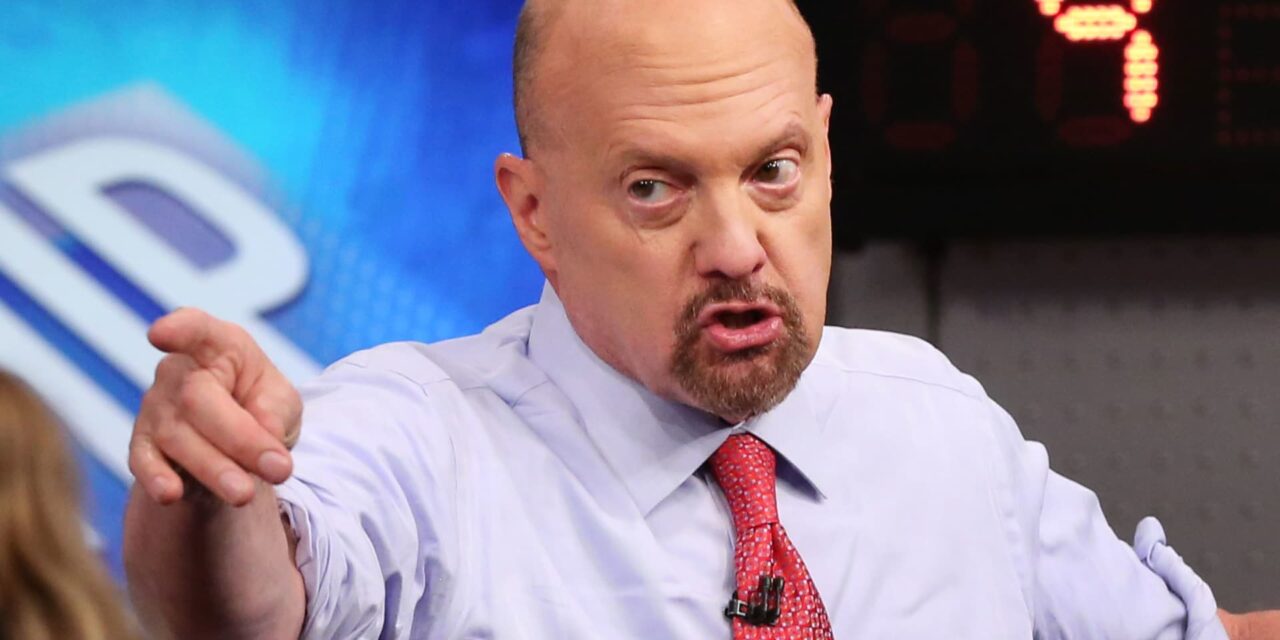
Oracle Corporation (NYSE: ORCL) became an unexpected focal point for Wall Street after CNBC personality Jim Cramer posted a bullish comment about the stock on X during a turbulent trading session.
Cramer’s post, made close to midday on September 17, came at a moment when the broader AI trade was under pressure and investors were searching for reassurance about the durability of technology spending.
Rather than pointing to Nvidia or another widely followed AI bellwether, Cramer zeroed in on Oracle, a company whose shares had struggled for much of the year.
His post read: “Strength in Oracle is a very positive sign,” a brief but pointed statement that rippled across financial media within hours of publication.
Oracle shares closed 5% higher that day, suggesting that at least some portion of the market treated the comment as a meaningful signal rather than noise.
Cramer had already laid out his thinking two days earlier, arguing on September 15 that even if some companies pulled back on AI infrastructure purchases, other buyers would step in and keep overall demand intact.
The backdrop for all of this was a weekend remark from Anthropic CEO Dario Amodei, who stated that AI development needed to slow down due to safety concerns, rattling investor confidence across the sector.
What Cramer appeared to be communicating was that Oracle’s price action functions as a proxy for broader sentiment toward the AI buildout, given how deeply the company has staked its future on cloud and AI infrastructure spending.
Oracle’s most recent financial results give that thesis considerable weight, with Oracle Cloud Infrastructure revenue jumping 121% year over year to $7.4 billion and total cloud revenue rising 62% to $11.6 billion.
Overall revenue grew 30% to $19.3 billion, while GAAP net income jumped 60% to $4.7 billion, and management is guiding for at least $90 billion in full-year fiscal 2027 revenue.
Capital spending of $28.5 billion pushed free cash flow to negative $5.4 billion, a figure that has drawn scrutiny from skeptics who argue the pace of investment outpaces the balance sheet supporting it.
CLSA initiated coverage with a Hold rating and one of the Street’s lowest price targets, citing exactly those concerns about the cost of building Oracle’s AI infrastructure.
Michael Burry has also maintained a bearish position in Oracle, including put options tied to the same debt-related concerns that have given more cautious analysts pause.
On the other side of that debate, at least one major firm reinstated coverage with a Buy rating and a price target implying roughly 30% upside, arguing that Oracle is genuinely positioned to win the AI infrastructure race.
With the company guiding for 34% revenue growth in fiscal 2027, the next several sessions of price action will likely tell investors a great deal about which camp is reading the market correctly.
