
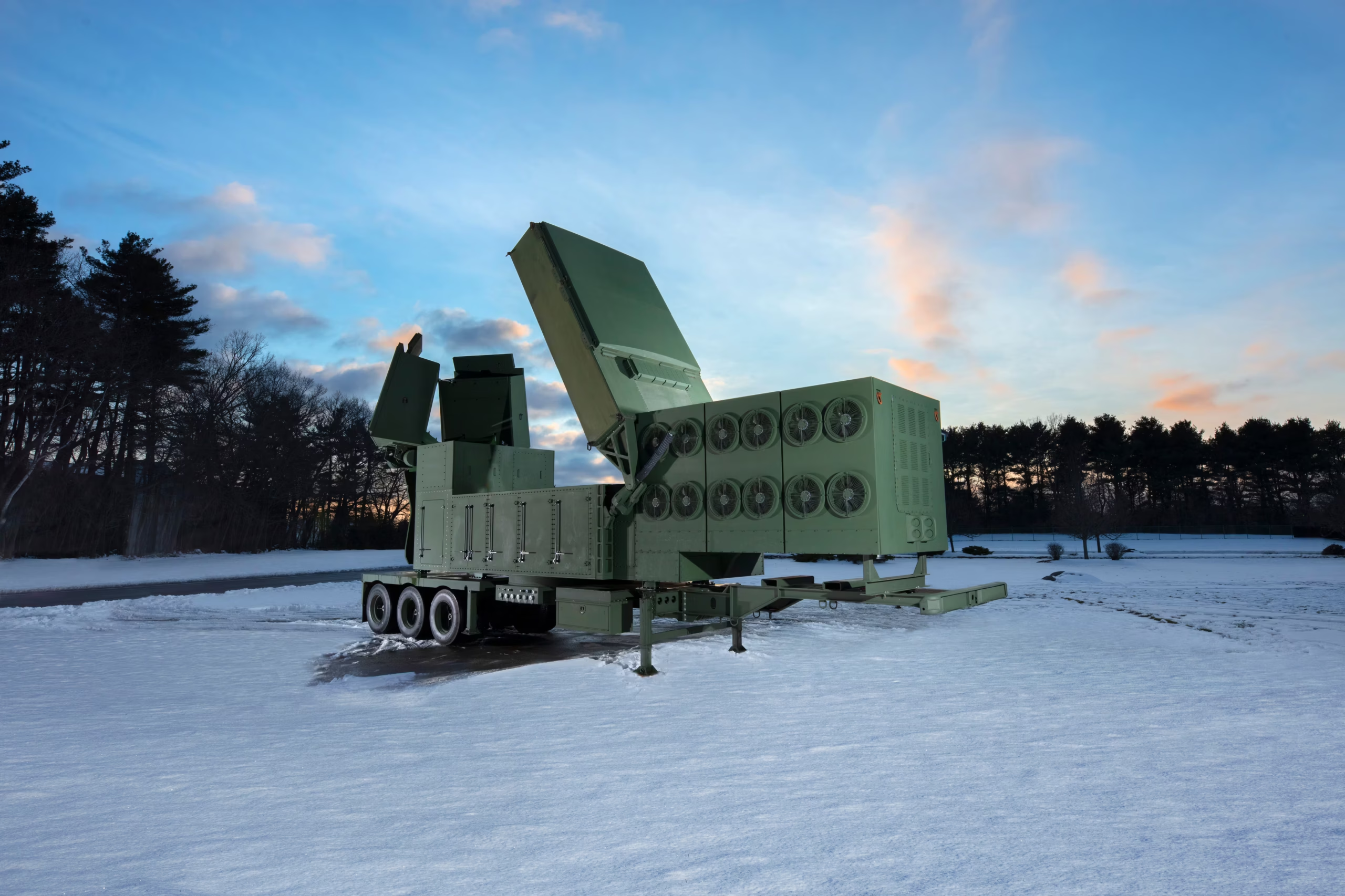
The second quarter earnings season for defense contractors has wrapped up, revealing a sector that largely outperformed analyst expectations across revenues and forward guidance.
Defense contractors operate in a uniquely insulated market, benefiting from long-term government contracts that provide revenue predictability most industries can only envy.
High barriers to entry, including technical expertise requirements and government security clearances, limit competition and give established players a durable structural advantage.
Geopolitical pressures, from Russia’s ongoing invasion of Ukraine to China’s posture toward Taiwan, have reinforced the political case for sustained or expanded defense budgets across Western governments.
The 14 defense contractor stocks tracked this earnings cycle reported a very strong Q2, with revenues beating analyst consensus estimates by 4% and next-quarter guidance coming in 1.1% above expectations.
Despite the broadly positive results, share prices in the sector have declined an average of 2.8% since earnings were reported, suggesting markets had already priced in much of the outperformance.
RTX (NYSE: RTX), the aerospace and defense giant formerly focused on refrigeration technology, posted revenues of $24.71 billion for Q2, representing 14.5% year-on-year growth and exceeding analyst expectations by 7.8%.
RTX also delivered full-year EPS guidance that exceeded analyst expectations, making it an exceptional quarter overall, though the stock has traded flat since reporting and currently sits at $196.75.
Huntington Ingalls (NYSE: HII) stood out as the quarter’s strongest performer, reporting revenues of $3.42 billion, up 10.9% year on year and 8.2% ahead of analyst forecasts, with shares currently trading at $281.21.
Kratos (NASDAQ: KTOS), a provider of advanced engineering and national security solutions, posted revenues of $458.8 million, up 30.5% year on year and 11.6% above analyst expectations, claiming the biggest estimate beat and fastest revenue growth in the group.
CACI International (NYSE: CACI), which offers defense, intelligence, and IT solutions to government clients, reported revenues of $2.71 billion, up 17.6% year on year, with the stock surging 23% since its earnings release to trade at $636.95.
Parsons (NYSE: PSN) delivered the weakest showing in the group, with revenues of $1.58 billion coming in flat year on year and falling 1.9% short of analyst estimates, while full-year revenue and EBITDA guidance both missed expectations significantly.
Parsons shares have dropped 24.8% since the results were published and currently trade at $46.65, reflecting investor disappointment with the company’s outlook.
The broader market backdrop has been defined by shifting investor anxieties, with artificial intelligence disruption concerns giving way to geopolitical fears centered on the U.S. conflict with Iran before energy markets stabilized and refocused attention on company fundamentals.
Defense spending appetite remains sensitive to political cycles and budget negotiations, meaning even well-performing contractors must navigate uncertainty around how future administrations choose to allocate federal resources.
