
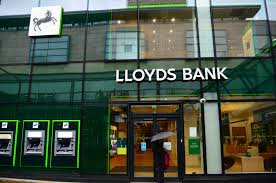
Lloyds Banking Group (LON: LLOY), the UK’s largest retail lender, is facing renewed selling pressure despite stronger-than-expected economic growth data out of the United Kingdom.
The UK economy expanded by 0.4% in July, beating forecasts of 0.3%, with the three-month figure to July also coming in at 0.4%, again ahead of expectations.
Additional data showed that the trade deficit narrowed while industrial and manufacturing production rose faster than economists had initially projected.
These figures carry particular weight for Lloyds, which serves over 26 million customers across the country and is deeply exposed to domestic economic conditions.
Despite the positive growth backdrop, rising bond yields are casting a shadow over the bank’s equity performance, with the stock sitting 6.13% below its highest point of the year.
The UK ten-year gilt yield climbed to 5.34%, its highest level since 2007, while the five-year yield surged to 4.88%, a peak not seen since 2008.
Markets are also pricing in a more aggressive stance from the Bank of England, with odds of an interest rate hike this year jumping to 80% on Polymarket as inflation continues to climb.
Higher rates are a double-edged sword for Lloyds, as the bank makes most of its money through lending, benefiting from rate increases, but elevated yields also weigh on broader equity valuations.
The bank’s most recent half-year results reflected genuine underlying strength, with profit before tax rising to 4.3 billion pounds from 3.5 billion pounds in the prior year period, while net interest income grew 9% year-over-year to 7.3 billion pounds.
Management has also launched what it calls the Accelerate 2030 strategy, targeting stronger revenue growth, improved cross-group connectivity, and productivity gains expected to deliver 2 billion pounds in savings by the end of the plan.
Share buybacks have been a notable feature of the bank’s capital return program, reducing outstanding shares from over 70.14 billion in 2022 to 58.16 billion currently.
On the technical side, the weekly chart shows LLOY has pulled back from a high of 116p to around 110p, and the stock has formed a rising wedge pattern, a structure frequently associated with bearish breakouts as its two converging trendlines approach their apex.
The bearish case is further supported by divergence in momentum indicators, with both the Relative Strength Index and the Percentage Price Oscillator trending lower even as price held elevated levels.
Analysts following the technical setup suggest the stock could slide toward 100p if the wedge pattern breaks to the downside as expected.
