
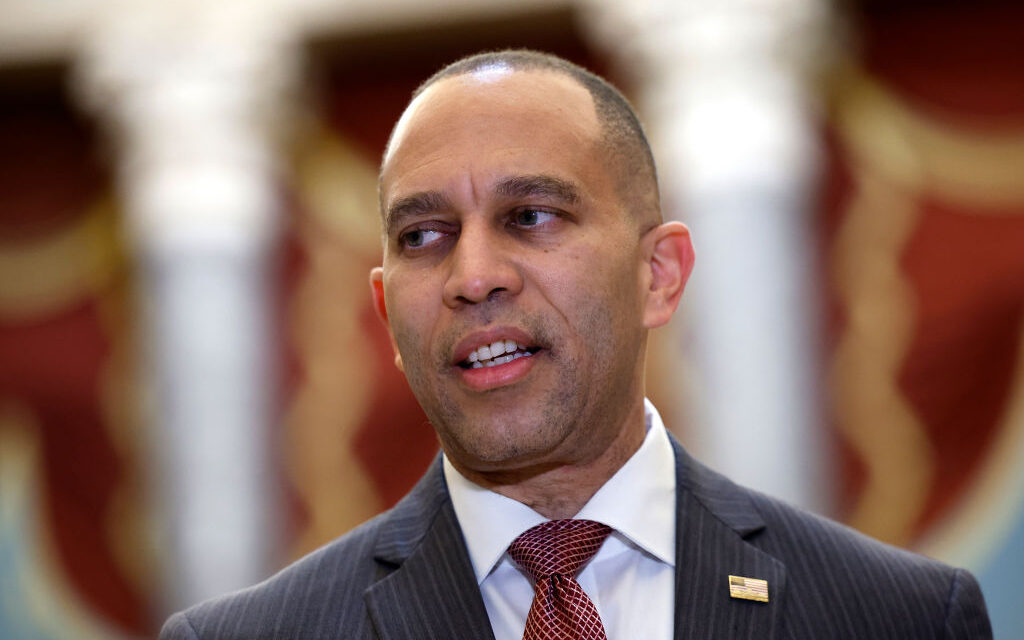
House Minority Leader Hakeem Jeffries has thrown his support behind David Jolly and Gwen Graham in the Florida gubernatorial contest, adding national Democratic weight to the race.
The endorsement from Jeffries signals that national Democratic leadership views the Florida governor’s race as a meaningful battleground worth investing political capital in ahead of the election.
Jolly, a former Republican-turned-independent congressman, has positioned himself as a cross-partisan alternative capable of drawing support from voters dissatisfied with both major parties.
Graham, a former Democratic congresswoman and daughter of longtime Florida Senator Bob Graham, brings name recognition and established ties to the state’s Democratic base.
The dual endorsement from Jeffries is an unusual move, reflecting the complicated and still-evolving dynamics of the Democratic field in Florida’s statewide race.
Florida Republicans, including allies of GOP candidate Byron Donalds, wasted little time responding to the news, with the Donalds camp publicly saying “thank you” in reaction to the endorsement.
The sardonic response from the Donalds camp suggests his team views a Jeffries endorsement as a political gift, framing the Democratic leader’s involvement as a liability for the endorsed candidates.
Donalds, a congressman from Naples and a prominent conservative figure, has been building his campaign on a platform closely aligned with the national Republican brand and Florida’s rightward political shift.
Florida has trended increasingly Republican in recent election cycles, and GOP strategists argue that a visible connection to national Democratic figures could hurt candidates in competitive general election matchups.
The endorsement nonetheless gives Jolly and Graham a boost in terms of fundraising networks and organizational support that Jeffries and House Democrats can mobilize at the national level.
The Florida governor’s race is shaping up as one of the more closely watched state-level contests, drawing national figures from both parties into what has historically been a critical swing state, even as its electoral composition continues to evolve.
