
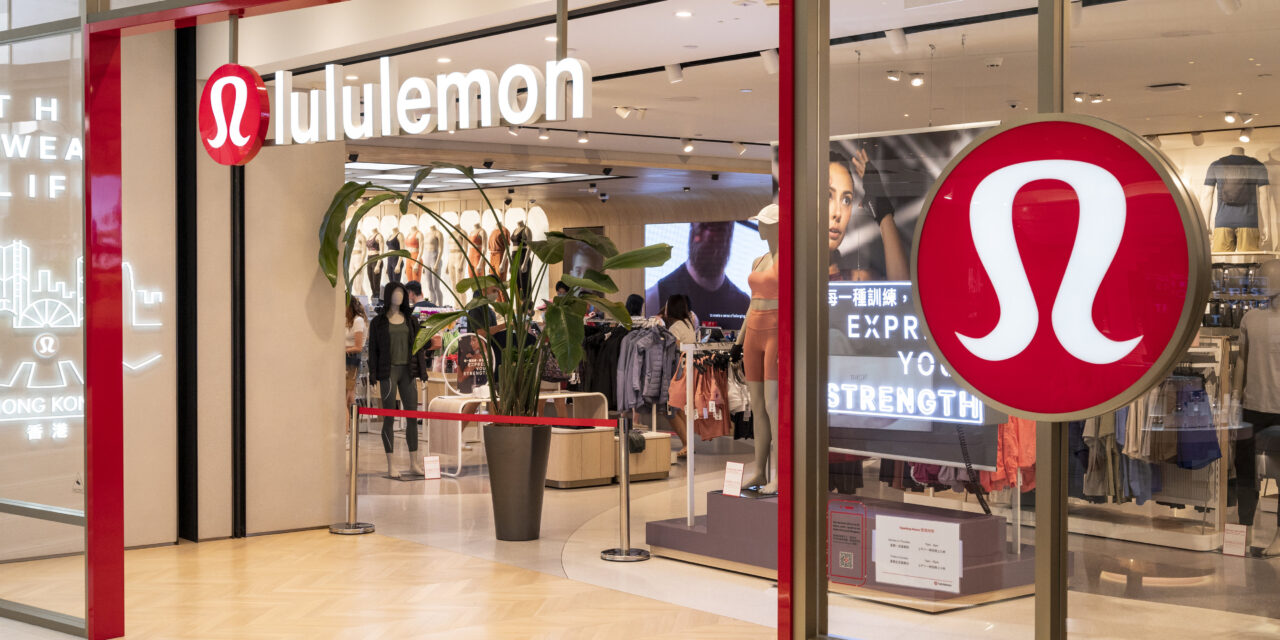
Lululemon Athletica (NASDAQ: LULU) reported a 4% revenue decline to $2.4 billion for its most recent quarter, with comparable sales dropping 10% on a constant dollar basis.
Management cut full-year guidance for the second time in 2026, reflecting deteriorating brand sentiment across its two most important markets and a product lineup that has yet to fully resonate with shoppers.
Incoming CEO Heidi O’Neill was set to take the helm the week following the September 3 announcement, stepping into a role that requires a meaningful strategic reset.
Full-year revenue is now expected to fall between 5% and 7%, landing in a range of $10.35 billion to $10.5 billion, while full-year earnings per share guidance was cut to between $9.48 and $9.73, down sharply from $13.26 in the prior fiscal year.
Third-quarter operating margin is projected at roughly 6.5%, compared with 17% a year earlier, as rising marketing costs and unabsorbed fixed expenses weigh heavily on profitability.
North America revenue fell 8%, with Canada declining 11% on a reported basis, and management acknowledged that consumer response to new product launches remains inconsistent heading into the third quarter.
Leggings, the brand’s most iconic and commercially significant category, saw sales fall approximately 20% as shoppers shift toward looser silhouettes, a trend the company has not yet fully offset.
Accessories revenue also fell 13% as the bag business softened, adding further pressure to a domestic business that has struggled throughout the year.
China Mainland presented its own set of challenges, with revenue growing just 4% on a reported basis but actually declining 2% in constant currency, hurt by a surge of negative commentary across Chinese social media and digital platforms following a marketing event staged at the Great Wall of China.
Tmall also chose not to repeat its 618 promotional event in the same format as the prior year, and Lululemon opted out of the promotions that followed, further weighing on digital sales in that market.
Not all signals are negative, however, as the company increased its chase volume, the supply chain capability allowing it to rapidly reorder fast-moving styles, by about 20% compared with last year.
Away-from-body styles including the Groove Wide-Leg, Align Foldover Jogger, Breezily, and an updated Dance Studio Pant are all trending well, and management expects that momentum to carry into 2027.
Rest of World revenue, spanning EMEA and APAC, grew 5% on a reported basis, with South Korea marking its 10th year in the market and a new flagship store opening in Tokyo’s Harajuku district.
The SeaWheeze Half Marathon and Festival returned in August for the first time since 2019, drawing nearly 10,000 runners from 24 countries, approximately 14,000 festival attendees, and more than 85,000 participants from 120 countries via a companion challenge on Strava.
Lululemon has already committed to bringing the event back next summer, signaling confidence in its community marketing approach even as core sales metrics disappoint.
The company also trimmed its store-opening plan to approximately 35 net new locations for the year, down from an earlier target of 40, reflecting a more cautious capital allocation stance.
Hedge fund ownership dropped from 61 to 51 funds in the most recent quarter, a pullback that tracks closely with the back-to-back guidance cuts and softening fundamentals.
Short interest currently sits at 12.78% of the float, a level that reflects organized skepticism rather than routine hedging activity from market participants.
Despite the headwinds, the stock traded at a forward price-to-earnings ratio of just 9.46 as of September 11, a compressed multiple that suggests a significant portion of the negative news has already been absorbed into the share price.
O’Neill now inherits a brand that demonstrated it can still generate genuine consumer enthusiasm, but must urgently convert that enthusiasm into consistent product momentum and stabilize sentiment in both China and North America.
