
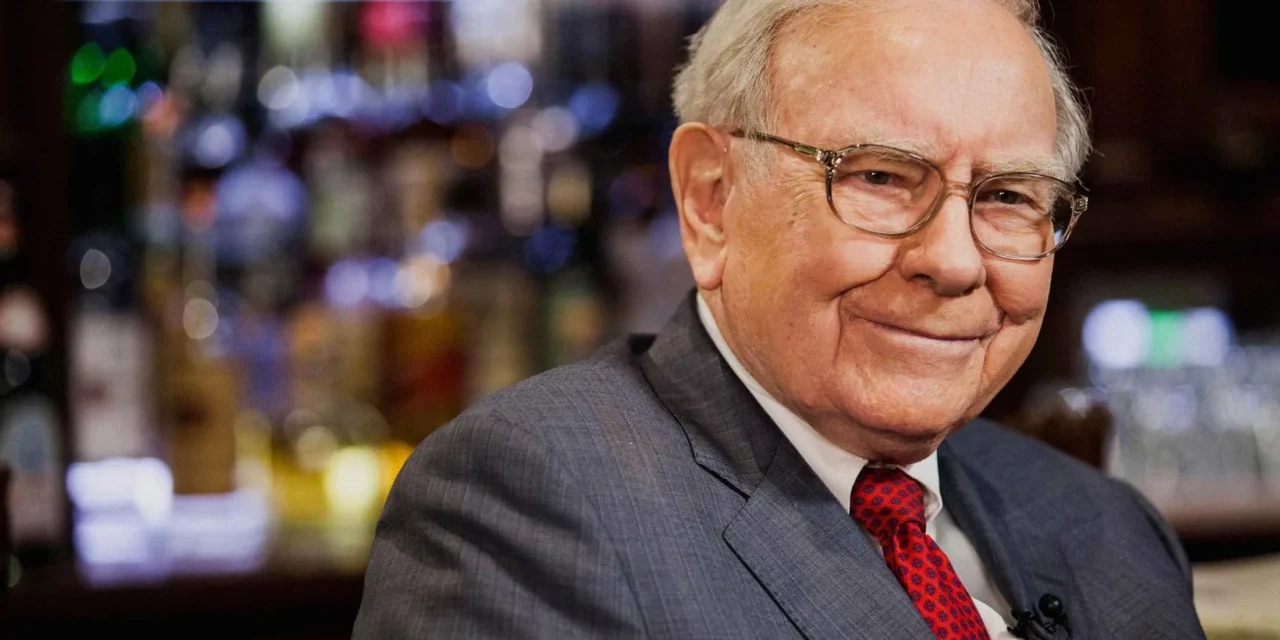
Warren Buffett has spent much of 2026 delivering an increasingly pointed warning to investors: the American stock market has come to resemble a casino, and prices for a great many things now look “very silly.”
The 95-year-old Berkshire Hathaway chairman, who stepped down as CEO in 2025 but remains the company’s most influential voice, first sounded the alarm at Berkshire’s annual shareholder meeting in early May. Speaking to CNBC on the sidelines of the event, Buffett said markets had never seen people in a more gambling mood. He returned to a long-running analogy of his: financial markets as a church with a casino attached, where the church represents genuine long-term investing and the casino represents pure speculation. What has changed, he argued, is the balance between the two — the casino has simply become more attractive.
Buffett pointed to two specific developments driving that shift: the explosion of one-day options contracts, which give traders enormous leverage on short-term price swings, and the rapid growth of prediction markets, some of which have already produced insider-trading cases and match-fixing scandals involving college and professional athletes. Describing the options trend, he told CNBC it wasn’t investing or even speculating — it was pure gambling.
That May message wasn’t a one-off. A month earlier, Buffett had also dismissed the idea that the market’s spring pullback was severe enough to justify deploying Berkshire’s cash pile, telling CNBC that Berkshire had lived through drops of more than 50% three separate times during his tenure and that the current dip amounted to nothing by comparison. He said Berkshire would only act on a genuinely “big” decline — not a mild correction — leaving the company’s roughly $373 billion cash-and-Treasury-bill stockpile largely untouched.
By June, Buffett was repeating a version of the same theme in even fewer words, telling an interviewer simply that the casino had gotten very attractive to people. Around the same time, he laid out his standard advice for ordinary investors unmoved by market noise: roughly 90% in low-cost S&P 500 index funds, 10% in short-term government bonds, and a habit of saving before spending rather than the reverse.
The warnings sharpened again in July, when Buffett sat down with CNBC’s Becky Quick and said plainly that it had become tough to find values while everybody around him preferred gambling. He noted that Berkshire would rather hold more equities and less cash — but only once genuinely compelling opportunities appear, which he suggested are in short supply with the market pricing many ordinary companies as though their growth were exceptional rather than routine. Berkshire’s purchase of Alphabet shares during the second quarter — bought at a discount to the broader S&P 500’s valuation — became the clearest example of Buffett finding value at the edges of an otherwise expensive market rather than buying the index wholesale.
The warnings reached a new pitch in August, tied to two closely watched valuation gauges. The “Buffett Indicator,” which measures total stock market value against GDP, had climbed to roughly 238%, while the S&P 500’s cyclically adjusted price-to-earnings (CAPE) ratio pushed above 40 — a level historically associated with weak returns. Analysts noted that the S&P 500 has never posted a positive three-year return following a monthly CAPE reading that high, and that past instances above similar thresholds preceded average declines of roughly 4% over the following year, 20% over two years, and 30% over three years.
Buffett’s 2026 commentary echoes warnings he has issued at earlier market peaks, including his caution during the dot-com bubble of the late 1990s and his oft-cited advice to be fearful when others are greedy, coined during the 2008 financial crisis. What’s notable this year, observers say, is the consistency: month after month, and despite record highs in major indexes, Buffett has kept returning to the same core message — that speculation has overtaken investing for a large share of market participants, even as he insists this doesn’t mean investing itself is doomed, only that valuations for many assets no longer make sense.
