
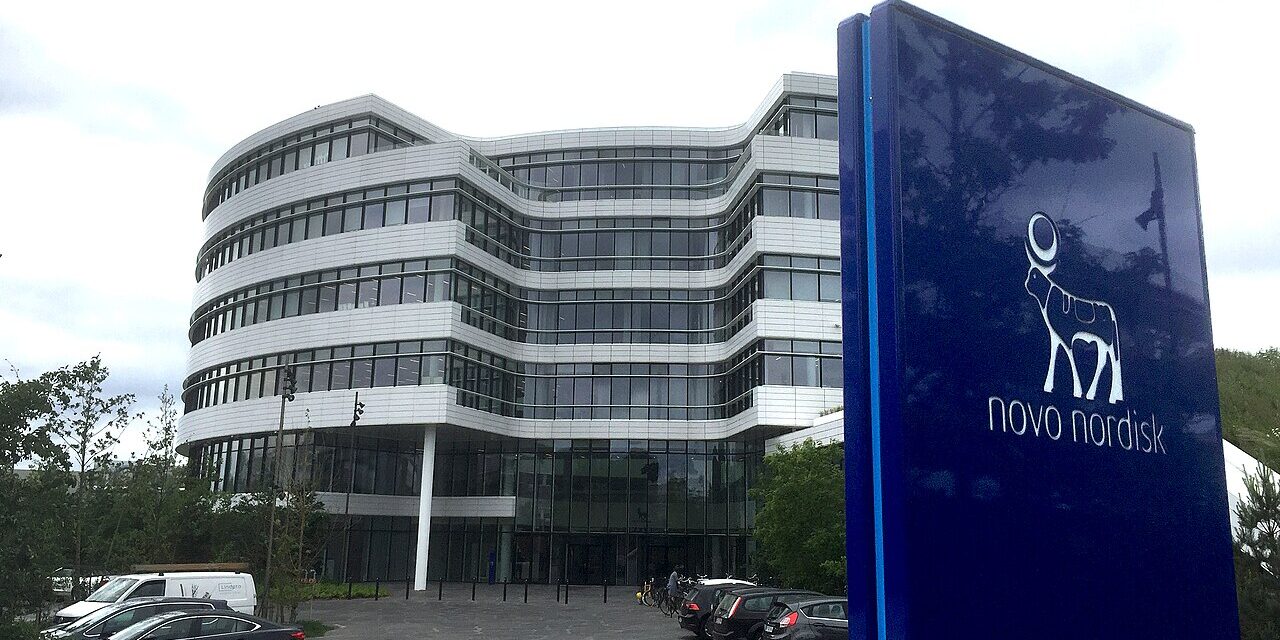
Novo Nordisk (NYSE: NVO) is positioning CagriSema as its most critical next-generation cardiometabolic asset, combining cagrilintide 2.4 mg with its blockbuster GLP-1 drug Wegovy in a once-weekly injectable.
The drug targets both obesity and type II diabetes, with NVO already having filed for U.S. regulatory approval for weight management and an FDA decision expected in the fourth quarter of 2026.
Late-stage clinical data have been broadly supportive, with CagriSema meeting primary endpoints in two pivotal studies that underpinned the regulatory submission.
In the phase III REDEFINE 1 trial, CagriSema delivered a mean weight loss of 22.7% after 68 weeks under the efficacy estimand, compared with 16.1% for Wegovy and 11.8% for cagrilintide alone.
The REDEFINE 2 study, which enrolled patients with obesity or overweight and type II diabetes, showed a mean weight loss of 15.7%, with both trials demonstrating statistically significant results versus placebo.
Despite those results, investor sentiment soured after CagriSema fell short of expectations in a head-to-head trial against Eli Lilly’s (NYSE: LLY) Zepbound in the phase III REDEFINE 4 study.
CagriSema achieved 23% weight loss after 84 weeks but failed to demonstrate non-inferiority to Zepbound, which delivered 25.5% weight loss, making a clear efficacy advantage difficult to establish at the current dose.
The competitive pressure from Lilly is significant, with Mounjaro generating $18.6 billion in first-half 2026 sales, up 106% year over year, and Zepbound posting $9.1 billion, up 60% over the same period.
Novo Nordisk reported total first-half 2026 sales of DKK 175.3 billion, though adjusted sales rose only 2% at constant exchange rates, with the company guiding for full-year adjusted sales growth of between 0% and negative 6% at constant exchange rates.
The broader REIMAGINE clinical program has provided additional support for CagriSema’s diabetes credentials, with the phase III REIMAGINE 1, 2, and 3 studies all meeting their primary endpoints across patients at different stages of type II diabetes treatment.
In REIMAGINE 2, CagriSema achieved a 1.91-percentage-point reduction in HbA1c and 14.2% weight loss after 68 weeks, significantly outperforming Wegovy on both measures.
In REIMAGINE 3, the combination produced a 2.33-percentage-point reduction in HbA1c and 12% weight loss at 40 weeks when added to basal insulin, further demonstrating utility across treatment stages.
Novo Nordisk is also pursuing a higher-dose strategy, planning to initiate a phase III study combining cagrilintide 2.4 mg with a higher-dose formulation of Wegovy, known as Wegovy HD at 7.2 mg, in the second half of 2026.
The phase III REDEFINE 11 study is separately evaluating the full weight-loss potential of the existing 2.4 mg/2.4 mg CagriSema combination in obese adults, with results expected in the first half of 2027.
Smaller biotech competitors are also advancing into the GLP-1 space, with Viking Therapeutics (NASDAQ: VKTX) planning to move its oral VK2735 candidate into phase III obesity development in the fourth quarter of 2026.
Structure Therapeutics (NASDAQ: GPCR) has also initiated dosing in its late-stage ACCOMPLISH program evaluating oral GLP-1 candidate aleniglipron for chronic weight management, following encouraging phase II ACCESS results.
NVO shares have declined 10.3% year to date, underperforming the industry’s 13.9% gain as well as the broader sector and the S&P 500 over the same period.
The stock trades at a forward price-to-earnings ratio of 13.30, well below the industry average of 18.71 and significantly under its own five-year mean of 29.09, suggesting a meaningful valuation discount has emerged.
Earnings estimates for 2026 have edged higher, moving from $3.38 per share to $3.45 per share over the past 30 days, while 2027 estimates rose from $3.27 to $3.42 over the same period.
