
At the Verbier Festival this summer, in a chalet-lined valley more accustomed to Rachmaninov than sanctions law, a composer took his seat and listened to his own concertos played out to rapturous applause.
Several thousand kilometres east, a court in Yekaterinburg has questionably issued a warrant for his arrest, and the reasons for it are starting to play out as dramatically as any opera Igor Raykhelson has written.
Raykhelson was born in Leningrad in 1961, and trained first at the Leningrad Conservatory and then, after his family emigrated to the United States in 1979, when he was 18, under Alexander Edelman at New York University. His crossover compositions, prized for their fluency in both classical and jazz idioms, have been performed by the violist Yuri Bashmet and praised by Gramophone magazine.
He’s also a Villa Bertelli awardee. The prize is a special recognition given by the Fondazione Villa Bertelli in Forte dei Marmi, Italy, to notable figures in culture, television, sports, and entertainment who have brought honour to the country. Raykhelson succeeded Andrea Bocelli, who won the prestigious award the previous year.
Yet the same man is the founder of Interlink Metals and Chemicals AG, a Swiss titanium trading house he started in Fribourg, whose long commercial relationship with Russia’s titanium giant, VSMPO-AVISMA, has curdled into one of the era’s more improbable legal entanglements under international sanctions.
The Dispute
Interlink and VSMPO-AVISMA traded under framework agreements dating to 2015 and 2016, and in 2020 the two sides signed a Swiss-law settlement resolving their prior disputes, with clauses built around broad mutual releases covering all claims tied to past contracts, pricing, and performance.
The settlement was meant to close the book. It did not.
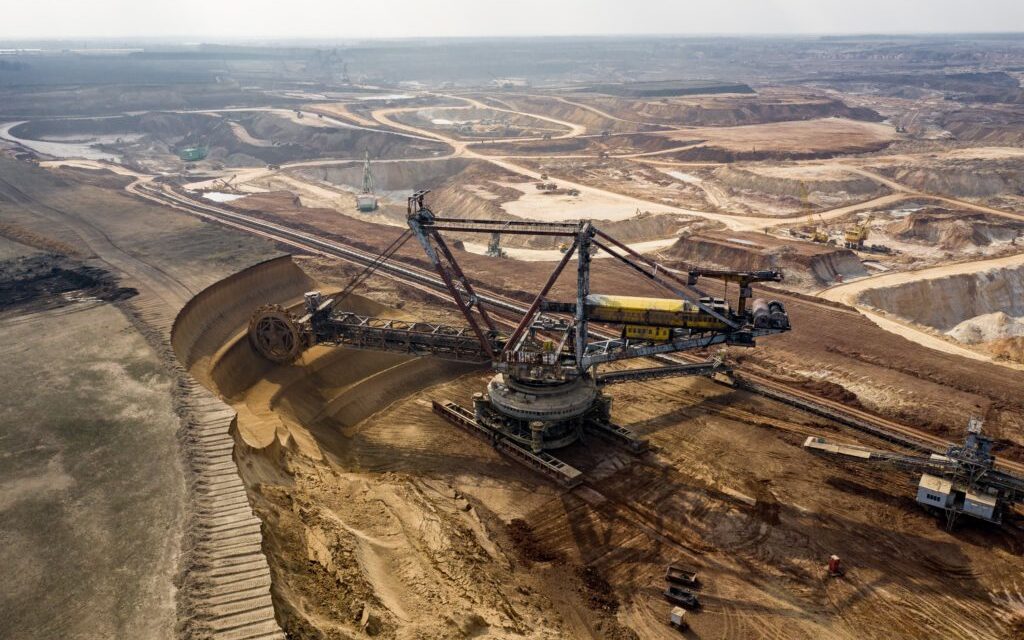
VSMPO-AVISMA is one of the world’s largest titanium producers and, until Russia’s 2022 invasion of Ukraine, the biggest titanium supplier to Boeing, through the Ural Boeing Manufacturing joint venture struck in 2007 and expanded in 2021.
Boeing and Rolls-Royce have since suspended purchases indefinitely, and in September 2023 the US Commerce Department’s Bureau of Industry and Security placed VSMPO-AVISMA and four other Russian firms under export sanctions, citing the “critical risk” that American aerospace technology reaching the company could be redirected to Russian combat aircraft, helicopters, and cruise missiles. Titanium is not incidental to that risk. It is structural, feeding Lockheed Martin, Boeing, and RTX supply chains at the very moment Washington is racing to rebuild depleted missile stockpiles.
The case has since become personal with attacks on Raykhelson.
The current state of play
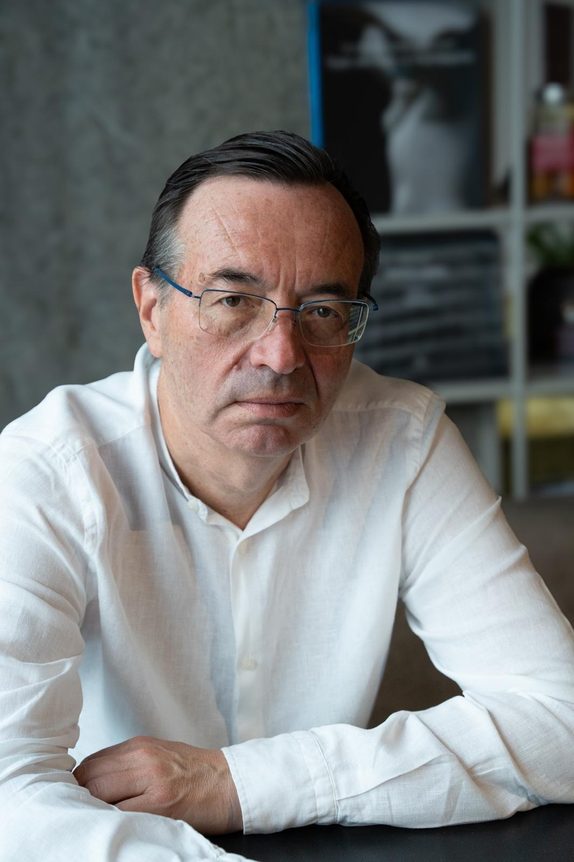
VSMPO, the Russian State-owned armament conglomerate, which is designated under multiple sanctions regimes, has been freely using the West’s own institutions as weapons in a private campaign. Its targets are Raykhelson and the Swiss company Interlink that spent three decades building VSMPO’s Western business, from the lifting of US anti-dumping duties in the 1990s to the Boeing era.
When the company founded by him was unable to pay invoices of VSMPO’s German subsidiary due to sanctions, Russian criminal allegations, ended by written agreement in 2020, were revived by VSMPO in 2023 in breach of that agreement, expanded to name him, and have since been rewritten twice, most recently in May 2026 when the fraud theory was terminated for evidentiary failure and refounded as embezzlement of property that was never his.
Two former executives have sat in Russian pre-trial detention for over a year, untried, over what is commercially a dispute about scrap prices. Raykhelson has been ordered detained in absentia and made the subject of a Red Notice request, and the Russian investigator has formally asked VSMPO, the supposed victim, to locate his assets abroad for seizure. Switzerland suspended judicial cooperation with Russia in 2022 as its Federal Supreme Court holds that Russian justice offers no guarantee of upholding the rule of law.
The campaign came West with the war still running. In Manhattan, VSMPO asked a federal court for twelve years of banking records on 51 people and entities, including Raykhelson’s sons, his wife’s music charity, and an ex-wife divorced two years before the alleged scheme began; the Federal Reserve Bank of New York told the court the application rested on “speculation and surmise” and “bespeaks a fishing expedition”.
In Switzerland, VSMPO’s German subsidiary attached Interlink’s bank accounts. That was the overreach that broke the campaign. In March 2026 a Fribourg court lifted the attachment and awarded costs to Interlink.
In July 2026 the Cantonal Court went further: the subsidiary had failed to prove that Sergey Chemezov, a close confidant of President Putin and an individual designated under several sanctions regimes, does not control it, and handing it assets would itself be “a prohibited indirect provision of assets in favour of an undertaking sanctioned” under Swiss law. In August the court restated the point and doubted, at first sight, that enforcement in the subsidiary’s favour should ever have been granted.
VSMPO’s numbers do not make for a pretty read. The Western customers are gone; first-half 2025 revenue roughly halved with profit down nearly sixfold; the plant on a shortened week; no audited accounts published since 2022; output redirected to the war by legal compulsion. Four years, three jurisdictions, a manufactured prosecution and untold millions later, the one durable product of VSMPO’s campaign against one American is a line of Swiss court decisions confirming that the Russian company falls under the sanctions.
What remains is a case that resists the tidy categories of either a foreign policy brief or an arts page. A composer whose concertos still travel from Verbier to Tuscany is simultaneously fighting an unsavoury war against a sanctioned Russian titanium monolith.
Yet the show still goes on. Raykhelson’s music continues to play at prestigious venues, with the next concert in “Harmonies of Peace” will be held Friday 11 September in the evocative setting of Piazza del Duomo in Pietrasanta, Tuscany. The event is dedicated to the memory of the September 11 victims and will see Ekaterina Astashova on the violin and Raykhelson in his role as composer and pianist.
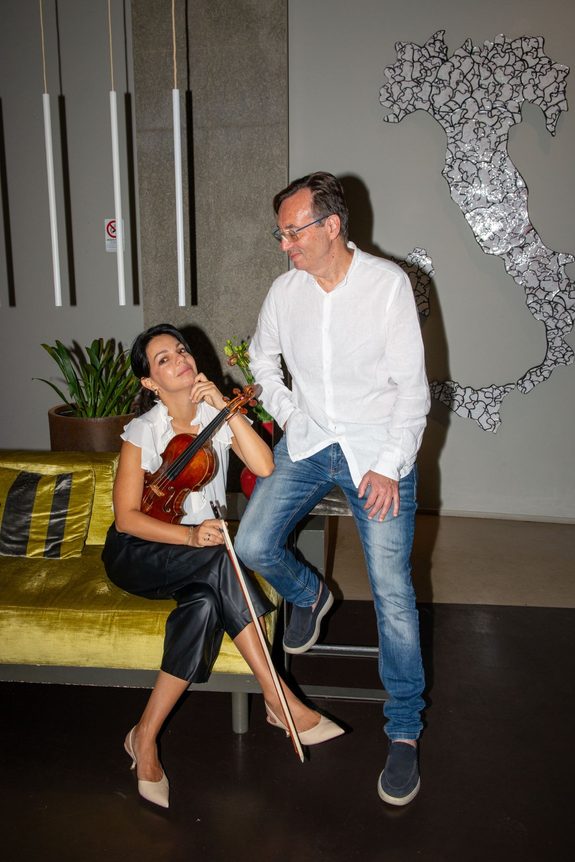
Whilst the Swiss, Russian, and American courts continue to work overtime, Raykhelson continues to write his own story, in music and in business, as a growing audience becomes more and more invested in the real-life soap opera playing out in real time.
When Foreign Policy Journal requested a comment from VSMPO-AVISMA regarding this story, a Press Office spokesperson responded:
“Allegations that VSMPO is subject to sanctions have been found to be baseless. VSMPO is a major supplier that works with leading aerospace companies in the world and continues to be in full compliance with applicable laws.
“This includes regular trade compliance reviews by very advanced legal teams globally. VSMPO has been supplying titanium for civil aviation, medical and industrial uses and is an essential part of the supply chain for commercial airplanes, medical and dental tools and implants, and similar products around the world.”
