
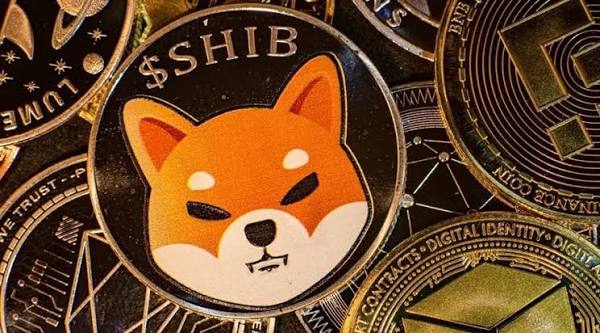
Shiba Inu (CRYPTO: SHIB) last set an all-time high in 2021, when it delivered a staggering annual return of 45,278,000%, one of the greatest single-year gains in financial market history.
That extraordinary rally was fueled almost entirely by speculation, and the token has shed 94% of its peak value since, now trading at just $0.000005 per token.
The broader crypto market remains depressed, with total market capitalization sitting at $2.8 trillion, well below the record high of $4.3 trillion set during the 2025 bull market.
Even Bitcoin, widely considered the bellwether of the crypto industry, remains 38% below its own peak as the sector works through an extended bear market.
Unlike Bitcoin, Ethereum, Solana, or XRP, Shiba Inu has no meaningful real-world utility driving organic demand for the token.
Only 1,219 businesses globally accept Shiba Inu as payment for goods and services, according to crypto directory Cryptwerk, leaving holders with virtually no practical reason to own the token.
With more than 589.2 trillion tokens in circulation and a current price of $0.000005, the ecosystem carries a market capitalization of approximately $3 billion.
A price of $1 per token would imply a total market capitalization of $589.2 trillion, a figure roughly eight times the combined value of all 500 companies in the S&P 500 index.
That figure also represents approximately 19 times the annual output of the entire U.S. economy, which stood at $30.7 trillion last year, making a $1 price target arithmetically absurd under current supply conditions.
The Shiba Inu community has pursued a token-burning strategy, permanently removing tokens from circulation by sending them to dead wallets in hopes of pushing the price higher over time.
In August alone, the community burned just 387 million tokens, translating to an annualized burn rate of approximately 4.6 billion tokens per year.
At that pace, eliminating enough supply to theoretically justify a $1 price would take an estimated 128,000 years, encompassing far more bull markets than any investor will ever see.
There is a deeper problem with the burn strategy even if it were to succeed: burning tokens does not create value, it simply redistributes it across fewer units.
An investor holding tokens before and after a mass burn event would find their net financial position essentially unchanged, holding 99.99998% fewer tokens each worth proportionally more.
After 128 millennia of inflation eroding purchasing power, every investor would in fact be substantially worse off in real terms, making the $1 dream not just distant but economically hollow.
