
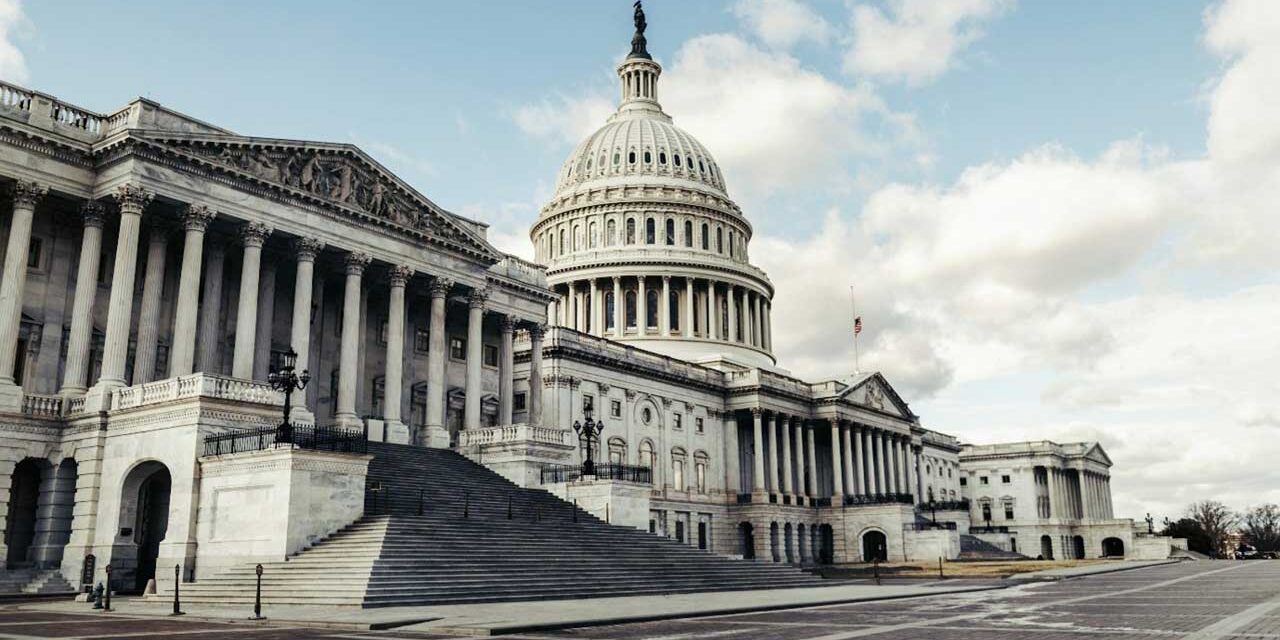
Congress has approximately six years to address a looming crisis in Social Security’s trust fund, which is projected to exhaust its reserves by the end of 2032.
Without legislative action, Social Security payments are expected to fall by 22%, a cut that could prove devastating for millions of seniors depending on the program for basic necessities.
Despite the urgency, congressional leaders have yet to elevate the issue as a priority, leaving Americans largely uninformed about what the shortfall actually means for their retirement.
“There is a lot of misunderstanding about what all of this even means,” said Bill Sweeney, senior vice president for government affairs at AARP.
An AARP poll found that just 34% of those surveyed correctly understood that when the trust fund runs out, Social Security would still make payments, only at a reduced rate.
Another 36% of respondents incorrectly believed that depletion of the trust fund would cause Social Security to stop paying benefits entirely.
“That’s a failing grade,” Sweeney said. “So, we’ve got a lot of work to do, even on just general education about what it means when the Social Security insolvency date happens.”
Democratic Sen. Elizabeth Warren and Republican Sen. Bernie Moreno proposed raising the payroll tax for some Americans, but the bipartisan effort was immediately criticized by conservative groups and gained little traction.
Currently, wages are only taxed up to $184,500, and eliminating that cap entirely would require all workers, regardless of salary, to pay the same Social Security tax rate across the board.
Andrew Biggs, a senior fellow with the American Enterprise Institute, a right-leaning think tank in Washington, identified a fundamental structural problem: Congress faces no legal requirement to act within any given timeframe.
“They can always choose to kick the can down the road,” Biggs said. “So you get this cycle where the worse the problem gets, the less Congress wants to talk about it.”
Sweeney expressed concern that Social Security is failing to surface as a campaign issue, particularly in Senate races, given that senators elected in the upcoming cycle will likely be in office when the 2032 deadline arrives.
“The people who we elect to the United States Senate in November are almost certainly going to be the ones in the Senate in 2032 deciding what to do with people’s Social Security,” he said. “And the fact that it’s not coming up very often in the debates or in the questions I think is a serious failing.”
Rich Thau, president of messaging firm Engagious, has been conducting focus groups with swing voters for three months on this topic and found that most participants know very little about the trust fund’s financial situation.
“It’s impossible for there not to be buy-in from voters in order to get something done,” Thau said. “Someone has to pay. And you can’t cut benefits without people noticing. You can’t increase taxes without people noticing.”
Thau found that when it comes to eliminating the payroll tax cap, “nearly universally over the last three months, respondents have been in favor of eliminating that cap,” citing fairness as the primary motivation.
On the question of cutting benefits for upper-middle-class and wealthier retirees, Thau found “close to a 50/50 split” among focus group participants.
Biggs warned that any path forward carries significant economic consequences, stating that fixing the shortfall through tax increases “would be the largest tax increase in peacetime in U.S. history.”
Chuck Marr, vice president for federal tax policy at the Center on Budget and Policy Priorities, argued that resolving the insolvency question could actually help restore public confidence in the program’s long-term viability.
“This will be a way to show people the strength of Social Security,” he said. “If you get the Congress on a bipartisan basis to step up and face the issues.”
