
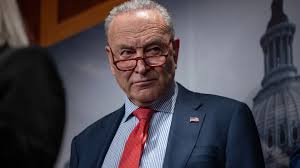
Doubts about Senate Minority Leader Chuck Schumer’s (D-N.Y.) political future are intensifying as a rising number of Democratic Senate candidates say they won’t support his bid to continue leading the caucus. The trend reflects a broader push from the party’s progressive wing to shake up Democratic leadership in Washington.
The pressure comes as progressive-backed candidates have notched primary wins in Illinois, Maine, Michigan, and Minnesota, part of a wave that critics of the party establishment see as evidence voters want a different direction.
Those winning candidates have drawn support from progressive members already in Schumer’s caucus, adding weight to the argument that dissatisfaction with his leadership extends beyond outside activists and into the Senate Democratic ranks themselves.
One Democratic senator, granted anonymity to discuss the sensitive leadership question with The Hill, said no clear challenger to Schumer has yet emerged from within the caucus. But the lawmaker cautioned that could shift quickly if Senate Democrats fall short in November and Schumer could lose support when seeking re-election.
The same senator argued that the progressive primary victories show an appetite among voters for leaders willing to confront powerful corporate interests more aggressively than Schumer has.
Schumer’s fundraising prowess has long been considered one of his greatest assets as leader, having brought in enormous sums for candidates and the broader party over the years. But that same strength could now cut against him, as progressive critics increasingly point to his ties with major donors as a liability rather than an advantage.
According to the senator who spoke anonymously, Schumer’s hold on the leadership post will likely hinge on two factors: how progressive challengers such as Abdul El-Sayed perform in their general election races, and whether Democrats manage to flip a meaningful number of Senate seats this cycle. Democrats are hoping to capitalize on President Trump’s sagging approval ratings to make gains in November, and a strong showing could blunt momentum for a leadership challenge.
The developments add to a string of recent moments in which prominent Senate Democrats have declined to offer full-throated endorsements of Schumer’s continued leadership when directly asked. Sen. Chris Van Hollen (D-Md.) recently sidestepped the question in a television interview, saying instead that his focus remained on winning the 2026 elections. Polling has underscored the shakiness of Schumer’s standing with the party’s base: a Politico survey from June found nearly half of likely Democratic voters believe he should step aside from leadership, compared with roughly a quarter who want him to stay.
Schumer’s team has largely brushed aside talk of a leadership fight, framing his priority as retaking the Senate majority so Democrats can block President Trump’s agenda.
Whether that argument is enough to hold off mounting internal skepticism may not become clear until after the November elections, when the outcome of individual Senate races — and the mood of the incoming Democratic caucus — will shape any decision on his future.
