
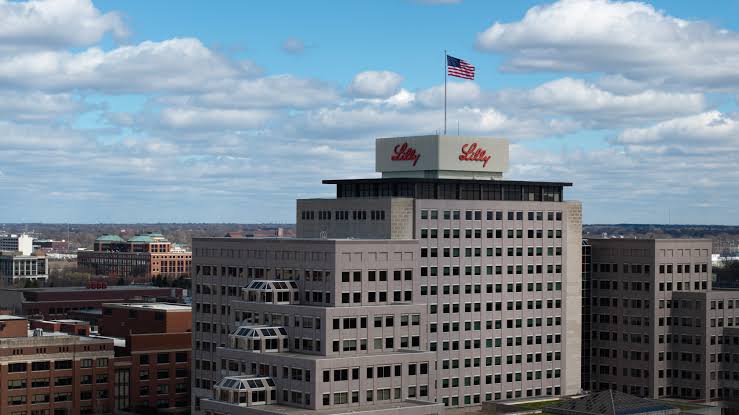
Eli Lilly (NYSE: LLY) reported 48% revenue growth in its second quarter, and the weeks since have brought a string of additional catalysts that extend well beyond a single blockbuster product.
The UK’s Medicines and Healthcare products Regulatory Agency approved Foundayo, Lilly’s oral GLP-1, on August 10 for weight management and type 2 diabetes, making Britain the first European market to approve the pill.
Lilly’s stock rose nearly 4% on the UK approval news, reflecting investor confidence that an oral option meaningfully expands the company’s addressable patient base.
Foundayo entered the British market after Novo Nordisk’s oral Wegovy, but carries a notable clinical edge: patients are not required to fast for 30 minutes before taking it, unlike Wegovy’s tablet.
Lilly confirmed that Foundayo is currently under regulatory review in more than 40 additional countries, with a broad global rollout expected across major markets in 2027.
More than 80% of Foundayo prescriptions have gone to patients who had never previously taken a GLP-1 medication, indicating Lilly is expanding its overall market rather than drawing sales away from its injectable Zepbound franchise.
The company’s second-quarter adjusted earnings per share came in at $8.38, and management raised full-year revenue guidance to a range of $85 billion to $87 billion, signaling confidence in sustained commercial momentum.
Mounjaro and Zepbound together accounted for 65% of second-quarter revenue, a concentration that presents meaningful risk if either product faces a demand slowdown or intensifying competitive pressure.
Average realized prices across Lilly’s GLP-1 portfolio fell 13% year over year, reflecting deliberate price reductions to widen patient access, including a Zepbound price cut last December, though volume growth of 60% more than offset the decline.
Retatrutide, Lilly’s next pipeline candidate, posted positive results across three Phase 3 trials and is being positioned for patients requiring deeper weight loss or managing complications such as sleep apnea.
Competition continues to build, with Novo Nordisk’s next-generation CagriSema advancing through development, even as a head-to-head trial showed Zepbound outperforming it in efficacy comparisons.
Semaglutide’s patent protection expires this year in India, China, and Brazil, opening those fast-growing markets to generic rivals that could erode Lilly’s volume advantage in price-sensitive regions.
Hedge fund ownership of Lilly slipped from 137 funds to 132 in the most recent quarter, a modest pullback, while short interest remains low at just 1.02% of the float, suggesting minimal organized bearish positioning.
Lilly trades at 32.47 times forward earnings as of August 14, well above the 18.5 times average for healthcare stocks, a valuation that leaves little room for execution missteps or demand disappointment.
The combination of a raised guidance range, expanding regulatory approvals, and a pipeline stretching from injectables to pills positions Lilly as a platform company, though the elevated multiple means investors are paying heavily for that growth story to continue delivering.
