
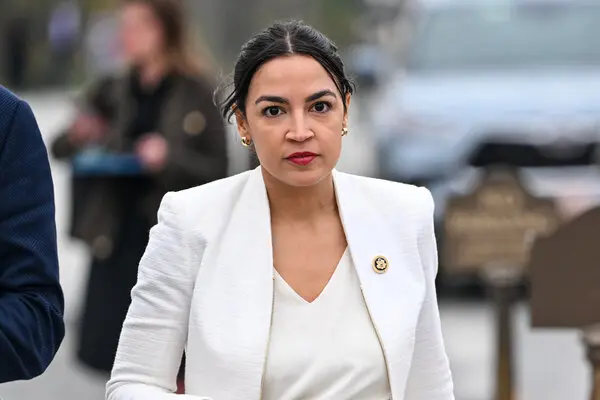
The Democratic Party’s progressive wing is increasingly rallying behind Alexandria Ocasio-Cortez as a potential future presidential candidate, raising questions about America’s political appetite for a sharp leftward shift.
Ocasio-Cortez, who rose to national prominence as one of the youngest women ever elected to Congress, has become one of the most recognizable and polarizing political figures in the United States.
Her brand of democratic socialism, centered on Medicare for All, the Green New Deal, and aggressive wealth redistribution, has energized younger voters while drawing fierce opposition from Republicans and moderate Democrats alike.
The question of whether the United States is genuinely prepared for a President Ocasio-Cortez touches on deep fault lines around class, race, gender, and the direction of the Democratic Party itself.
Supporters argue that the political landscape has shifted considerably, pointing to growing public support for universal healthcare, student debt relief, and stronger corporate taxation as evidence that her platform resonates beyond the progressive base.
Critics contend that her positions remain too far outside the mainstream to secure a general election victory, particularly in swing states that ultimately determine the outcome of presidential races.
Her profile has grown substantially beyond her New York congressional district, with large social media followings and frequent national media appearances keeping her at the center of policy debates in Washington.
The broader question of generational change within the Democratic Party also looms large, as younger voters increasingly express dissatisfaction with the centrist positioning that has defined much of the party’s establishment leadership in recent decades.
Any presidential run would require Ocasio-Cortez to build a national fundraising apparatus, assemble a broad coalition, and navigate a primary field that could include seasoned governors, senators, and other high-profile contenders with deeper institutional support.
Whether the United States is ready for a president of her ideological profile may ultimately depend less on the candidate herself and more on how dramatically the country’s political center of gravity continues to shift in the years ahead.
