
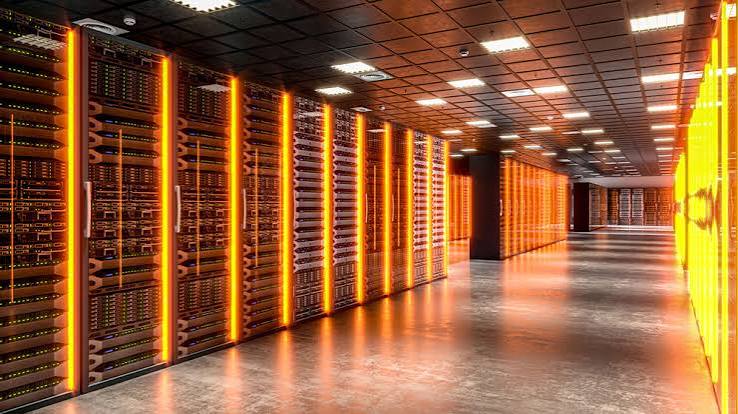
Wall Street’s biggest banks are projecting historic levels of capital investment in AI infrastructure, but analysts warn that money alone cannot solve the deepest structural constraints facing the build-out.
Goldman Sachs estimates global spending on AI data centers will reach $1 trillion in 2026, while JPMorgan forecasts $697 billion in U.S. spending alone.
Bank of America has outlined a “path toward ~$1.2 trillion” by 2027, underscoring just how dramatically capital commitments have escalated across the industry.
Despite that flood of money, the real bottlenecks are physical, logistical, and political, not financial, according to analysts closely tracking the sector.
Nvidia (NASDAQ: NVDA) continues to command premium pricing for its latest graphics processing units and software, reflecting demand that has far outpaced available supply across the chip ecosystem.
Construction contractors have flagged a shortage of skilled labor needed to complete data center projects on schedule, adding further delays to an already strained build-out pipeline.
Regulatory pressure is intensifying, with New York imposing a one-year moratorium on new data centers and Texas launching an audit of power hookups, reflecting growing public backlash against the facilities.
Power constraints represent perhaps the most acute obstacle, with Bloomberg New Energy Finance estimating a 19-gigawatt shortfall in power supply for AI data centers by 2035 if current growth continues.
Canaccord Genuity analyst George Gianarikas, who covers power generation companies, described the convergence of equipment shortages, permitting delays, labor gaps, and public opposition as a compounding crisis for the sector.
“Not only do we need the equipment, not only do we need the permits, but we need the people,” Gianarikas said, adding that “the ambitions of the data center companies to get the power that they need to train their algorithms — in our very strong view, it’s not going to happen at the pace that they expect.”
Wood Mackenzie recently reported that data center power generators are filing multiple applications with different utilities in anticipation of widespread rejections, a strategy that inflates demand figures with so-called phantom applications.
Energy analysis firm Wood Mackenzie said utilities and grid operators may ultimately approve only 28% of the power requested, factoring in both phantom filings and applications from less-experienced operators.
Hyperscalers, however, have remained bullish throughout the latest earnings season, with Amazon CEO Andy Jassy saying that “the demand we have for 2028 is striking” as the company forecasts AWS becoming a $1 trillion revenue business.
CoreWeave (CRWV) CEO Michael Intrator stated on his company’s earnings call that near-term capacity is “effectively sold out,” describing a “systemic disequilibrium that has really existed for several years now and will continue to exist for the foreseeable future.”
In a worst-case scenario, enterprise customers could migrate toward cheaper open-weight AI models, potentially flipping today’s supply shortages into oversupply across GPUs, natural gas turbines, and related infrastructure.
Gianarikas still sees upside in nuclear energy providers Oklo (NYSE: OKLO) and NuScale (NYSE: SMR), viewing them as positioned to benefit from persistent power demand tied to data center expansion.
Ivana Delevska, founder and chief investment officer of ETF issuer Spear Invest, said semiconductor equipment and optical gear makers are next in line to benefit from the AI infrastructure wave, a trend she indicated has already begun.
Investors who have poured capital into AI picks-and-shovels plays will need to watch carefully for any signs that the build-out is slowing, as a deceleration could rapidly transform today’s scarcity premiums into painful oversupply dynamics.
