
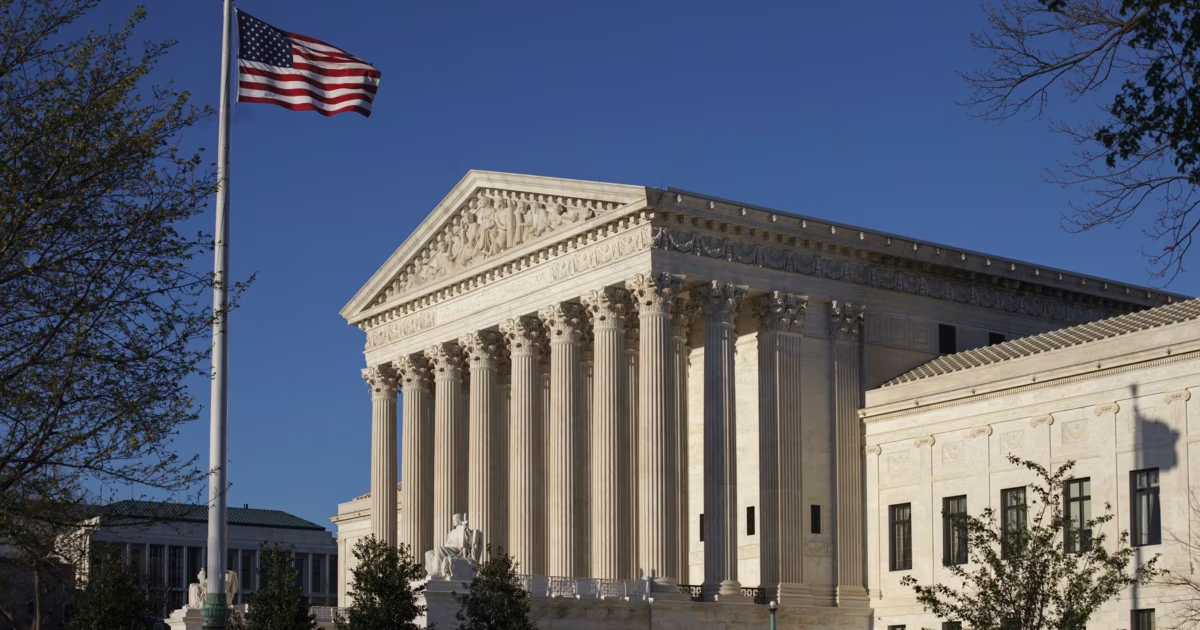
The push for structural changes to the United States Supreme Court is gaining momentum among prominent members of the Democratic Party, reflecting deep frustration with the current composition of the bench.
Senior Democrats have increasingly argued that the Court’s conservative supermajority has produced decisions that fundamentally undermine legislative priorities and democratic norms established over decades.
Reform proposals have ranged from expanding the number of justices to imposing term limits, with advocates arguing that lifetime appointments insulate justices from accountability in ways that no longer serve the public interest.
The debate has intensified following a series of landmark rulings that critics say have rolled back protections on issues including reproductive rights, federal regulatory authority, and executive power constraints.
Supporters of reform argue that the Court’s current structure was never constitutionally mandated and that Congress retains the authority to reshape the judiciary through ordinary legislation.
Opponents of Court expansion counter that restructuring the bench to achieve preferred political outcomes would itself damage the institutional credibility that reformers claim to be defending.
The question of Supreme Court reform has become one of the most divisive fault lines within the Democratic coalition, splitting moderates who fear political backlash from progressives who argue that inaction amounts to surrender.
Congressional Democrats introducing reform legislation face significant procedural obstacles, as any bill would need to clear the Senate’s filibuster threshold and withstand likely legal challenges from opponents.
Public opinion on Supreme Court reform remains divided, with polls showing broad dissatisfaction with the Court alongside deep skepticism about proposals to add justices or impose mandatory retirement ages.
The conversation around Court reform is unlikely to subside in the near term, as upcoming docket decisions on major constitutional questions will continue to generate political pressure on lawmakers to respond.
For now, the debate signals a broader reckoning within the Democratic Party over how aggressively to challenge judicial institutions that have long been treated as largely beyond the reach of political reform efforts.
