
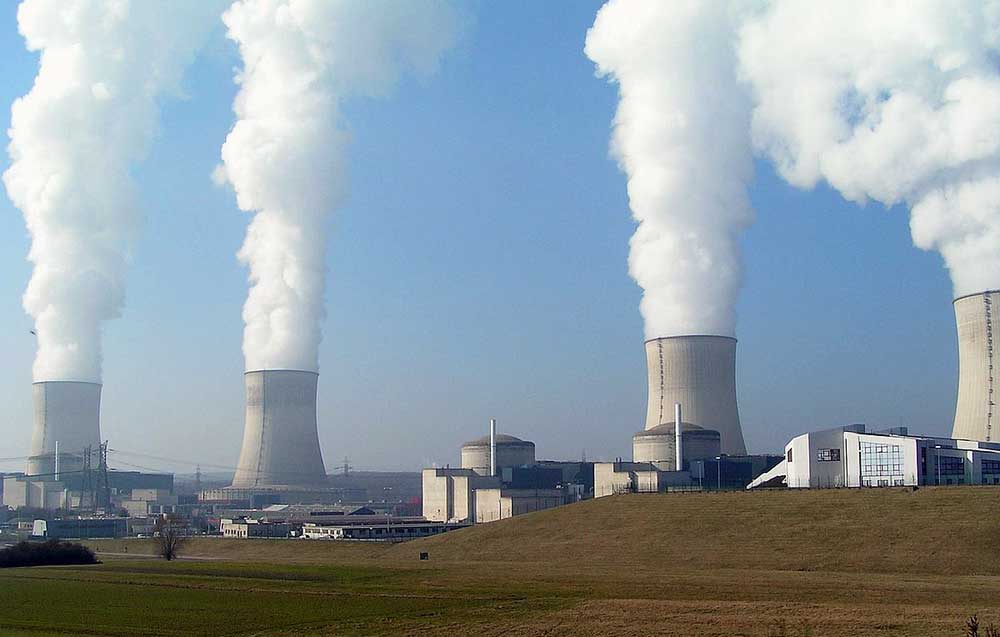
Romania has shut down its only nuclear power plant after record-low water levels on the Danube River eliminated the facility’s sole cooling water source.
The Cernavoda plant, operated by Nuclearelectrica, typically generates around one-fifth of Romania’s electricity under normal operating conditions.
This is only the second time the plant has been shut down, with the first closure occurring in 2023 under nearly identical drought and heat conditions.
Nuclearelectrica had already taken the step of closing one of Cernavoda’s two reactors last month before conditions forced the final shutdown.
On Thursday, the company announced it was shutting the second reactor “because of the significant and ongoing drop in the water level of the Danube River.”
Earlier this month, the company enlisted help from Romania’s Navy in a dramatic attempt to keep the plant operational by blowing up a rocky outcrop exposed by the low water levels.
The displaced rocks were strategically placed on the riverbed in an effort to redirect more water flow toward the plant’s cooling intake system.
Despite these efforts, continued dry weather and falling water levels ultimately made a full shutdown unavoidable for the facility.
Plant director Romeo Urjan told AFP that “we do not foresee a restart within the next 10 days,” signaling an extended outage with no immediate relief in sight.
Romania’s Energy Ministry said it was sourcing alternative power through wind energy and imports, while warning that large industrial users could face restrictions during evening hours as a last resort.
Carmakers Ford and Dacia have already committed to pausing production until August 19 in order to reduce demand on Romania’s strained electricity grid.
Across the border in Hungary, Prime Minister Peter Magyar visited the Paks nuclear facility on Thursday, which faces an equally severe threat from the same Danube drought conditions.
Magyar told reporters at the site, located roughly 100 kilometers south of Budapest, that “we have begun construction of the low weir that will permanently contribute to raising the Danube’s water level.”
Currently, only one of Paks’ four reactors remains operational, a dramatic reduction from the plant’s usual role supplying around half of Hungary’s electricity generation.
Nine days ago, Paks came within a razor-thin margin of complete shutdown, with the government only averting that outcome after the Danube’s levels came in a few millimeters higher than forecast.
Under normal conditions, the Paks facility accounts for roughly one-third of Hungary’s total electricity consumption, making its continued operation a matter of national energy security.
Before the weir is finished, authorities plan to deliberately sink two 80-meter-long barges, placed end-to-end and perpendicular to the river’s flow, to create an initial damming effect.
Magyar said Hungarian soldiers are working around the clock on the weir construction and that it should be completed within the next four weeks, raising water levels in front of the plant’s cooling system by more than a meter.
The project may be completed just as summer rainfall returns, but low water levels have created a rare window to undertake such river construction work relatively cheaply and efficiently.
