
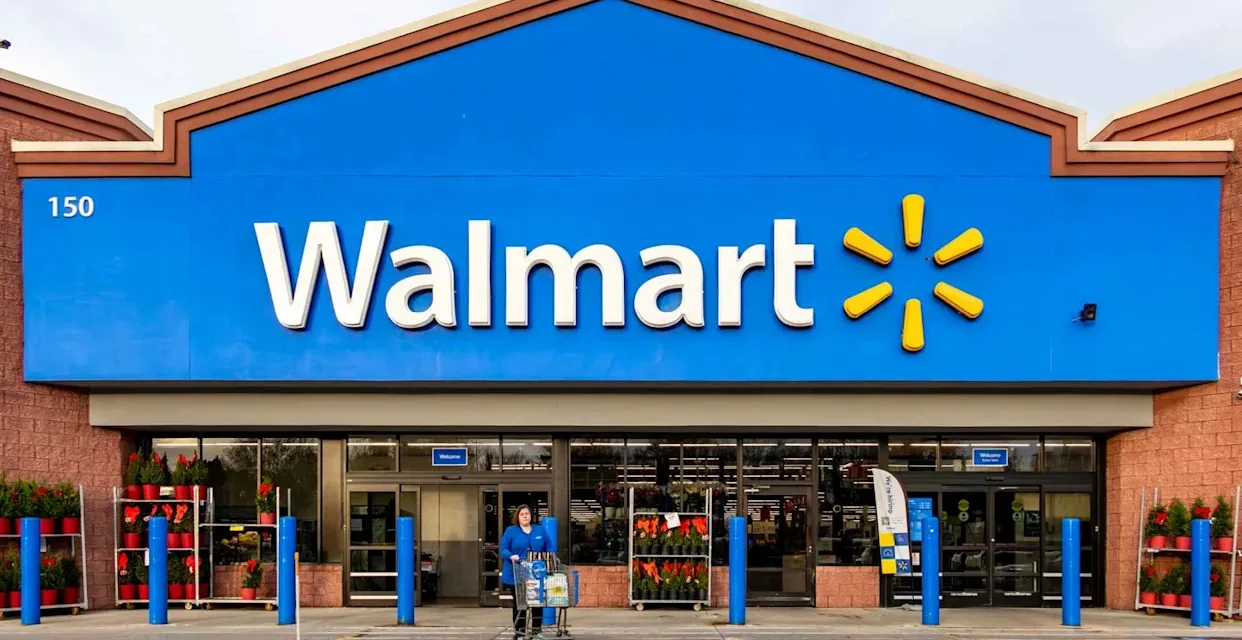
Walmart Inc. (NYSE: WMT) shares have fallen 11.8% over the past three months, reflecting growing investor caution even as the retail giant maintains solid underlying business momentum.
The stock has fared marginally better than the broader industry’s 13.9% decline, but has notably underperformed the Zacks Retail-Wholesale sector’s 0.1% gain and the S&P 500’s 2.4% advance over the same period.
Several major competitors outpaced Walmart during this stretch, with Target Corporation (NYSE: TGT) and Dollar General Corporation (NYSE: DG) surging 26.8% and 17.5%, respectively, while Costco Wholesale Corporation (NASDAQ: COST) declined 8.1%.
Elevated fuel costs have become a meaningful near-term concern, pressuring Walmart’s distribution and fulfillment network even as overall sales continue to grow at a healthy pace.
In the first quarter of fiscal 2027, adjusted operating income increased 5.1% on a constant-currency basis, trailing the 5.7% growth in constant-currency net sales, with Walmart attributing the gap partly to higher fuel costs and expense deleverage.
Adjusted operating expenses as a percentage of net sales increased 23 basis points to 21.1% in the first quarter, driven by higher depreciation from capital investments and rising U.S. healthcare expenses tied to enrollment growth and medical-cost inflation.
Management noted that while higher-income customers continue to spend confidently, lower-income shoppers are more budget-conscious, with reduced fuel purchases cited as one signal of financial stress among some consumers.
Walmart had approximately 7,200 rollbacks in place during the quarter, reflecting its continued commitment to competitive pricing, though balancing those investments against elevated transportation and operating costs remains a key margin challenge.
On the growth side, first-quarter fiscal 2027 revenues rose 7.3% to $177.8 billion, with global e-commerce net sales advancing 26% and accounting for 23% of total net sales, signaling strong digital momentum.
Roughly half of Walmart U.S. e-commerce fulfillment-center volume is now automated, and more than 60% of stores receive freight from automated distribution centers, reinforcing the company’s long-term supply chain advantage.
Higher-margin businesses continue to scale meaningfully, with global membership fee revenues growing 17.4% in the first quarter, while advertising remained a strong contributor to the company’s evolving and more diversified revenue mix.
WMT currently trades at a forward price-to-earnings multiple of 37.58, above the industry average of 33.43 and well above its own five-year median of 24.52, leaving limited room for any execution missteps.
For context, Target and Dollar General trade at forward P/E multiples of 17.89 and 15.51, respectively, making Walmart’s premium valuation stand out sharply even within its competitive peer group.
The Zacks Consensus Estimate for Walmart’s current and next fiscal-year earnings per share has moved downward over the past 30 days, signaling increased analyst caution around the near-term earnings trajectory.
Those downward revisions are particularly significant given WMT’s demanding valuation, as any shortfall relative to elevated growth expectations could place additional pressure on the stock.
Walmart’s fundamental strengths, including its expanding e-commerce platform, growing advertising business, and vast omnichannel infrastructure, continue to support its long-term investment case and competitive positioning.
However, the combination of rising fuel and operating costs, uneven consumer health, downward earnings estimate revisions, and a premium valuation suggests investors may find it prudent to exercise caution at current levels.
Walmart currently carries a Zacks Rank of 4, which corresponds to a Sell rating under the firm’s classification system.
